Google launches Nano Banana 2 image model with high-speed generation
Google’s new Nano Banana 2 image model bridges the gap between high-speed iteration and studio-grade quality across its ecosystem. The release includes a cost-effective Lite version and enterprise-ready features like SynthID watermarking.
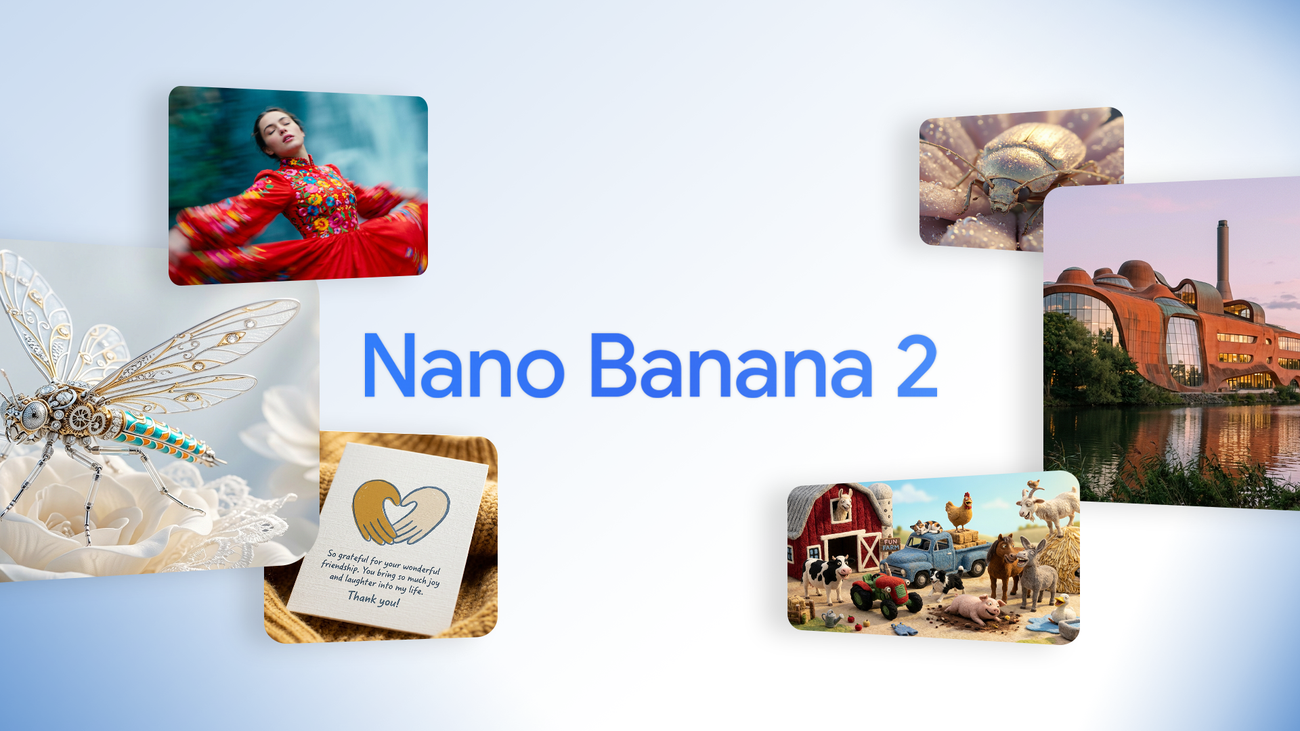
Google has launched Nano Banana 2, a high-speed image generation model that aims to bridge the gap between studio-grade quality and rapid, high-throughput production. Known technically as Gemini 3.1 Flash Image, the model represents a significant shift in how the company positions its visual generation tools within the broader technology ecosystem, offering a balance of performance and efficiency for creators and developers.
Evolution of the Nano Banana Family
The introduction of Nano Banana 2 follows a rapid cycle of innovation within Google’s model lineup. The original Nano Banana, based on Gemini 2.5 Flash Image, debuted in August 2025 and quickly became a viral tool for rapid, low-latency image tasks. By November 2025, Google released the more sophisticated Nano Banana Pro, which utilized the Gemini 3 Pro reasoning architecture to deliver high-fidelity results, though at a cost profile that made large-scale production challenging for some enterprise users.
Related media
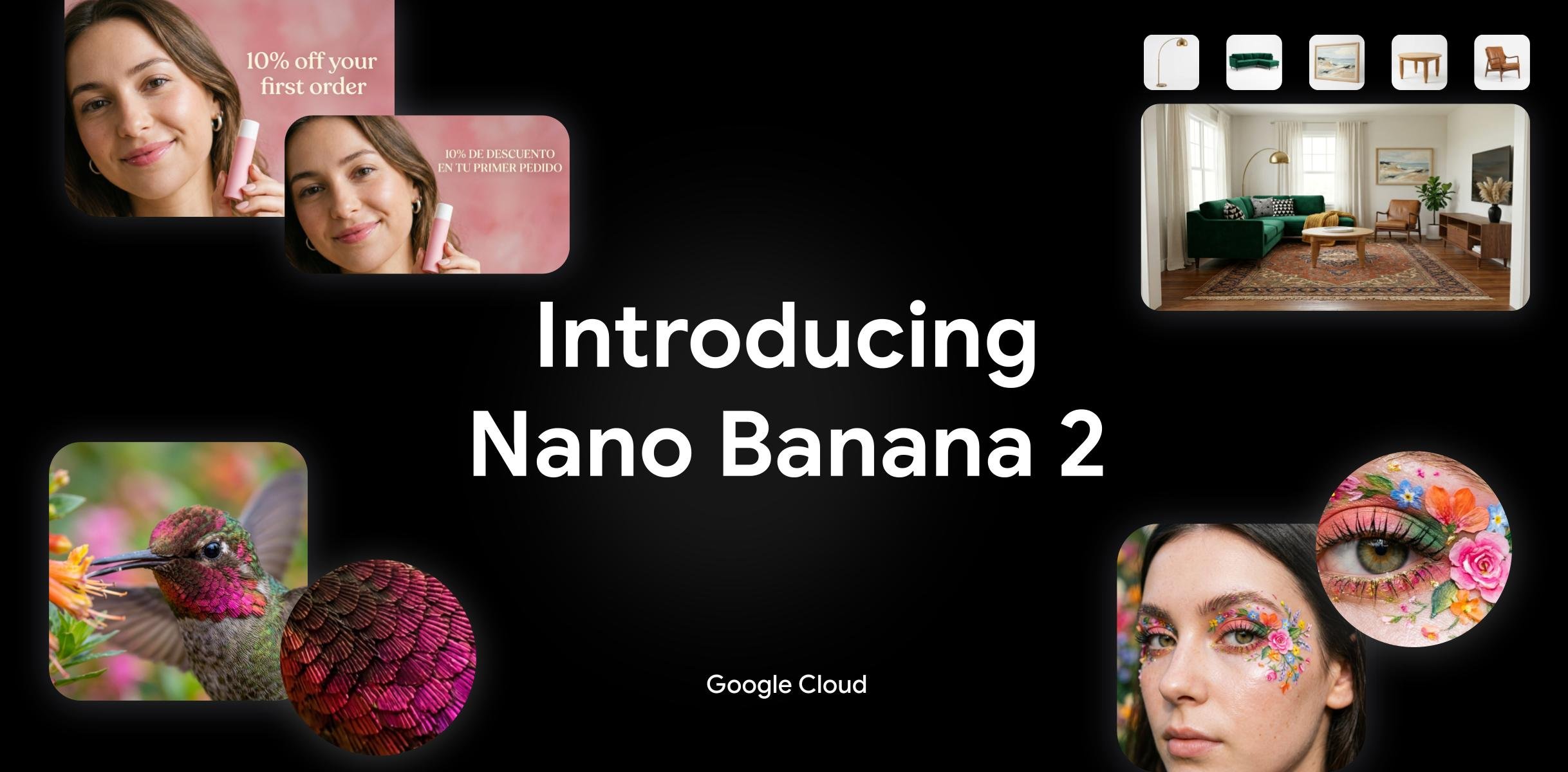

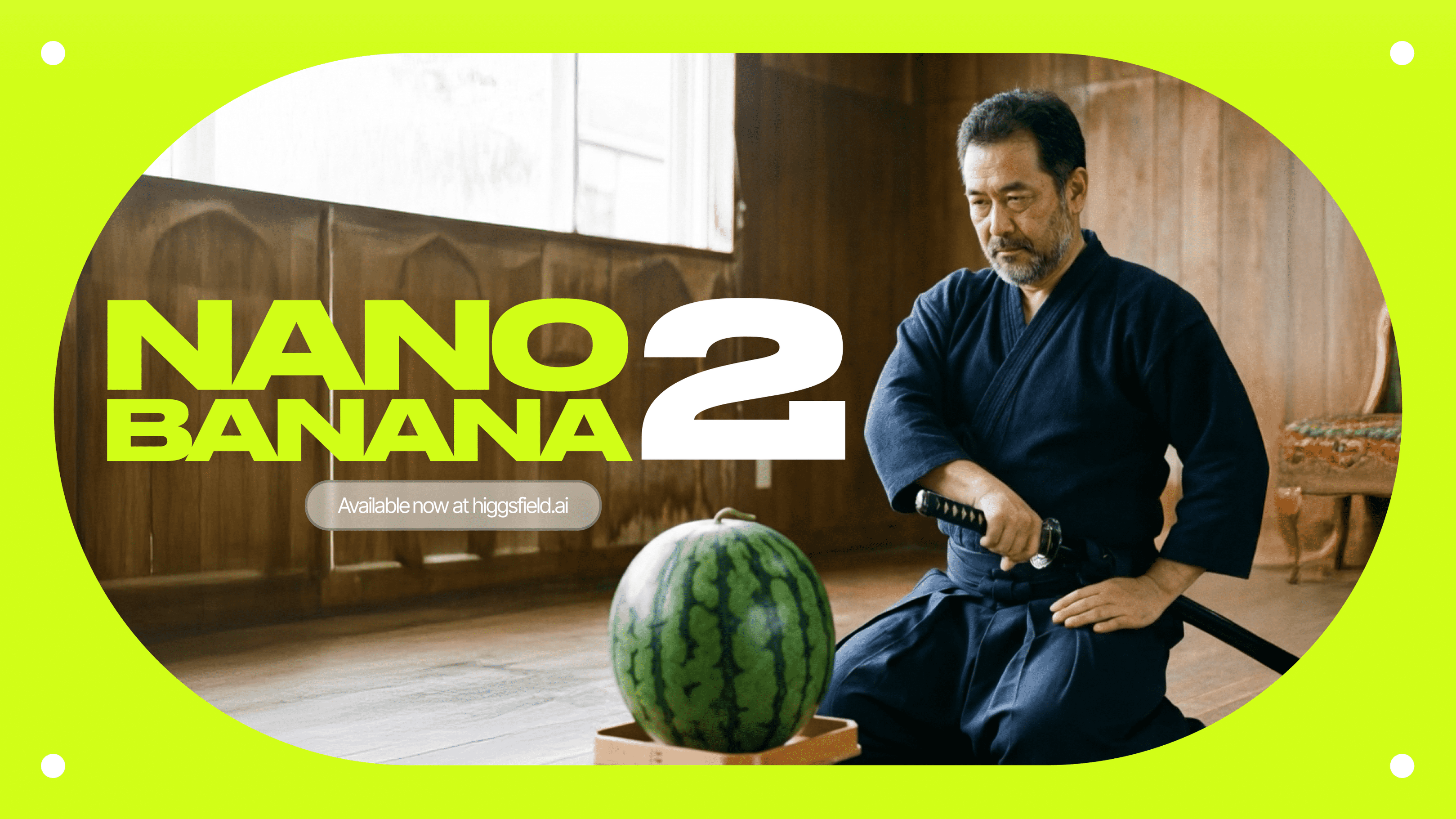
Nano Banana 2 combines the reasoning capabilities of the Gemini 3.1 Flash architecture with the production controls previously reserved for the Pro tier. According to documentation, the model is designed to be the primary, default workhorse across Google products, including the Gemini app, Google Search’s AI Mode, Google Lens, and Google Ads. It is specifically optimized for rapid iteration, providing users with the ability to maintain subject consistency across up to five characters and 14 objects, while also handling accurate text rendering and localization within images.
Expanding the Model Stack
On June 30, 2026, the company further segmented its offerings with the release of Nano Banana 2 Lite (gemini-3.1-flash-lite-image). Designed specifically for high-velocity developer pipelines, this version focuses on cost efficiency and speed. It generates images in approximately four seconds at a price point of $0.034 per 1,000 images. Google frames this as the new "floor" for its model family, intended for drafting and high-throughput tasks where quick iteration is more critical than maximum fidelity.
The rollout of Nano Banana 2 Lite also coincides with the preview availability of Gemini Omni Flash, a model capable of generating and editing video via text prompts. Developers are encouraged to use these models in tandem, utilizing the faster Lite model to generate reference images that are subsequently animated by Omni Flash in an "image-to-video assembly line."
Enterprise and Creative Integration
The practical utility of these models has drawn attention from enterprise partners. Through the Gemini Enterprise Agent Platform and Google Cloud, businesses are integrating Nano Banana 2 into professional workflows. Steve Newcomb, VP of Product at Adobe Firefly, stated:
"Nano Banana 2 in Firefly sets a new standard for image quality and precision, giving creators greater control to generate and refine production-ready work in a seamless workflow."
Steve Newcomb, VP of Product, Adobe Firefly, via Google Cloud Blog
Other companies, including Notion and Whering, have adopted the model to streamline tasks such as storyboard creation and product asset enhancement. For WPP and Unilever, early testing demonstrated that the model's improved world knowledge and reasoning capabilities significantly reduced the time required for high-fidelity product representations.
Provenance and Transparency
As part of its commitment to responsible media creation, Google has coupled Nano Banana 2 with its SynthID watermarking technology and interoperable C2PA Content Credentials. These tools are designed to provide users with a contextual view of how AI was employed in the creation of an asset. The company reports that its verification features were utilized over 20 million times in the months following their initial implementation, with plans to expand C2PA verification across the Gemini app in the near future.
Model Comparison Summary
| Model | Primary Use Case | Strength |
|---|---|---|
| Nano Banana 2 Lite | High-throughput drafting/prototyping | Lowest latency (4s) and cost |
| Nano Banana 2 | General purpose/Standard production | Balanced speed and high fidelity |
| Nano Banana Pro | Complex, high-fidelity hero assets | Advanced reasoning and structural depth |
For users looking to build beyond static imagery, the integration of Gemini Omni Flash represents the current frontier. While audio references and complex scene extensions remain in early stages, the ability to chain these models indicates a push toward fully conversational, end-to-end multimedia creation.
How significant is this development?
Contribute your assessment to the aggregated reader intelligence ledger.
Archypedia is dedicated to independent, evidence-backed reporting. This briefing was synthesized from primary source reporting, corroborated across independent newsrooms, and verified against our Editorial Standards.
Transparency record
Evidence behind this report
This report synthesizes 12 distinct sources. Open the source ledger below to compare the underlying coverage.
- kie.ai
- docs.cloud.google.com
- blog.google
- cloud.google.com
- the-decoder.com
- higgsfield.ai
- deeplearning.ai
- searchengineland.com
- techcrunch.com
- 9to5google.com
- almcorp.com
- wavespeed.ai
Prepared under the Archypedia Editorial Policy by the Niko Vale editorial desk profile. AI-assisted tools may support drafting and verification; public accountability remains with Archypedia. Report an error.