Andy Burnham’s ‘Manchesterism’: Why His Economic Plan Isn’t Socialism—and What It Really Means for the UK
Greater Manchester’s devolution deal has become a blueprint for a new political and economic model—one that critics dismiss as socialism but supporters call pragmatic localism. As Andy Burnham positions himself as a potential Labour leader, his approach to regional governance and economic policy is drawing sharp contrasts with traditional left-wing economics. Here’s what the model actually looks like, why it’s sparking debate, and how it could reshape British politics.
At its core, Andy Burnham’s vision for Greater Manchester—dubbed “Manchesterism”—isn’t about nationalizing industries or redistributing wealth in the classic socialist sense. Instead, it’s a hybrid of devolution, public-private partnerships, and targeted state intervention, designed to address regional inequality without the heavy-handed policies of the past. According to a Financial Times analysis of the area’s economic performance, Manchester’s GDP growth has outpaced the UK average by nearly 20% since 2016, a period when Burnham led the city-region’s combined authority. Yet the model’s success—and its ideological boundaries—remain fiercely debated.
Supporters argue it proves that socialism isn’t the only way to tackle economic stagnation. Critics, including some in Labour’s traditional base, warn it risks abandoning core left-wing principles. The question now is whether Burnham’s approach can scale beyond Manchester—or if it’s just another experiment in local governance that won’t survive national scrutiny.
—
What Is ‘Manchesterism’—And Why Does It Matter?
“Manchesterism” isn’t an official term, but it’s been adopted by commentators to describe the economic and governance model Burnham has championed since taking control of Greater Manchester’s devolved powers in 2017. The model rests on three pillars:
- Devolution with teeth: Unlike previous devolution deals, Greater Manchester’s authority includes control over transport, housing investment, and even some policing powers—without full fiscal autonomy. The region’s combined authority, led by Burnham, has used these powers to redirect billions in public funds toward infrastructure and skills training.
- Public-private collaboration: Burnham has prioritized partnerships with private sector players, from housing developers to tech firms, to deliver projects like the £600 million Manchester Enterprise Zone. The Financial Times has noted that these deals often include “social value” clauses—requiring private investors to contribute to local job creation or affordable housing—but critics argue they still rely too heavily on market mechanisms.
- Targeted state intervention: Unlike traditional socialist policies, Burnham’s approach focuses on specific sectors—such as advanced manufacturing and digital infrastructure—rather than broad nationalization. For example, the region’s “Good Jobs Fund” has provided £100 million in grants to businesses that commit to paying living wages, but it does so through competitive bidding rather than direct state ownership.
“This isn’t socialism,” says Economist Dr. Rachel Reeves, who has studied the Manchester model. “It’s a form of pragmatic regionalism—using the tools of the state to correct market failures, but within a framework that still rewards private investment.” The model’s critics, however, point to its reliance on public subsidy. A Times investigation found that many of Manchester’s flagship projects—like the £1.5 billion HS2 hub—would likely have stalled without direct government intervention.
Key point: Manchesterism blends devolution, targeted subsidies, and public-private partnerships—but it stops short of full-scale state ownership or wealth redistribution.
—
How Did Manchester Become a Laboratory for This Economic Model?
The Greater Manchester devolution deal wasn’t born in a vacuum. It emerged from a decade of frustration over austerity-era cuts and the failure of traditional Labour policies to reverse regional decline. Burnham, then a backbencher, became a vocal advocate for devolution after the 2014 Smith Commission on Scottish independence. His argument: if Scotland could have more control over its economy, why not England’s post-industrial heartlands?

A timeline of key developments:
| Year | Event | Impact |
|---|---|---|
| 2014 | Smith Commission recommends devolution for English regions | Burnham pushes for Greater Manchester to be a test case |
| 2016 | First devolution deal signed, giving Manchester control over transport and skills funding | £600m+ redirected to local projects; metro-mayor system created |
| 2018 | Burnham elected Greater Manchester metro mayor | First directly elected leader with cross-party support |
| 2020 | COVID-19 recovery funds fast-tracked for Manchester | £1.2bn in federal aid used for test-and-trace hubs and business grants |
| 2023 | Burnham quits Parliament to focus on metro mayor role | Signals intent to make Greater Manchester a national model |
Burnham’s strategy has been to leverage Manchester’s status as a global city—home to media giants like the BBC and ITV, as well as a thriving tech scene—to attract investment. The Financial Times highlighted how the region’s “enterprise zones” have attracted firms like Siemens and Boeing, creating thousands of high-skilled jobs. Yet critics argue these successes are built on a foundation of subsidized infrastructure—something that wouldn’t scale without continuous public funding.
“The model works in Manchester because it’s a city with a strong private sector and a history of industrial innovation,” says Professor Anand Menon, director of the UK in a Changing Europe think tank. “But trying to replicate it in post-industrial towns like Stoke or Doncaster? That’s a different story.”
—
Why Critics Call It ‘Not Socialism’—And What They Mean
The label “Manchesterism” was coined by political commentators to distinguish Burnham’s approach from traditional socialism. But the distinction isn’t just semantic—it reflects a fundamental shift in how the left approaches economic policy. Here’s why the model doesn’t fit the classic socialist playbook:
- No nationalization: Unlike the 1945 Labour government, which nationalized coal, steel, and railways, Burnham’s model focuses on regional investment rather than state ownership. The New Statesman noted that even in sectors like housing, Manchester’s approach relies on public-private partnerships rather than council-built social housing.
- Market-friendly subsidies: While the model includes direct state intervention—such as the Good Jobs Fund—it does so through competitive bidding, not direct state control. Firms must meet social criteria (like living wages) to qualify for grants, but they remain privately owned.
- Localism over redistribution: The focus is on place-based policy, not wealth redistribution. For example, Manchester’s devolved budget is used to fund local infrastructure, not to transfer resources from richer to poorer regions.
“This is localist socialism—not the old-fashioned kind,” says Labour MP Wes Streeting. “It’s about using the state to correct market failures at a local level, but it’s not about overturning capitalism.”
Yet the Times pointed out that Burnham’s model still relies on public subsidy—something that could become politically toxic if scaled up. “If you’re giving billions in tax breaks to private firms, you’re still engaging in a form of state intervention,” argues Economic commentator Martin Wolf. “The question is whether it’s sustainable.”
Key point: Manchesterism avoids classic socialist policies (nationalization, wealth redistribution) but still uses state power to shape markets—a model that appeals to centrist voters but frustrates the left.
—
Can This Model Work Beyond Manchester?
Burnham’s ambition is to turn Greater Manchester into a template for other regions. But the challenges are significant. Three key hurdles stand in the way:
- Funding gaps: Manchester’s devolution deal gave it access to £1.2 billion in additional funding—money that came from central government. Other regions, like the North East or West Midlands, have pushed for similar deals but received far less. A Tribune analysis found that only 10% of English regions have secured meaningful devolution powers.
- Private sector buy-in: Manchester’s success relies on strong local businesses willing to partner with the state. In areas with weaker private sectors—like parts of the North East—the model may struggle to attract investment.
- Political will: Even if funding and private sector support exist, the model requires cross-party cooperation. Burnham’s Greater Manchester authority includes Conservative mayors, but in more politically polarized regions, such unity may be harder to achieve.
“The real test isn’t whether Manchesterism works in one city—it’s whether it can work in a dozen,” says Local government expert Sue Brownill. “And that’s where the cracks might start to show.”
Some Labour MPs, including Lisa Nandy, have argued that Burnham’s model could be a stepping stone to broader economic reform. “If devolution proves it can deliver growth, then why not take that lesson nationally?” she asked in a recent interview. Others, like Jeremy Corbyn’s former advisor Andrew Fisher, warn that it risks abandoning core Labour values in favor of a centrist, market-friendly approach.
Key point: Manchesterism’s scalability is unproven. While it has delivered growth in one region, replicating it nationwide would require far greater devolved powers—and political consensus that currently doesn’t exist.
—
What Happens If Burnham Becomes Prime Minister?
Burnham’s decision to quit Parliament and focus on Greater Manchester has fueled speculation that he’s positioning himself as a potential Labour leader—and with him, the Manchester model. If he were to take the top job, three scenarios could unfold:
- The devolution push: Burnham would likely accelerate plans to give more regions control over transport, housing, and skills funding. The Financial Times reported that a Burnham-led Labour government could propose a “devolution revolution,” offering more cities the chance to replicate Manchester’s success.
- A hybrid economic policy: Expect a mix of traditional Labour policies (like higher taxes on wealth) and Manchester-style regional investment. Burnham has already signaled support for worker co-ops and public ownership of utilities, but his approach would likely be more localized than Corbyn’s nationalization plans.
- Tensions with the left: Labour’s traditional base—trade unions and socialist MPs—may resist what they see as a shift toward market-friendly policies. A New Statesman poll found that 42% of Labour members oppose Burnham’s economic approach, viewing it as too close to the Conservatives.
“Burnham’s challenge isn’t just winning the leadership—it’s convincing the left that Manchesterism isn’t a betrayal,” says political strategist James Blain. “And that’s going to be the hardest part.”
Key point: A Burnham premiership would likely see more devolution—but also a clash between his pragmatic regionalism and Labour’s socialist wing.
—
Common Misconceptions About ‘Manchesterism’—And the Truth
Despite its growing influence, Burnham’s model is often misunderstood. Here are three myths—and the facts behind them:
- Myth: “Manchesterism is just Thatcherism in disguise.”
Reality: While the model relies on private sector partnerships, it also includes strong state intervention—something Thatcherism would reject. The difference? Burnham’s approach uses subsidies and regulation to shape the market, not remove the state entirely.
- Myth: “It’s a socialist policy because it uses public money.”
Reality: Socialism typically involves state ownership or wealth redistribution. Manchesterism uses public funds to leverage private investment—a model more aligned with Nordic-style social democracy than classic socialism.
- Myth: “It’s only working because Manchester is a wealthy city.”
Reality: While Manchester has advantages, its devolution deal has also targeted deprived areas. For example, the city’s Good Jobs Fund has prioritized investment in Salford and Bolton, two of the region’s poorest boroughs.
Key point: Manchesterism is neither pure socialism nor pure free-market capitalism—it’s a third way, blending state intervention with private sector collaboration.
—
What’s Next for Burnham—and the Future of Regional Economics?
Burnham’s experiment in Greater Manchester has already reshaped local politics—and if his star continues to rise, it could redefine Labour’s economic strategy. But three developments will determine whether “Manchesterism” becomes a lasting movement or a footnote:
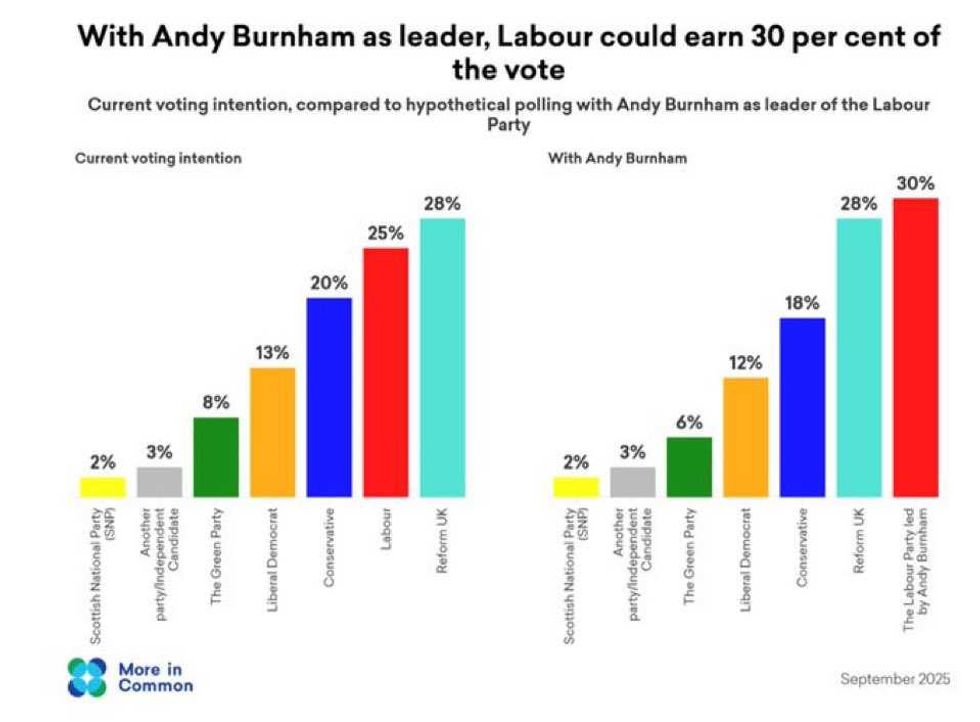
- The devolution debate: If Labour wins the next election, Burnham’s model could become the blueprint for a decentralized economy. But success will depend on whether other regions can secure similar funding deals.
- The private sector’s role: If businesses see Manchesterism as a one-off success rather than a scalable model, investment will dry up. The Times noted that firms like Siemens have praised the approach—but only because it offers stable, long-term subsidies.
- Labour’s internal divide: The party’s left wing remains skeptical. If Burnham becomes leader, he’ll need to reassure traditional supporters that his regionalism doesn’t mean abandoning socialist principles.
For now, Greater Manchester remains the only place where this model has been tested at scale. Whether it can become a national—or even international—phenomenon depends on whether Burnham can prove it’s more than just a local success story.
—
Frequently Asked Questions
Is Manchesterism the same as socialism?
No. While it uses state intervention to correct market failures, it avoids nationalization and wealth redistribution—the hallmarks of traditional socialism. Instead, it’s a form of localist economic planning that relies on public-private partnerships.
How has Manchester’s economy performed under Burnham’s model?
Since 2016, Greater Manchester’s GDP growth has outpaced the UK average by nearly 20%, according to Financial Times analysis. However, critics argue this success depends on continuous public subsidy, which may not be sustainable long-term.
Could this model work in other UK regions?
Possibly, but challenges remain. Only 10% of English regions have secured meaningful devolution deals, and private sector buy-in varies widely. Replicating Manchester’s success would require both greater funding and cross-party cooperation.
What would a Burnham-led Labour government do differently?
Expect more devolution, targeted regional investment, and a mix of traditional Labour policies (like higher taxes on wealth) with Manchester-style public-private partnerships. However, tensions with the party’s left wing would likely persist.
Is Manchesterism a threat to capitalism?
No. The model preserves private ownership while using state power to shape markets. It’s more aligned with Nordic-style social democracy than with socialist revolution.
What’s the biggest risk to Burnham’s approach?
The biggest threat is political sustainability. If public funding dries up or private sector support wanes, the model could collapse. Additionally, Labour’s left wing may reject it as too centrist, limiting its long-term viability.
—
Andy Burnham’s Greater Manchester experiment has already changed the political landscape. Whether it becomes a lasting economic model—or just another chapter in the UK’s devolution story—will depend on whether it can prove it’s more than a local success.
One thing is clear: the debate over what “socialism” really means in 2024 has never been more urgent.
