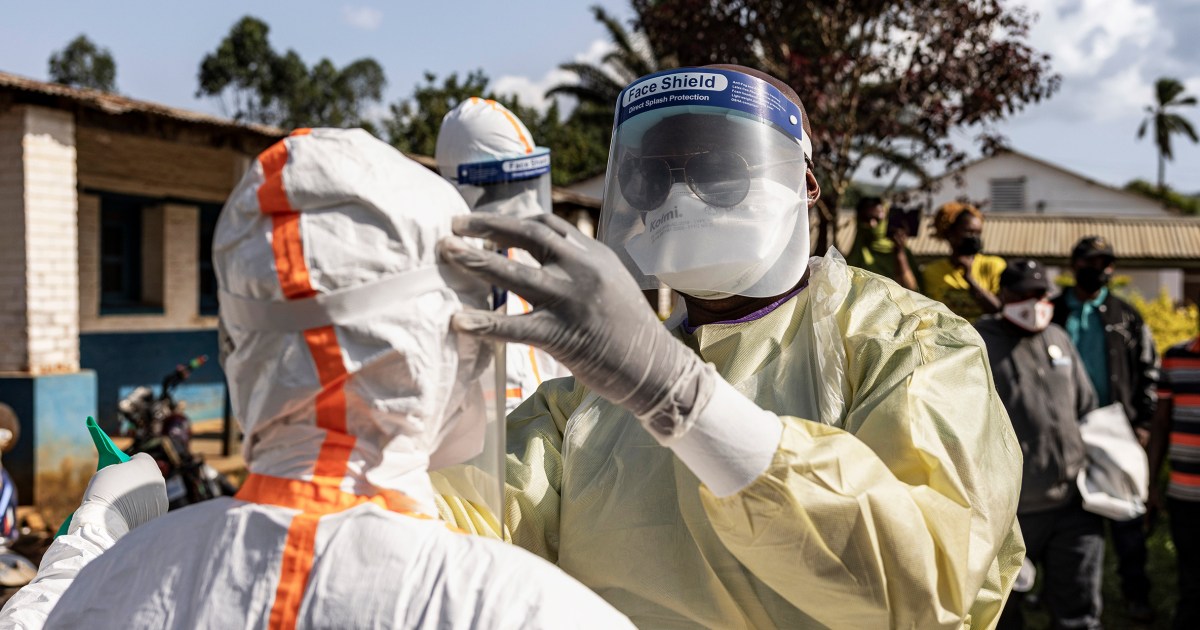
WHO adds first diagnostic test for Bundibugyo virus to emergency list
The World Health Organization has granted Emergency Use Listing to the first molecular diagnostic test for the Bundibugyo virus. This tool aims to assist health authorities in rapidly confirming infections during the ongoing outbreak.

On 2 July 2026, the World Health Organization (Who) added the first molecular diagnostic test for the Bundibugyo virus (BDBV) to its Emergency Use Listing (EUL). This regulatory milestone provides health authorities with a quality-assured tool to confirm infections rapidly during the ongoing outbreak in the Democratic Republic of the Congo (DRC) and Uganda.
As of 2 July 2026, the Democratic Republic of the Congo has reported 1,406 laboratory-confirmed cases and 438 deaths. The WHO Director-General declared the outbreak a Public Health Emergency of International Concern on 17 May 2026.
Related media


The EUL procedure assesses the quality, safety, and performance of health products, aiming to accelerate access to diagnostic tools in low- and middle-income countries. "Public health emergencies require not only speed, but also confidence that the health products being used meet standards for quality, safety and performance," said Dr. Yukiko Nakatani, WHO Assistant Director-General for Health Systems, Access and Data, via the WHO. "During a fast-moving outbreak, timely access to quality-assured diagnostic tests can make a critical difference in containing transmission. Through this Emergency Use Listing, WHO is helping countries access trusted diagnostic tools more rapidly so that they can respond more effectively."
Expanding Laboratory Infrastructure
The deployment of the new test occurs alongside a significant expansion of diagnostic capacity in the affected regions. Supported by the WHO and the Africa Centres for Disease Control and Prevention (Africa CDC), laboratory networks have grown from a limited number of sites—primarily the Institut National de Recherche Biomédicale in Kinshasa and Goma, with an estimated combined capacity of 200–400 tests per day—to a network of 10 laboratories capable of processing over 2,000 tests daily. This expansion addresses a critical bottleneck, as earlier tests optimized for the Zaire ebolavirus species were unable to detect the Bundibugyo strain, leading to diagnostic delays.
Validation and Future Diagnostics
The WHO, in collaboration with the Africa CDC, PATH, FIND, the Clinton Health Access Initiative (CHAI), and Unitaid, is establishing a joint validation platform. This platform aims to evaluate a wider range of diagnostic tools, including laboratory-based molecular tests, near-point-of-care molecular tests, and antigen rapid diagnostic tests (AgRDTs). The initiative follows an Expression of Interest process that closed on 11 June 2026, which yielded 83 eligible submissions from manufacturers.
Currently, the RADI Ebolavirus Detection Kit on the RADIONE platform is the only near-point-of-care molecular test operationally deployed in the field, though availability remains constrained. While antigen-based rapid tests are viewed as a critical need for community-level decision-making, the Africa CDC’s Diagnostics Advisory Committee noted that no antigen RDT currently meets the required target product profile for widespread recommendation.
Medical Countermeasures
There are currently no vaccines or therapeutics specifically indicated for the Bundibugyo virus. Licensed Ebola treatments, such as Inmazeb and Ebanga, are designed for the Zaire ebolavirus and are not effective against BDBV. Research is ongoing; the PARTNERS adaptive platform trial is evaluating candidates including MBP134 and remdesivir. Additionally, vaccine candidates like rVSV-BDBV-GP and ChAdOx1-BDBV are being prioritized for near-term evaluation. The WHO continues to review additional applications for BDBV diagnostics under its EUL pathway, with further updates expected as more products move through the regulatory process.
How significant is this development?
Contribute your assessment to the aggregated reader intelligence ledger.
Archypedia is dedicated to independent, evidence-backed reporting. This briefing was synthesized from primary source reporting, corroborated across independent newsrooms, and verified against our Editorial Standards.
Transparency record
Evidence behind this report
This report synthesizes 12 distinct sources. Open the source ledger below to compare the underlying coverage.
- ippsecretariat.org
- who.int
- linkedin.com
- devdiscourse.com
- pressclubai.com
- africacdc.org
- gktoday.in
- reliefweb.int
- healthandfamily.in
- diagnostics.roche.com
- miragenews.com
- trtworld.com
Prepared under the Archypedia Editorial Policy by the Lina Park editorial desk profile. AI-assisted tools may support drafting and verification; public accountability remains with Archypedia. Report an error.