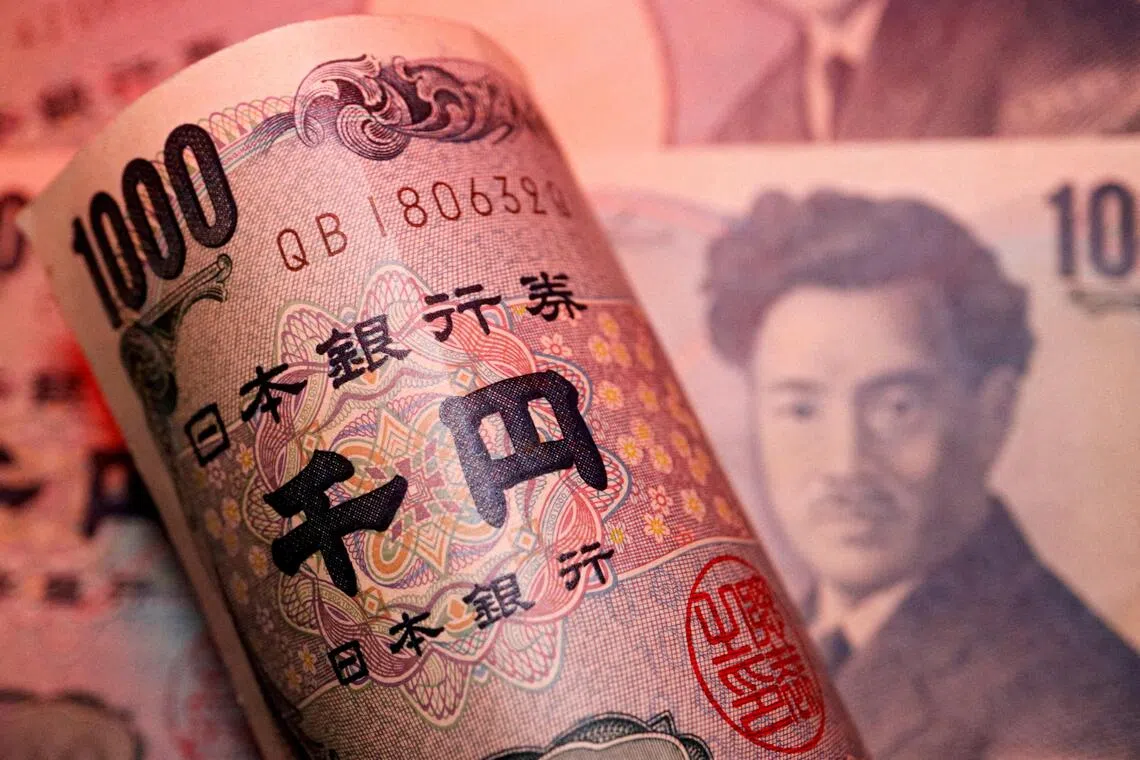
Japan and US confirm rare joint intervention to prop up yen
The coordinated yen-buying operation marks a rare bilateral effort to curb excessive volatility after Japan's solitary interventions and interest rate hikes failed to stabilize the currency.
Japan's solitary attempts to stabilize its currency throughout the spring failed to produce more than brief rebounds. Interventions in late April and May, coupled with a June interest rate hike to 1% — a 31-year high — offered little lasting support for the yen. However, the market shifted on Monday, August 3, 2026, after the U.S. And Japan confirmed a rare coordinated yen-buying operation to halt the currency's slide toward fresh 40-year lows.
The confirmation sparked a sudden jump in the yen, which firmed 0.5% to 156.47 per U.S. Dollar. This bilateral action represents the first joint intervention since 2011, when the two nations worked together to weaken the yen following a devastating earthquake in eastern Japan.
Related YouTube video


The scale of the effort reflects the desperation of Tokyo to curb a relentless decline that has pushed the yen toward 163.99 per U.S. Dollar. Bank of Japan data indicates that Japan may have sold as much as $58.97 billion to buy yen during New York market interventions on Thursday, before the joint action confirmed for Friday. U.S. Regulator data showed net short positions on the yen at roughly $12.5 billion, the highest level in two years.
The sliding yen increases the cost of imports, stoking broader inflation that directly impacts household budgets and has eroded the public approval ratings of Prime Minister Sanae Takaichi.
The "Backstop" Strategy
U.S. Treasury Secretary Scott Bessent confirmed that Washington is considering increasing the size of the Federal Reserve's repurchase facility in the coming months. This facility, established in 2020 during the pandemic, serves as an important backstop
by providing temporary dollar liquidity.
This mechanism is critical because it allows Japan to raise dollar liquidity without outright sales of U.S. Treasuries. By avoiding a mass dump of Treasuries, Tokyo can intervene in the currency market without inadvertently pushing U.S. Treasury yields higher, which analysts say could create dangerous global spillovers.
U.S. President Donald Trump stated on Sunday that the U.S. Was helping prop up the yen as a sign of friendship
and to support the global economy.
"They have a weakening yen, and they wanted a little bit of help. And we're always there for Japan,"
Donald Trump, U.S. President, via Mandurah Mail
The intent to intervene was captured in a Reuters photo showing a handwritten To Do
list at a Cabinet meeting belonging to Secretary Bessent, which explicitly noted: Buy Japanese Yen (JPY) $5-10 bil
.
Structural Resistance
Tsuyoshi Ueno, a senior economist at NLI Research Institute, noted that while the announcement effect is larger than a solo action, the underlying fundamentals driving the weakness have not changed. He suggested that one-sided yen rises are unlikely because the market will challenge the moves once the intervention is perceived as complete.
The primary structural frictions include:
- Interest Rate Gaps: A wide differential between Japanese and U.S. Rates continues to make the yen less attractive to investors.
- Energy Costs: Rising fuel prices driven by conflict in the Middle East put persistent downward pressure on the currency.
- Market Volatility: Recent swings in Asian stocks, including a nearly 2% dip in the Nikkei, have been exacerbated by investor anxiety over capital spending and returns in the AI trade, according to Yahoo Finance.
The 2-year Japanese Government Bond (JGB) yield, which is most sensitive to near-term policy, briefly hit 1.545% on Monday, the highest level since 1995. This spike indicates that markets are now pricing in the possibility of an accelerated timeline for monetary tightening.
The focus now shifts to the Bank of Japan's September policy meeting. Having already signaled the scope for a rate hike, the central bank must decide if it will move early to align with the Treasury's calls for higher rates and provide a fundamental floor for the yen's value.
Coordinated Timeline and Regional Ripples
The bilateral effort culminated on Friday, with the Japanese Ministry of Finance and the U.S. Treasury Department conducting coordinated yen-buying operations. South Korea stepped in to buy its won currency on Thursday. Japan may have sold as much as $58.97 billion to buy yen when it intervened in New York markets on Thursday, Bank of Japan data indicated.
The intervention aimed to reverse a trend that saw the yen hit a 40-year high near 164 per dollar late last month. While the dollar fell 0.2% to 157.07 yen immediately following President Trump's Sunday remarks, the confirmation of joint action on Monday pushed the currency further to an intraday low of 156.50, according to The Globe and Mail.
Analysts told The Globe and Mail that the resolve to prevent a yen sell-off is tied to avoiding a collapse in Japanese Government Bonds (JGBs), which could trigger global spillovers by driving up U.S. Treasury yields. This fear was evident in the 30-year U.S. Bond yield, which had jumped 372 basis points in July amid confusion over the Iran war and Federal Reserve policy, before easing to 5.238% on Monday as oil prices dropped.
The Ministry of Finance stated that the move countered excessive volatility and disorderly movements
and confirmed it remains in close communication with the U.S. Treasury. Secretary Bessent echoed this on X, stating Washington will not hesitate to participate in further joint intervention
to correct the substantial undervaluation
of the currency.
Japan's top currency diplomat, Atsushi Mimura, told reporters that the government will continue to align its actions with the Bank of Japan's monetary policy. Given that the central bank kept policy steady on Friday while offering its most explicit signal yet of an early rate hike, the next step depends on whether the BOJ implements that hike at its September policy meeting.
How significant is this development?
Contribute your assessment to the aggregated reader intelligence ledger.
Archypedia is dedicated to independent, evidence-backed reporting. This briefing was synthesized from primary source reporting, corroborated across independent newsrooms, and verified against our Editorial Standards.
Transparency record
Evidence behind this report
This report synthesizes 4 distinct sources. Open the source ledger below to compare the underlying coverage.
Prepared under the Archypedia Editorial Policy by the Elena Voss editorial desk profile. AI-assisted tools may support drafting and verification; public accountability remains with Archypedia. Report an error.