US Treasury prepares toughest sanctions in history to isolate Iran
Treasury Secretary Scott Bessent signals a shift toward economic warfare following the failure of a June Memorandum of Understanding, while Iran threatens nations participating in the economic war.
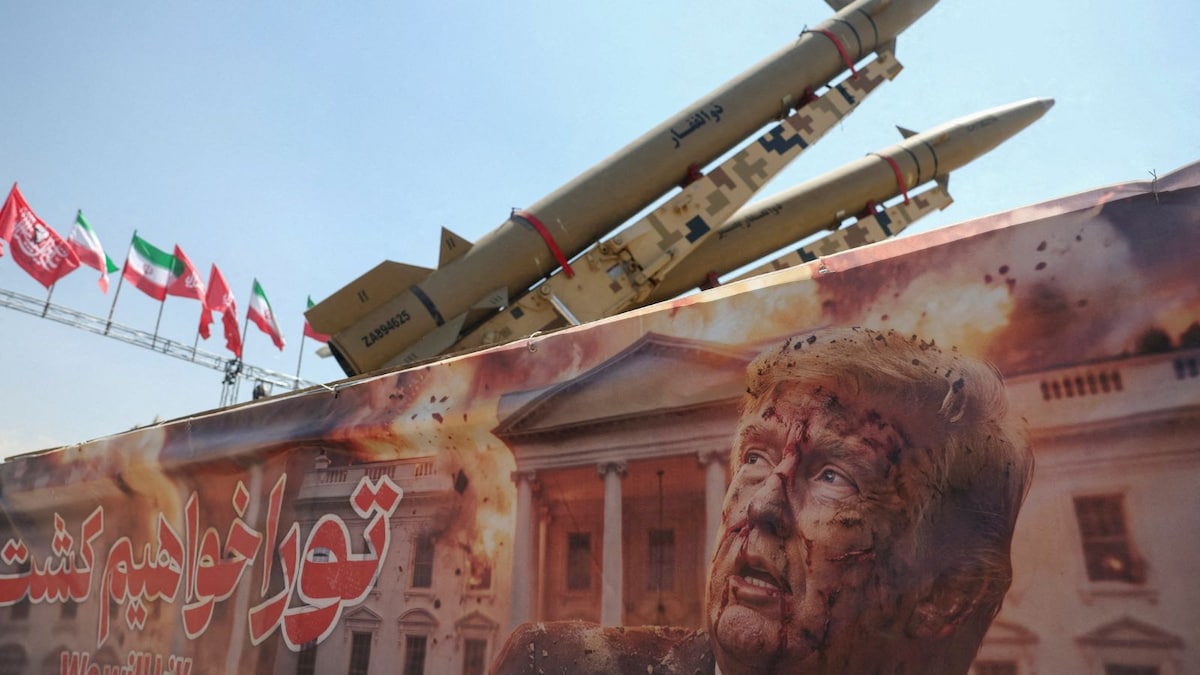
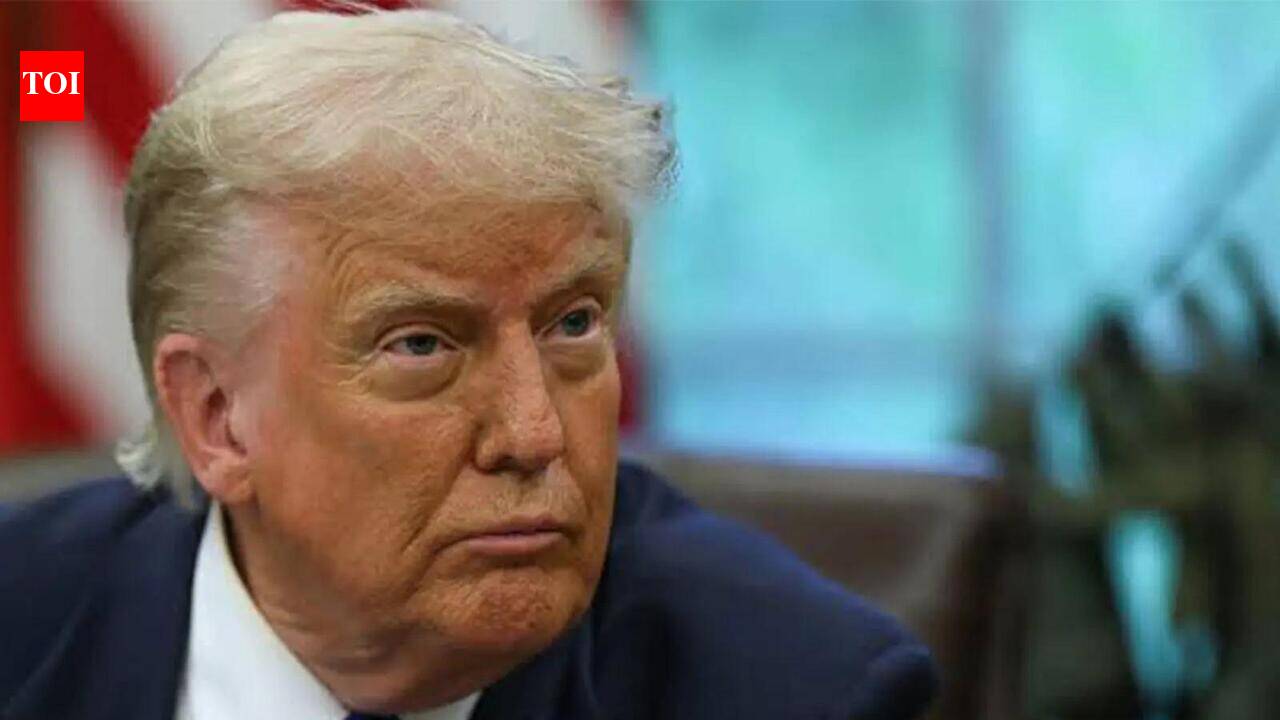
Donald Trump has declared that Iran is completely collapsing
, posting the claim to his social media platform on Monday. But for Ahmad Karimi, a taxi driver in Iran working 15-hour days to support his family, the collapse is not a geopolitical abstraction but a daily struggle for calories. Karimi told AP that his family has been forced to cut protein and fruit from their diets and abandon all leisure activities as the rial hit a record low of 2 million to the US dollar in informal markets.
The contrast between the White House rhetoric and the street-level reality arrives as the US Treasury prepares to unveil what it calls the toughest sanctions in history. Treasury Secretary Scott Bessent described the upcoming package as the single greatest financial offensive ever marshalled against an adversary
, signaling a shift from military strikes to a strategy Trump has termed an economic D-Day
. The objective, according to Bessent, is to sever every economic lifeline
sustaining the Islamic Republic.
Related YouTube video

This pivot to economic warfare follows the failure of a June Memorandum of Understanding. The agreement, which President Masoud Pezeshkian defended as a path to avoid a state of neither war nor peace
, set a 60-day deadline to end the conflict and reach an accord on Iran's nuclear program. That window closed last week with both sides declaring the deal abandoned, leaving no compromise on the reopening of the Strait of Hormuz.
The resulting financial offensive carries a secondary threat: any country providing a lifeline to Iran
faces US sanctions. Bessent has urged Iran's allies to sever ties, arguing that doing so would reinforce their own standing in the global economy. Iran has countered by declaring that any nation participating in this economic war
will be considered an enemy. Mohsen Rezaei, secretary of Iran's Supreme National Security Council, warned that Tehran would harm
the interests of such countries.
The struggle for control over the Strait of Hormuz has already caused a precipitous drop in energy flows. According to the oil-shipping tracking service TankerTrackers, Middle East crude exports crossing the US Navy blockade line fell to nearly 6 million barrels per day (bpd) over the last seven days, a sharp decline from the 19 million bpd recorded in February.
Tehran is attempting to weaponize the waterway in response. The newly established Persian Gulf Strait Authority has blacklisted 45 tankers, including vessels linked to Bahri, Navig8 Tankers, and ADNOC Logistics & Shipping, accusing them of violating transit rules. While Iran has not specified the violations, it has previously demanded that ships obtain clearance and pay for security services. Iran's parliamentary National Security and Foreign Policy Commission has approved a draft requiring authorized vessels to pay for these services in rials or another designated currency; Reuters reports Iran has sought charges between 5% and 7% of a vessel's cargo value.
The ripples of the conflict are extending beyond the Persian Gulf:
- Maritime Escalation: Iran-aligned Houthis claimed on Monday to have struck the Saudi oil tanker Amzan with a ballistic missile off the coast of Yanbu, a critical alternative route for Saudi crude.
- European Defense: Local media reports indicate the Greek military moved a Patriot missile battery from Karpathos to the island of Crete, near the Souda US base, following Iranian threats to hit US military installations in Europe.
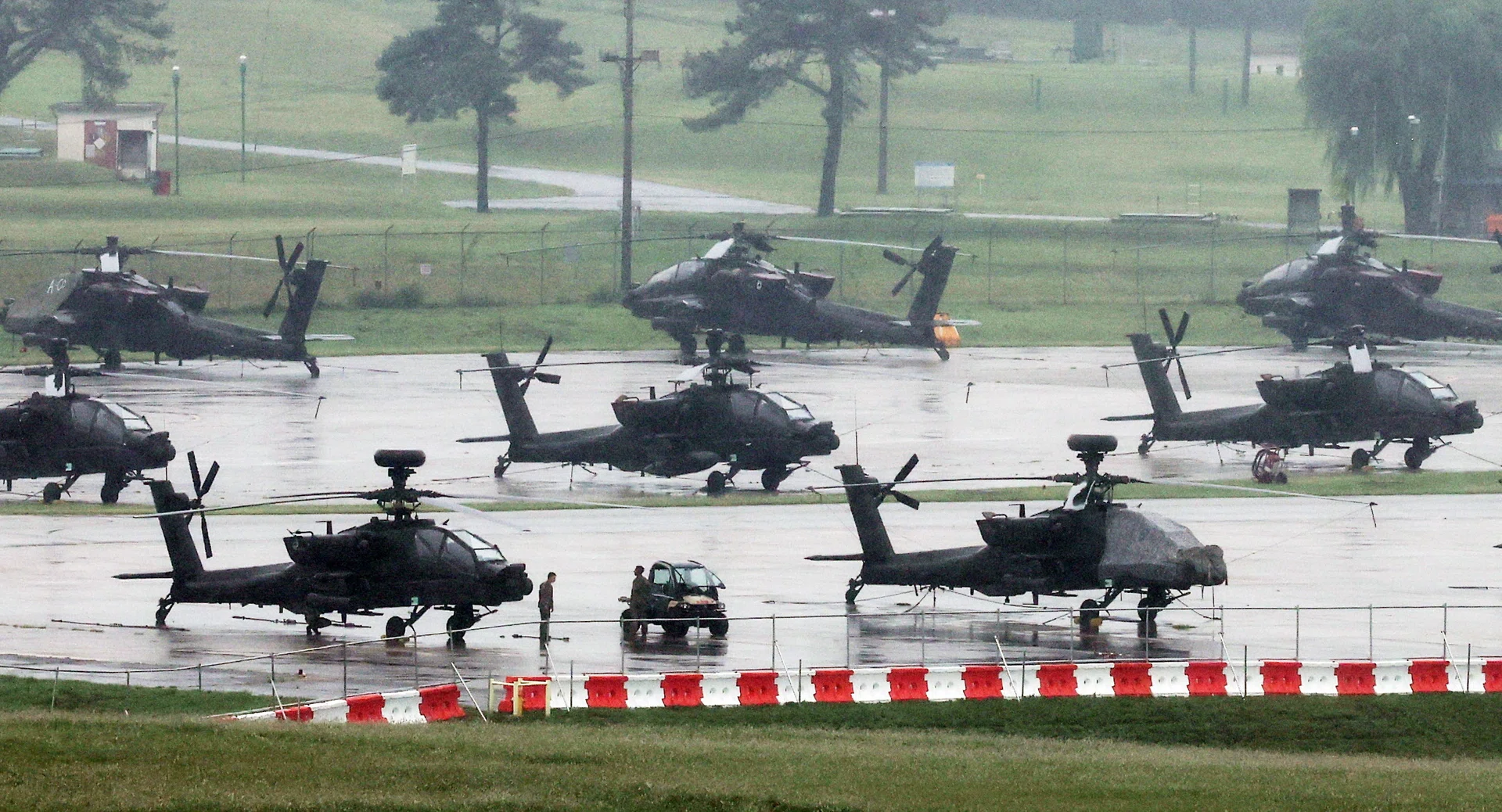
- Asian Security: The US canceled the Ssangyong joint amphibious landing exercise with South Korea scheduled for next month, citing force constraints due to the war in Iran.
Despite the pressure, Iranian officials insist the strategy is flawed. Central Bank Governor Abdolnaser Hemmati compared the current situation to the maximum pressure
campaign of Trump's first term, arguing that the country survived those conditions and will do so again. Brigadier General Hossein Mohebbi, a Revolutionary Guard spokesman, added that Iran's missile production continues.
Diplomatic attempts to break the stalemate remain active. Pakistan's Army Chief Asim Munir visited Tehran on Monday after speaking with President Trump last week. Munir, who is thought to have a personal rapport with Trump, is attempting to mediate based on an Islamabad-proposed agreement. Simultaneously, Oman's foreign minister is scheduled to visit Tehran on Tuesday to discuss the management and transit of the Strait of Hormuz.
The immediate consequence of these tensions is appearing in the security apparatus of the Iranian state. National police chief Brig. Gen. Ahmad-Reza Radan warned on Monday that adversaries are attempting to exploit grievances over unemployment and gasoline prices to trigger national unrest, urging police to identify hidden networks
on social media.
The global market remains on edge, with Brent crude futures falling to $93.17 a barrel on Monday as investors await the specific mechanics of the US Treasury's plan. The precision of the "economic D-Day" will be revealed during a scheduled press conference by Secretary Scott Bessent.
How significant is this development?
Contribute your assessment to the aggregated reader intelligence ledger.
Archypedia is dedicated to independent, evidence-backed reporting. This briefing was synthesized from primary source reporting, corroborated across independent newsrooms, and verified against our Editorial Standards.
Transparency record
Evidence behind this report
This report synthesizes 5 distinct sources. Open the source ledger below to compare the underlying coverage.
Prepared under the Archypedia Editorial Policy by the Samir Haddad editorial desk profile. AI-assisted tools may support drafting and verification; public accountability remains with Archypedia. Report an error.


