US military launches new strikes on Iran as regional attacks escalate
US forces have intensified operations against Iran following the closure of the Strait of Hormuz and retaliatory strikes across the Gulf region. These actions occur as diplomatic efforts to secure the maritime corridor reach a stalemate.
The United States military launched a fresh wave of strikes against Iran on 13 July 2026, following intensive operations throughout 12 July. According to US Central Command, the strikes were intended to degrade Iran’s capacity to threaten civilian mariners and commercial vessels within the Strait of Hormuz. The military operations included the use of precision-guided munitions deployed by fighter aircraft, naval vessels, and, for the first time in the current conflict, one-way attack sea drones. These latest actions bring the total number of Iranian targets struck by the United States over the past week to more than 300, according to military officials.
Conflict in the Strait of Hormuz
The Strait of Hormuz, a critical maritime corridor for global energy trade, remains the central point of the ongoing standoff. On 12 July, the Islamic Revolutionary Guard Corps (IRGC) declared the waterway closed until further notice, citing what it described as illegal American interference and the use of an unauthorized shipping route near the Omani coastline. Iran’s Parliament speaker and lead negotiator, Mohammad Bagher Qalibaf, stated, The era of one-sided deals is OVER.
The IRGC further asserted that the strait is Iranian territory.
Related media

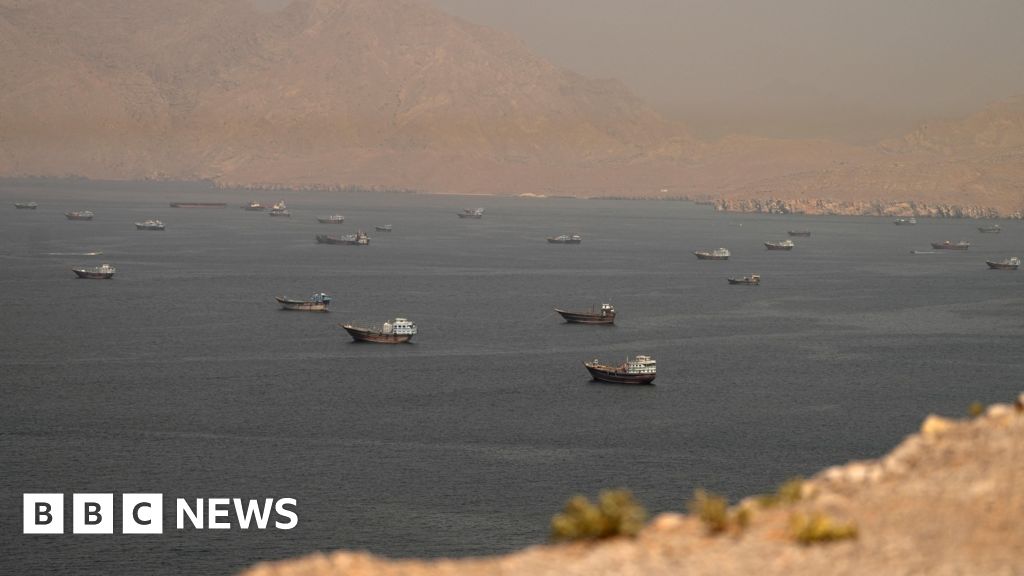
Conversely, President Donald Trump and US Central Command maintain that the strait remains open to international traffic. The United States has been promoting a southern shipping route closer to Oman to bypass Iranian coastal zones, a strategy Tehran strongly rejects. Trump, in remarks to the press, described the situation as an escalation following an Iranian attack on the container ship GFS Galaxy. The vessel was left ablaze in the strait, forcing its crew to abandon ship. While Omani authorities rescued 23 crew members, one civilian remains missing.
Regional Retaliation
In response to the US strikes, Iranian forces launched projectiles across the Gulf region on 12 July and 13 July, expanding the scope of the hostilities to include several US-allied nations:
- Jordan: Iranian missiles struck the Prince Hassan Air Base. The IRGC claimed the strikes destroyed a command-and-control center and drone hangars, though Jordanian military officials reported no casualties and only minor damage.
- Kuwait: Attacks damaged three northern border posts and an offshore oil drilling platform operated by the Kuwait Oil Company, injuring one worker.
- Qatar: Strikes targeted military infrastructure. Falling debris caused injuries to three people, including a child.
- Bahrain: Air raid sirens sounded multiple times as authorities intercepted incoming fire.
- Oman: The Sultanate reported drone attacks in its northern Musandam exclave and at the Port of Duqm. Oman formally protested the incidents, which occurred shortly after the country hosted Iranian diplomatic representatives.
- United Arab Emirates: The UAE reported that its air defenses intercepted Iranian missile and drone attacks.
Diplomatic Stagnation
The renewed fighting has cast doubt on the viability of an interim agreement reached last month, which had aimed to restore maritime security and provide a framework for future negotiations. Despite the collapse of the latest talks, mediators from Pakistan, Qatar, and Egypt continue to call for de-escalation. United Nations Secretary-General António Guterres issued a statement through his spokesperson, warning that these attacks must stop
and that a return to full-scale regional warfare would carry catastrophic consequences.
Meanwhile, leadership stances remain entrenched. Supreme Leader Mojtaba Khamenei has publicly vowed to avenge the death of his predecessor and father, Ali Khamenei.
Archypedia is dedicated to independent, evidence-backed reporting. This briefing was synthesized from primary source reporting, corroborated across independent newsrooms, and verified against our Editorial Standards.
Transparency record
Evidence behind this report
This report synthesizes 12 distinct sources. Open the source ledger below to compare the underlying coverage.
- businessday.ng
- abc.net.au
- yahoo.com
- economictimes.indiatimes.com
- apnews.com
- usatoday.com
- econotimes.com
- independent.co.uk
- rferl.org
- dailymail.com
- finance.yahoo.com
- thenightly.com.au
Prepared under the Archypedia Editorial Policy by the Samir Haddad editorial desk profile. AI-assisted tools may support drafting and verification; public accountability remains with Archypedia. Report an error.