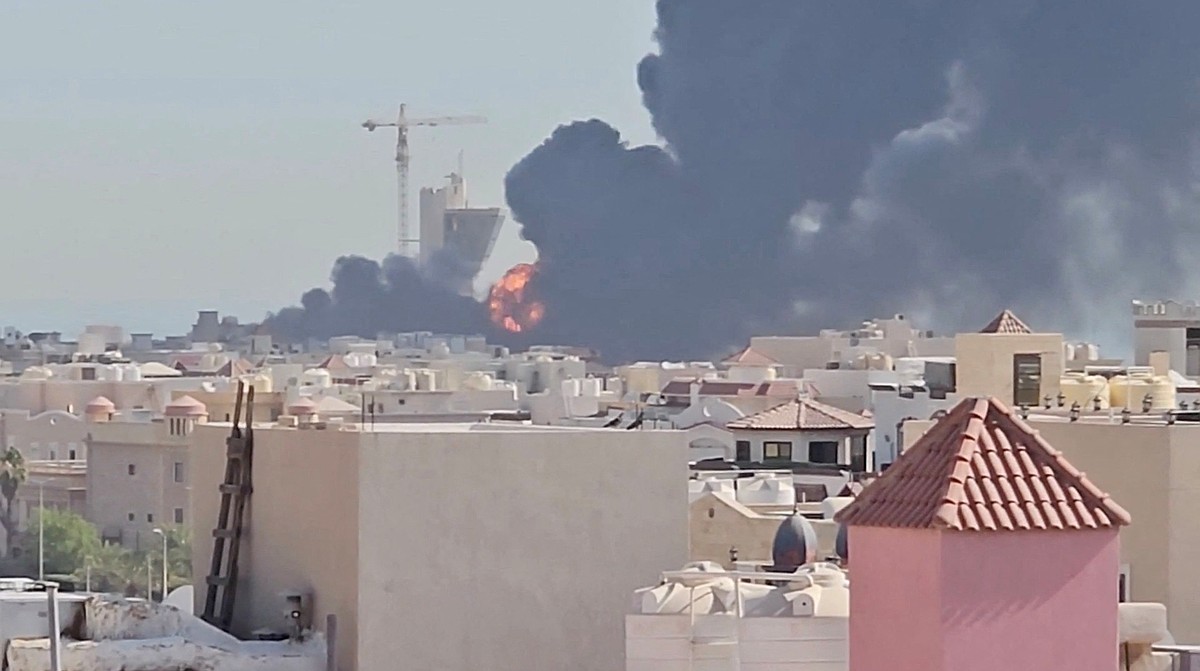
US launches fresh strikes on Iran as regional fighting escalates
Escalating clashes have triggered a blockade of the Strait of Hormuz, driving up oil prices and causing internal friction within the US government.

President Donald Trump claims the United States now has almost total control
of the Strait of Hormuz, even suggesting on social media that the strategic waterway be renamed the Trump Strait
. At the same time, Iranian state media has broadcast footage of a hole ripped through the roof of a residential home in the village of Kuhestak, where a missile strike during a wedding celebration left children dead and dozens of guests wounded.
Following fresh U.S. Strikes on Iranian air defenses, radar, and communications, Tehran launched retaliatory missile and drone attacks against U.S.-linked targets in Kuwait and the United Arab Emirates, while Jordan reported intercepting 10 missiles targeting the Prince Hassan Air Base.
Related YouTube video

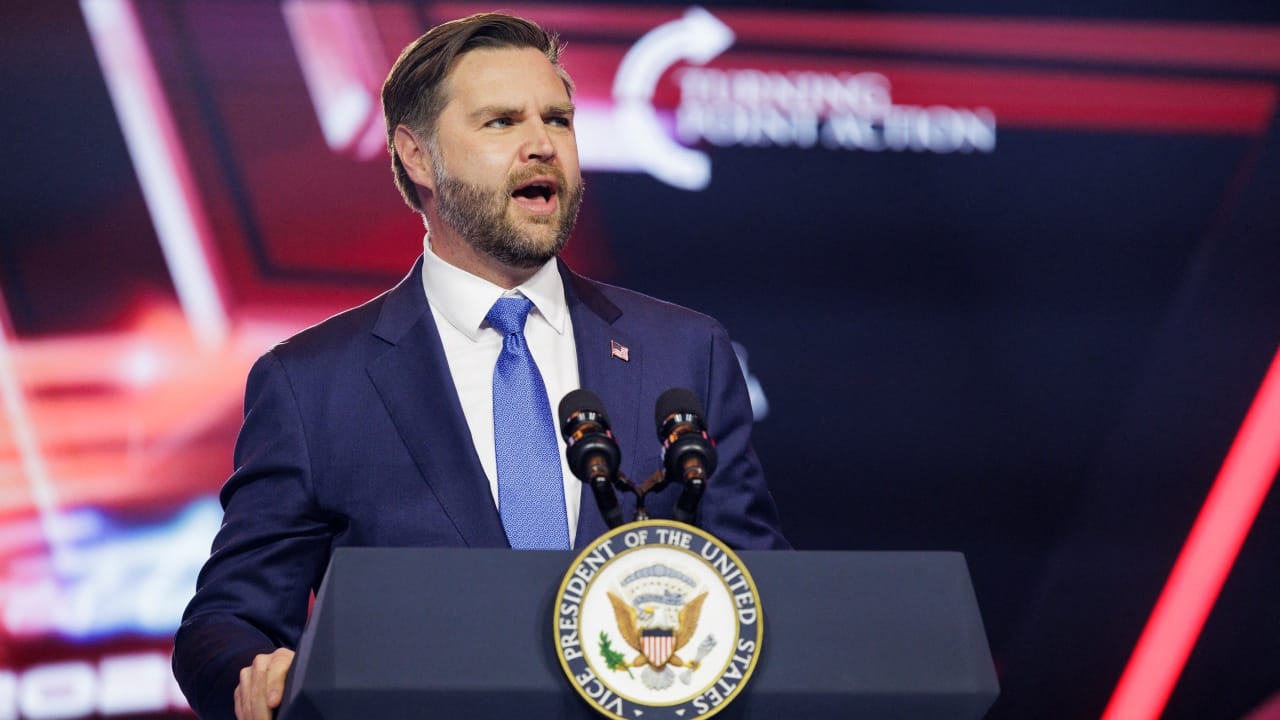

The human cost of the latest clashes is sharply contested. Iranian officials and the Red Crescent report that the strike in Kuhestak killed at least five people, including a 4-year-old and a 16-year-old, and wounded between 50 and 68 others. A local hospital chief stated that most of the 70 admitted patients were women and children. U.S. Vice President JD Vance said he is extremely skeptical
of these claims, arguing that Iranian state media has not been a very good scribe
during the conflict.
While the U.S. Military is investigating the incident, Vice President Vance maintained that the U.S. Never targets civilians. Conversely, Iranian First Vice President Mohammad Reza Aref warned that these new crimes
have changed Iran's defense doctrine, prompting a shift toward asymmetric
and multilayered
retaliation.
The conflict has also triggered a semantic battle within the U.S. Government over whether the country is actually at war. The current status of the engagement is blurred:
- The White House: Vice President Vance stated,
I wouldn't call it a war
, asserting that major combat operations ended after approximately six weeks and that there is currentlyno active shooting
. - The Pentagon: Internal emails from August show personnel were instructed to stop using the term
Operation Epic Fury
, as the administration declared that stage over on May 5. - The President: Donald Trump has referred to the situation as a war and recently used social media to correct Secretary of Commerce Howard Lutnick, who had claimed no Americans were killed.
This internal disagreement extends to the accounting of dead service members. While the Pentagon's database listed 14 casualties under Operation Epic Fury, President Trump publicly stated that 18 people were killed in Iran!
This discrepancy follows a move by the Pentagon to remove four service members killed in Jordan and Iraq in July from the specific Iran war casualty list.
Beyond the military tolls, the blockade of the Strait of Hormuz—through which one-fifth of the world's oil flows—is hitting American consumers. Brent crude has climbed to over $97 a barrel, its highest point since July 23. In the U.S., the average price for a gallon of regular gas reached $4.14, nearly a dollar higher than a year ago.
President Trump has met with nearly a dozen refiners and distributors to discuss expanding refining capacity and has openly accused retailers of price gouging. Meanwhile, the physical toll on the U.S. Military is mounting; 5,000 sailors and Marines recently departed the USS Abraham Lincoln after a grueling nine-month deployment, a record length of time at sea.
The regional instability has expanded into Yemen, where Houthi forces launched 14 ballistic missiles toward the western coast, including areas around Mokha and Khokha. A Houthi military source told Al-Akhbar that the transit of all Saudi commercial ships and oil tankers in the southern Red Sea has been halted.
Despite the violence, a diplomatic window remains partially open. Iranian President Masoud Pezeshkian has stated that Tehran is prepared to return to an interim ceasefire if Washington agrees to do the same. However, Vice President Vance has insisted the U.S. Will not negotiate as long as attacks on commercial shipping continue in the Strait of Hormuz.
Escalation of Regional Strikes
Among the dead, the Tasnim news agency reported six members of Iran's naval forces, including three pilots. In response, Tehran launched attacks targeting U.S. Bases and forces in the UAE, and Kuwait.
While Iran's army claimed to have hit satellite installations, warehouses, and fighter jet hangars at the Ahmed Al-Jaber Air Base in Kuwait, as well as the Al Minhad Air Base in the UAE, the outcomes are disputed. A U.S. Official confirmed to CBS News that no military facilities where Americans are based were impacted. Kuwaiti authorities reported intercepting the incoming weapons, describing the event as a flagrant violation of sovereignty.
The geopolitical tension extends to Israel, where Prime Minister Benjamin Netanyahu stated that the Iranian regime is teetering
and weaker than ever
.
Beyond military strikes, Washington is pursuing an economic offensive. This financial strategy is supported by the European Union, which has officially joined Operation Economic Outcast.
The diplomatic path remains blocked by the maritime crisis. While Iranian President Masoud Pezeshkian expressed readiness for a ceasefire, the U.S. Remains firm. According to Vice President Vance, the next step depends entirely on Tehran, as the U.S. Will not negotiate until Iran stops shooting at commercial shipping in the Strait of Hormuz.
Archypedia is dedicated to independent, evidence-backed reporting. This briefing was synthesized from primary source reporting, corroborated across independent newsrooms, and verified against our Editorial Standards.
Transparency record
Evidence behind this report
This report synthesizes 6 distinct sources. Open the source ledger below to compare the underlying coverage.
Prepared under the Archypedia Editorial Policy by the Samir Haddad editorial desk profile. AI-assisted tools may support drafting and verification; public accountability remains with Archypedia. Report an error.