US and Israel consider land blockade to increase economic pressure on Iran
The proposed strategy involves sealing all land borders to isolate Tehran, though success depends on persuading neighbor nations to risk Iranian retaliation.

A strategy to isolate Iran by sealing its land borders is currently under discussion between the United States and Israel, a plan that would require the cooperation of seven different nations to execute. The proposal aims to cripple Tehran's economy by restricting the flow of all imports and exports, but its success depends on persuading neighbors—some of whom are not U.S. Allies—to risk retaliatory military strikes from the Islamic Republic.
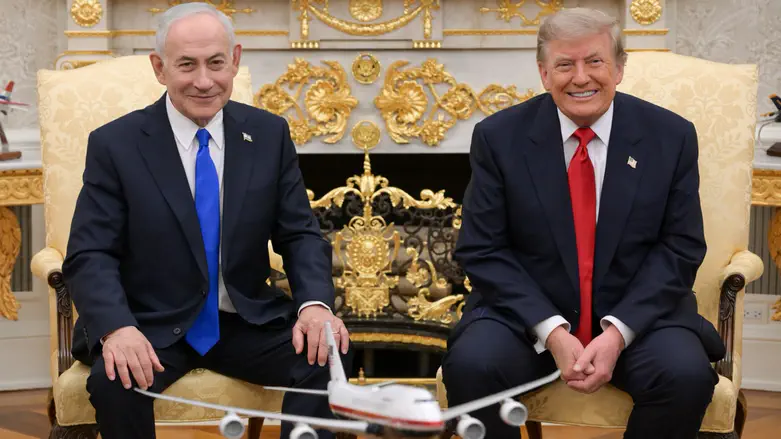
The plan was one of several options discussed by Donald Trump and Benjamin Netanyahu during an Oval Office meeting on Tuesday. According to The Telegraph, the leaders explored increasing economic pressure through kinetic and non-kinetic means
after months of strikes and a prolonged campaign failed to produce the desired results. The discussions are driven by Donald Trump's belief that his current strategy to reopen the Strait of Hormuz has reached its limit.
Related YouTube video

The proposed blockade would target the seven countries that share a land border with Iran: Iraq, Turkey, Pakistan, Afghanistan, Turkmenistan, Armenia, and Azerbaijan. Specifically, the plan could target border crossings such as Sarakhs-Sarahs and Incheh Borun, which connect Iran to Turkmenistan.
While the goal is total economic isolation, the practical geography presents a significant hurdle. Retired three-star lieutenant general Sean MacFarland told The Telegraph that such a blockade would be almost impossible
because Iraq is very aligned with Iran
. Washington may view Iraq and Pakistan as weak links
in the chain, as neither is considered a close ally in the region.
Beyond diplomacy, the blockade has a specific military objective: stopping the arrival of advanced weaponry. Tehran is expecting a $70m contract of hundreds of Chinese rocket launchers, including man-portable air defence systems (Manpads) and anti-aircraft missiles. Ships transporting these systems from Beijing have previously stopped at the southern Iranian ports of Chabahar and Bandar Abbas.
The proposal is not the only path forward. During the Tuesday meeting, officials said three primary options were discussed: pursuing a deal, continuing the naval blockade, and resuming strikes. Benjamin Netanyahu reportedly did not push for any single one of these options.
Internal fractures within the Iranian leadership may provide the opening the U.S. And Israel seek. Intelligence suggests a split between Iranian leaders who believe the war must continue and those fearing a total economic collapse. Evidence of this strain is already appearing internally; a senior Israeli official told The Telegraph there are very severe gas shortages inside Iran
, with queues forming at gas stations that have run out of diesel fuel.
There is, however, the possibility that the land blockade is not the intended goal. The Telegraph reports that the plan may have been floated as a red herring
designed to distract Tehran from the actual next step in the U.S.-Israeli strategy.
The geopolitical tension has accelerated since February 28, when the U.S. And Israel launched a war against Iran, according to TASS. While a memorandum of understanding signed in June called for a cessation of hostilities, the U.S. Resumed strikes on July 8, accusing Iran of violating agreements regarding the Strait of Hormuz.
The most recent escalation occurred this week. Following a surprise
Iranian strike on U.S. Bases in Jordan on Tuesday night, the U.S. Conducted a heavy wave of strikes
against Iran overnight Wednesday.
In the wake of these renewed hostilities, a White House official stated that the commander-in-chief has all options at his disposal
.
Risks to Regional Partners
The effectiveness of the land blockade depends on the willingness of seven nations to risk the consequences of cooperating with Washington and Jerusalem. According to TASS, countries including Azerbaijan, Armenia, Afghanistan, Turkmenistan, and Turkey would face the threat of retaliatory measures from Tehran, which could include military strikes, should they agree to the plan.
This diplomatic push follows a pattern of escalation and brief pauses in hostilities. While the U.S. And Israel launched a war against Iran on February 28, a June memorandum of understanding temporarily called for a cessation of hostilities on all fronts, including in Lebanon. That peace lasted until July 8, when the U.S. Resumed strikes due to alleged Iranian violations regarding the Strait of Hormuz, as reported by Tass.
For the U.S., the shift toward land-based pressure is a response to the perceived exhaustion of maritime strategies. A source familiar with the discussions told The Telegraph that Donald Trump believes his current strategy to reopen the Strait of Hormuz has run its course, necessitating new escalation measures to force Tehran back to the negotiating table. This coincides with a reported split in Iranian leadership between those favoring continued war and those fearing total economic collapse, a situation highlighted by diesel fuel shortages and queues at gas stations.
The outcome of the strategy remains uncertain, as the land blockade may be a diversion. In that scenario, the proposal serves as a red herring to mislead Tehran while the U.S. And Israel determine the next step among the three primary options: reaching a deal, continuing the naval blockade, or resuming strikes.
Archypedia is dedicated to independent, evidence-backed reporting. This briefing was synthesized from primary source reporting, corroborated across independent newsrooms, and verified against our Editorial Standards.
Transparency record
Evidence behind this report
This report synthesizes 4 distinct sources. Open the source ledger below to compare the underlying coverage.
Prepared under the Archypedia Editorial Policy by the Samir Haddad editorial desk profile. AI-assisted tools may support drafting and verification; public accountability remains with Archypedia. Report an error.