Skyroot Aerospace launches India's first private orbital rocket
Skyroot Aerospace successfully launched the Vikram-1 rocket, marking the first time a private Indian enterprise has deployed payloads into low-Earth orbit. The mission represents a major milestone in the country's expanding commercial space economy.

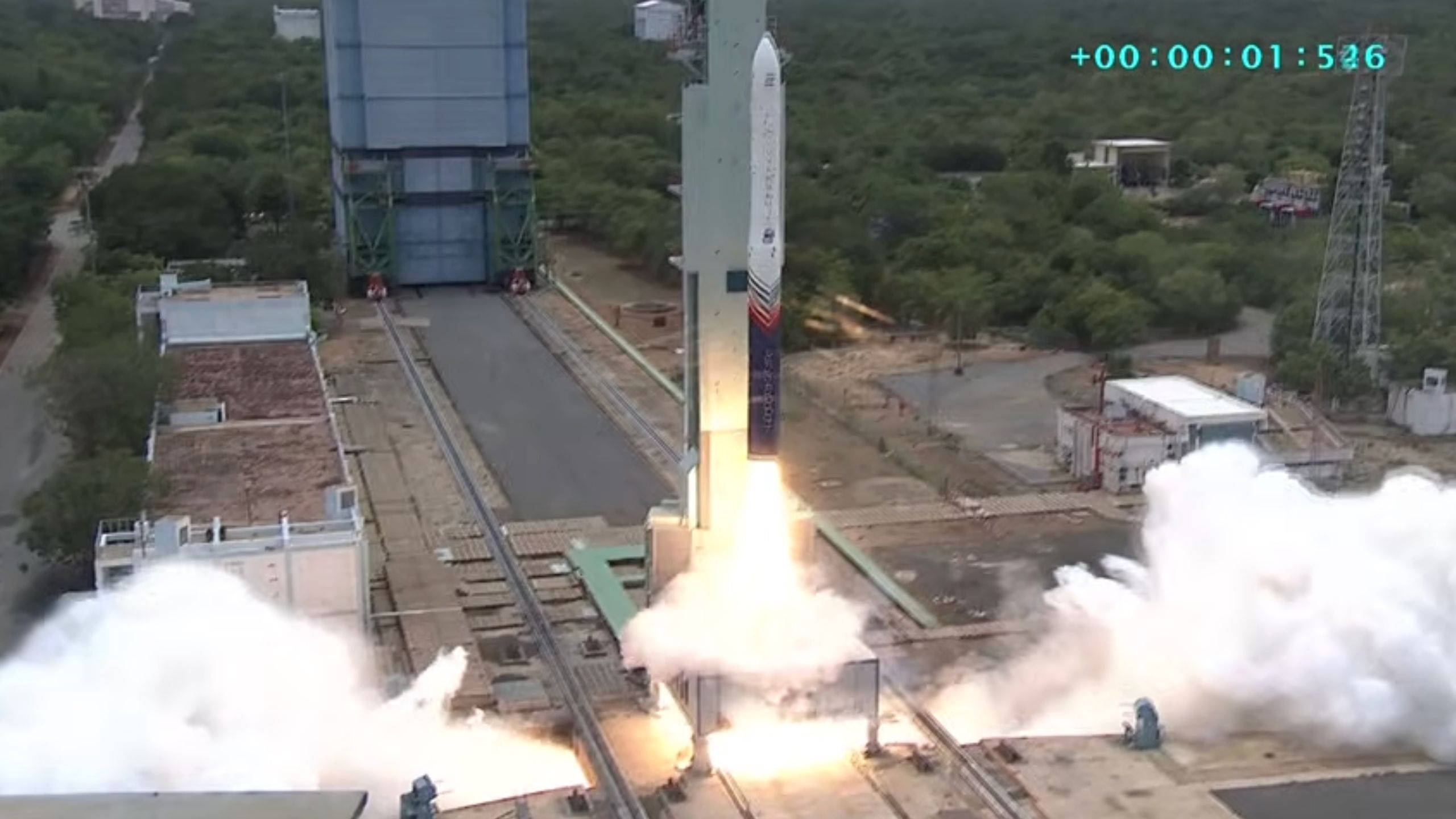
India entered a new phase of its Space exploration journey on Saturday, 18 July 2026, as Skyroot Aerospace successfully launched the Vikram-1 rocket from the Satish Dhawan Space Centre in Sriharikota. The mission, titled Aagaman — Sanskrit for "Arrival" — marked the first time a private Indian enterprise has successfully deployed payloads into low-Earth orbit. With this achievement, India joins the United States and China as one of the few nations to establish private-sector orbital launch capability.
The seven-storey-tall vehicle lifted off at 12:05 p.m. India Standard Time (0635 GMT). The rocket reached a planned orbit at an altitude of 450km (280 miles), successfully deploying its diverse cargo 17 minutes after liftoff. According to the manufacturer, the test validated the rocket's propulsion, avionics, telemetry, guidance, navigation, and control systems. Pawan Goenka, chairman of the Indian National Space Promotion and Authorisation Centre (IN-SPACe), noted that the performance exceeded the primary mission objective of simply "clearing the tower."
Related media
Commercial and Symbolic Payloads
Beyond testing the Vikram-1 launch vehicle, the mission carried a variety of experimental and commercial equipment:
- Embrace: A soft-robotic arm developed by Cosmoserve Space, designed to capture space debris.
- DCUBED technology: A mechanism for securing and releasing equipment during flight.
- Solaras S3: A nanosatellite from the Indian startup Grahaa Space, intended for Earth observation and disaster management data.
- SCOPE: An internal satellite that collected performance data during the flight.
- Symbolic items: A lab-grown diamond from Cosmos Diamonds, along with miniature 18-karat gold sculptures commemorating figures including Vikram Sarabhai, C.V. Raman, and Abdul Kalam.
A New Industrial Path
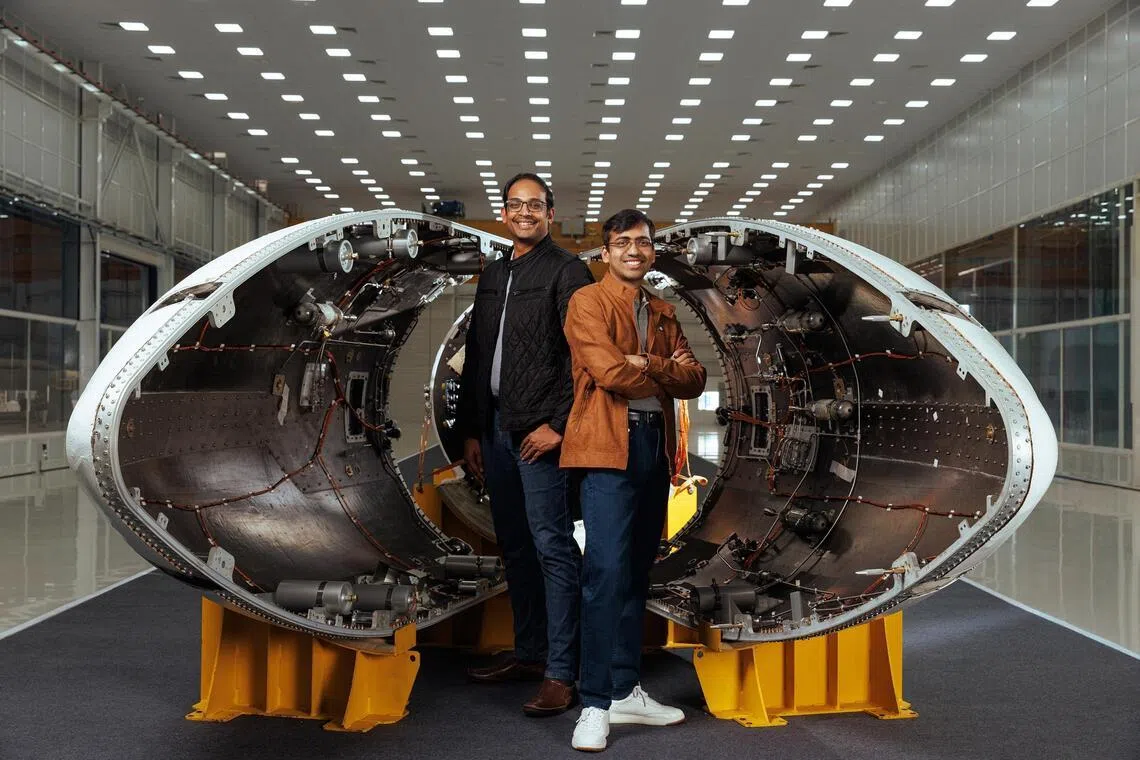
The success of the mission reflects a broader shift in the country's space strategy. Founded in 2018 by Pawan Kumar Chandana and Naga Bharath Daka, both former engineers at the Indian Space Research Organisation (ISRO), Skyroot represents a new generation of firms capitalizing on the government’s 2020 decision to open the space sector to private investment.
As the country seeks to increase its $8.4 billion space economy, Skyroot has positioned itself as a critical player. The company, which hit a $1 billion valuation earlier this year, intends to provide "on-demand" launch services for small satellites. "The small satellite launch market is deeply constrained on the supply side," Chandana stated in an earlier release. By utilizing ISRO’s established launch infrastructure and test stands, the company was able to compress its development timeline.
The government's National Space Policy, finalized in 2023, aims to catalyze growth across the sector. Current projections suggest the industry could grow by four to five times over the next eight to 10 years, potentially reaching $40 billion to $45 billion. Currently, there are more than 400 space startups in India, with significant backing from global investors, including Singapore’s Temasek and GIC.
What to Watch Next
Following the successful demonstration of the Aagaman mission, stakeholders are monitoring several upcoming developments in the Indian space industry:
- Routine Commercial Flights: Skyroot plans to conduct further testing before initiating a regular schedule of commercial satellite launches.
- Investment Growth: The government has committed 1 trillion rupees to a new Research, Development, and Innovation Fund to further support deep-tech space participation.
- Industry Diversification: Startups like Pixxel and GalaxEye continue to expand into hyperspectral imaging and multi-sensor satellite constellations to serve both domestic and international markets.
- Security Applications: Industry founders have signaled an increasing focus on the intersection of space and national security, noting a surge in global demand for satellite imagery.
While industry leaders acknowledge that India still has ground to cover to compete with the established launch ecosystems of the United States and China, the success at Sriharikota provides a foundational victory. "By executing the nation's first fully private orbital flight, Skyroot has shattered legacy boundaries," said Lt. Gen. AK Bhatt (retired), Director General of the Indian Space Association.
Archypedia is dedicated to independent, evidence-backed reporting. This briefing was synthesized from primary source reporting, corroborated across independent newsrooms, and verified against our Editorial Standards.
Transparency record
Evidence behind this report
This report synthesizes 7 distinct sources. Open the source ledger below to compare the underlying coverage.
Prepared under the Archypedia Editorial Policy by the Samir Haddad editorial desk profile. AI-assisted tools may support drafting and verification; public accountability remains with Archypedia. Report an error.