Russia makes Kostiantynivka main objective of summer offensive campaign
Russian forces have shifted their primary operational focus in the Donetsk region to Kostiantynivka, combining tactical assaults with an information campaign targeting the US administration.
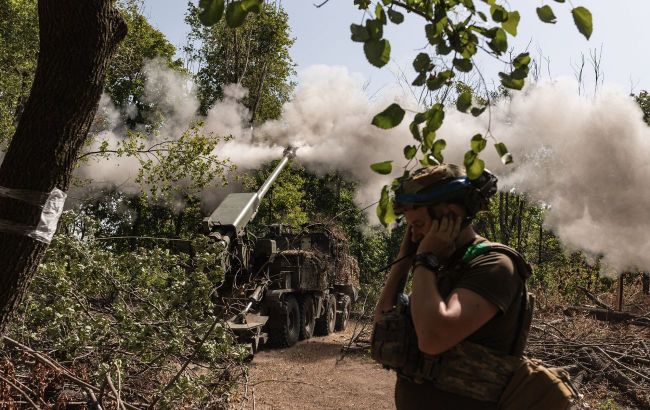
Russian military forces have shifted their primary operational focus in the Donetsk region, designating the city of Kostiantynivka as the main objective of their spring-summer offensive campaign in 2026. This pivot follows a failure by Russian troops to achieve a breakthrough toward Sloviansk, according to reporting from Newsukraine and the Institute for the Study of War (ISW).
The assault on the city is being executed by two large tactical groups: Bakhmut and Dzerzhinsk (Toretsk). Military observer Kostyantyn Mashovets reported on June 10 that the forward units of these groups are positioned approximately two kilometers from each other. The Bakhmut group advanced from Stupochky through Novodmytrivka and has entered the northeastern part of Kostiantynivka, moving toward the railway station via the T-0504 Pokrovsk-Bakhmut highway. Simultaneously, the Dzerzhinsk group, advancing from Illinivka, has expanded operations from the northwest to the southwest and reportedly achieved a tactical breakthrough in the western sector of the city.
Related media

Despite these incursions, the city has not fallen. While Russian forces have infiltrated parts of the city, they failed to capture the Kostiantynivka railway station. Ukrainian forces also successfully cleared Russian sabotage and reconnaissance groups from Dovha Balka. Ukraine's 19th Army Corps stated on July 4 that its forces maintain a presence throughout the city and are actively striking infiltrating Russian groups.
Information Warfare and Diplomatic Pressure
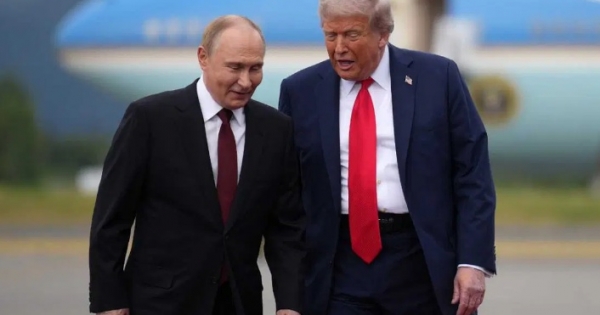
The battlefield struggle is being mirrored by a "cognitive warfare" effort. According to ISW, the Kremlin is conducting a targeted information campaign to convince the Trump administration and Western powers that Kostiantynivka has already been seized. This follows a July 4 phone call between US President Donald Trump and Russian President Vladimir Putin.
Russian Presidential Aide Yuriy Ushakov claimed that Putin informed Trump of the "real" battlefield situation, asserting that Russian forces have seized Kostiantynivka as a critical step toward capturing the rest of the Donetsk Oblast. This claim was echoed by Russian Security Council Deputy Chairperson Dmitry Medvedev, who described the alleged seizure as a clear victory. However, ISW assesses these claims as aggrandized and false, noting that the Kremlin likely staged meetings between Putin and commanders on July 3 to prepare these narratives ahead of the call with Trump.
As part of this strategy, the Russian Ministry of Defense proposed a short-term shelling ceasefire in Kostiantynivka from 1200 to 1800 Moscow time on July 6 to facilitate the transfer of killed Ukrainian troops. ISW characterizes this as a tactical move designed to portray Ukraine as an unwilling negotiator, as the proposal was rejected. Analysis suggests Russia may use such ceasefires to consolidate positions or rotate troops under the guise of humanitarian efforts.
The "Drone Siege" Strategy
The offensive is supported by a broader strategy of making frontline communities uninhabitable. In a report by Yahoo News, journalist Zarina Zabrisky describes a "drone siege" designed to force depopulation. This method, first refined in Kherson, involves combining first-person-view (FPV) drones, glide bombs, and remotely delivered anti-personnel mines to disrupt logistics and emergency services.
Zabrisky notes that these tactics are now appearing around Kostiantynivka, Kramatorsk, and Sloviansk. This effort is supplemented by the targeting of civilian infrastructure. Ruslan Tsarenok of Ukraine's 27th National Guard Brigade stated that Russian forces knock out civilian infrastructure to force residents to leave, after which they move in to dismantle the area further. Alina Holovko, co-founder of Dobra Sprava, added that FPV drones in Sloviansk and Kramatorsk deliberately target civilian homes, cars, and postal vans delivering pensions.
Operational Constraints and Ukrainian Response
While Russia pushes in Donetsk, it faces significant manpower and defense challenges in its rear. ISW reports that the Russian state energy operator Gazprom signed a contract with the Ministry of Defense to create mobile fire groups to protect gas infrastructure from Ukrainian drone strikes. These recruits receive monthly compensation of 200,000 rubles during training.
Ukraine continues to contest the region and maintain a broader strategic balance. Commander-in-Chief Oleksandr Syrskyi stated that in May, Ukrainian forces liberated 100 square kilometers more territory than they lost, contributing to an overall balance of over 600 square kilometers liberated since the start of the year.
Summary of the Kostiantynivka Offensive
| Aspect | Russian Claim / Action | Ukrainian/ISW Assessment |
|---|---|---|
| Control of City | Claimed total seizure of Kostiantynivka | Infiltrated but not seized; Ukrainian presence maintained |
| Tactical Groups | Bakhmut and Dzerzhinsk groups deployed | Forward units within 2km; tactical breakthrough in west |
| Key Targets | Kostiantynivka Railway Station | Railway station remains under Ukrainian control |
| Strategic Goal | Seizure of remainder of Donetsk Oblast | Likely to suffer heavy losses; full "Fortress Belt" success unlikely |
Ukrainian President Volodymyr Zelenskyy has stated that June and July could be decisive, as diplomatic decisions at EU, G7, and NATO summits may influence the conditions of a potential ceasefire. Meanwhile, Russian forces are expected to continue attempting to penetrate deeper into Kostiantynivka throughout the summer of 2026.
How significant is this development?
Contribute your assessment to the aggregated reader intelligence ledger.
Archypedia is dedicated to independent, evidence-backed reporting. This briefing was synthesized from primary source reporting, corroborated across independent newsrooms, and verified against our Editorial Standards.
Transparency record
Evidence behind this report
This report synthesizes 5 distinct sources. Open the source ledger below to compare the underlying coverage.
Prepared under the Archypedia Editorial Policy by the Samir Haddad editorial desk profile. AI-assisted tools may support drafting and verification; public accountability remains with Archypedia. Report an error.