The Collapse of the World’s Most Ambitious Coal Phase-Out Pact: What Its Failure Means for Global Climate Finance
The landmark agreement to accelerate the global phase-out of coal—once hailed as the most aggressive climate commitment of its kind—has unraveled, leaving a critical gap in climate finance and raising urgent questions about whether the world’s most vulnerable nations will receive the support they need to transition away from fossil fuels. Negotiators and climate advocates warn that the breakdown of this deal could delay critical funding for renewable energy projects in developing economies by years, while wealthy nations face mounting pressure to deliver on long-standing but unmet promises. With coal still powering nearly 30% of the world’s electricity, the failure of this pact underscores the growing divide between climate ambition and political reality.
What began as a high-stakes diplomatic effort to align coal exit timelines with the Paris Agreement’s 1.5°C target has instead become a cautionary tale about the fragility of international climate cooperation. The collapse—officially confirmed last month—exposes deep rifts between industrialized nations, fossil fuel-dependent economies, and the global South, where coal remains a lifeline for energy access. At stake is not just the future of coal but the credibility of climate finance mechanisms designed to help poorer nations shift to cleaner energy without sacrificing economic growth.
This article examines how the deal fell apart, who stands to lose the most, and what the failure reveals about the broader challenges of financing a just energy transition. It also explores the immediate fallout for climate negotiations, the role of private finance in filling the void, and whether this setback could spur a new wave of creative solutions—or simply deepen global climate inequality.
—
How the Deal Unraveled: A Timeline of Broken Promises
The agreement’s origins trace back to the 2021 United Nations Climate Change Conference (COP26), where 40 countries—representing over 80% of global coal capacity—pledged to phase out or phase down coal power generation by 2030 or 2040, depending on their development status. The pact was framed as a first step toward mobilizing $100 billion annually in climate finance for developing nations, a promise first made in 2009 but never fully delivered.
Yet by mid-2025, cracks began to show:
- June 2025: The United States and European Union, the deal’s primary backers, faced domestic political backlash over proposed carbon border taxes and subsidies for coal-dependent regions. The EU’s Green Deal Industrial Plan stalled in Parliament, while U.S. Congress blocked additional climate funding amid partisan gridlock.
- September 2025: India, China, and South Africa—three of the world’s largest coal producers—publicly signaled their unwillingness to commit to binding phase-out dates without guaranteed access to alternative financing. India’s coal consumption actually increased by 6% in the first half of 2025, as domestic power shortages persisted.
- November 2025: At COP28 in Dubai, negotiators failed to reach consensus on a revised timeline, with fossil fuel-producing nations arguing that coal’s role in energy security outweighed climate concerns. The Just Energy Transition Partnerships (JETPs), a key funding mechanism, saw pledges totaling just $8.5 billion—less than half of what was needed to cover the $20 billion annual shortfall in climate finance.
- January 2026: The final blow came when the G7 nations, under pressure from their own electorates, withdrew their collective commitment to the coal phase-out deal, citing “unrealistic expectations” and “insufficient global alignment.” The move triggered a cascade of withdrawals from other signatories.
Key Point: The deal’s collapse wasn’t just about coal—it was a symptom of a broader crisis in climate finance. Developing nations, which contribute the least to historical emissions, now face a stark choice: accelerate their own coal phase-outs without support or risk being left behind in the energy transition.
—
Who Is Affected—and How?
The failure of the coal phase-out pact has ripple effects across three critical groups: developing economies, industrialized nations, and global climate finance mechanisms. Each faces distinct challenges.

1. Developing Nations: The Cost of Stalled Progress
For countries like Vietnam, Indonesia, and Bangladesh—where coal accounts for 50% or more of electricity generation—the pact’s collapse means:
- Delayed renewable energy projects: Without guaranteed climate finance, these nations cannot retire aging coal plants or build solar/wind farms at scale. Vietnam, for example, had planned to retire 12 coal plants by 2030; that timeline is now in jeopardy.
- Increased debt risks: Many developing nations rely on international loans for energy infrastructure. Without climate-aligned financing, they may turn to higher-cost, fossil fuel-dependent projects—locking them into decades of carbon-intensive growth.
- Energy poverty trade-offs: In sub-Saharan Africa, where 600 million people lack access to electricity, coal remains the fastest way to expand the grid. Without alternatives, climate goals may clash with development priorities.
Case Study: South Africa’s Just Energy Transition Partnership (JETP), a $8.5 billion deal to retire coal plants, is now at risk of being scaled back. The country’s National Energy Crisis Committee warned in February 2026 that load-shedding (planned blackouts) could worsen without new funding for both coal and renewables.
2. Industrialized Nations: Credibility at Stake
Wealthy nations face two immediate consequences:
- Loss of moral authority: The EU and U.S. Have long positioned themselves as leaders in climate action. The pact’s failure undermines their calls for global emissions cuts, particularly in regions like Asia where coal demand is rising.
- Domestic political fallout: In Germany and Poland, coal-dependent regions have used the deal’s collapse to argue against further climate regulations. Poland’s government, for instance, has extended the lifespan of its last coal plant by 10 years, citing “unreliable” international commitments.
- Legal exposure: Under the Paris Agreement, wealthy nations have a legal obligation to provide climate finance. The failure to deliver could lead to lawsuits from vulnerable states, similar to the cases already filed against Germany and France for insufficient emissions cuts.
3. Climate Finance Mechanisms: A System in Crisis
The collapse exposes critical weaknesses in how climate finance is structured:
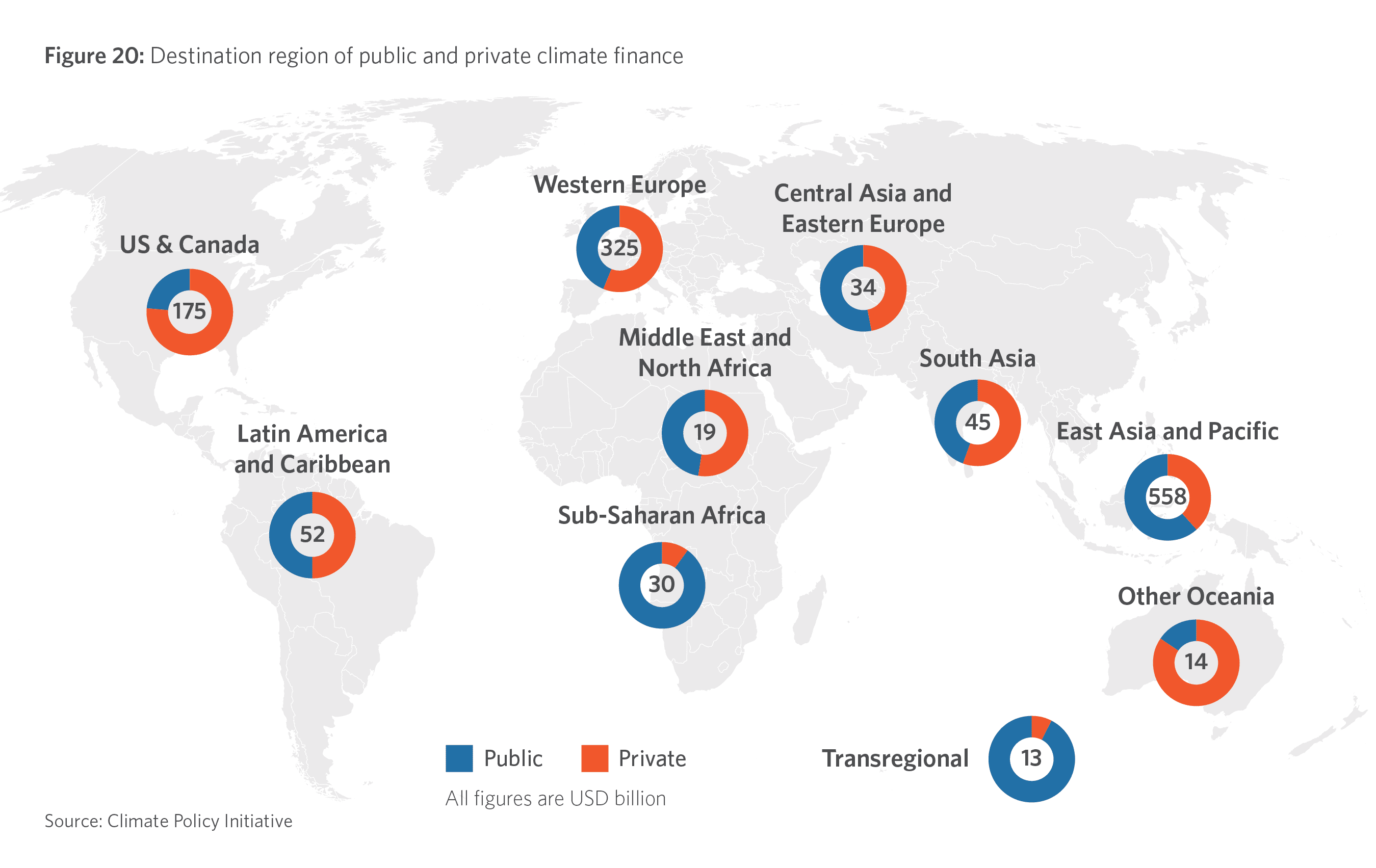
- Shortfalls in public funding: The $100 billion annual pledge has never been met. In 2024, developed nations provided just $83 billion—down from a peak of $93 billion in 2022. The shortfall is now $17 billion per year, growing as demand rises.
- Private sector reluctance: Banks and investors remain hesitant to fund coal phase-outs in developing nations without de-risking guarantees from governments. The World Bank’s International Finance Corporation (IFC) has halted new coal financing since 2019, but private equity firms are filling the gap in some markets.
- Accountability gaps: There is no independent body to audit whether climate finance is being used effectively. A 2025 report by the Climate Policy Initiative found that only 30% of pledged climate finance actually reached the most vulnerable countries.
Key Point: The failure isn’t just about coal—it’s a symptom of a funding system that lacks transparency, accountability, and political will. Without reform, future climate deals risk the same fate.
—
Why This Matters: The Broader Implications for Climate Action
The coal phase-out pact’s collapse is more than a setback—it’s a stress test for the entire Paris Agreement framework. Three major implications stand out:
1. The Race to Replace Coal Is Accelerating—Without Coordination
Even as the pact unravels, the global energy transition is happening:
- Renewables are growing faster than ever: Solar and wind capacity additions surged by 20% in 2025, but most new installations are in Europe and North America. Africa and Southeast Asia still rely on coal for 70% of new power capacity.
- Carbon capture is being hyped as a solution: Projects like Northern Europe’s Green Hydrogen Hub and China’s Shandong carbon capture pilot are gaining traction, but experts warn these technologies are not yet scalable for coal plants.
- Gas is filling the gap: In the U.S. And EU, natural gas plants are being repurposed as “bridge fuels,” but studies show this extends fossil fuel dependence rather than accelerates the transition.
Expert View: “The coal phase-out deal was supposed to create a managed transition,” says Dr. Lisa Schipper, a climate policy researcher at Oxford. “Instead, we’re seeing a fragmented transition, where some countries leap ahead with renewables while others double down on coal—all without a safety net.”
2. Climate Finance Is Becoming a Geopolitical Weapon
Wealthy nations are increasingly tying climate aid to political leverage:
- The U.S. Is linking climate finance to defense partnerships: At COP28, the U.S. Announced a $5 billion climate fund for Pacific Island nations, but only if they also agreed to military access deals.
- The EU is using climate conditions for trade: The Carbon Border Adjustment Mechanism (CBAM) now applies to 60% of global imports, forcing countries like India and Brazil to either cut emissions or face tariffs.
- China is offering an alternative: Through its Belt and Road Initiative, China has funded 120 coal plants abroad since 2013, positioning itself as the default lender for energy projects in Africa and Latin America.
Key Point: Climate finance is no longer just about money—it’s about who controls the rules of the transition. Developing nations now face a choice: align with Western climate conditions or accept Chinese-funded coal infrastructure.
3. The Paris Agreement’s 1.5°C Goal Is Slipping Further Away
Current national climate pledges (NDCs) put the world on track for 2.4°C of warming by 2100, according to the UN Emissions Gap Report 2025. The coal phase-out pact was meant to shave 0.3°C off that projection. Its failure means:
- Coal emissions will stay high: Global coal use rose by 1.6% in 2025, the first increase since 2014, driven by India and China.
- Renewable deployment will sluggish: Without guaranteed finance, solar and wind projects in Africa and Southeast Asia are being delayed. The International Renewable Energy Agency (IRENA) warns that 1.3 billion people could miss out on energy access by 2030.
- Loss and damage funding remains stalled: The $100 billion climate finance pledge was supposed to include $40 billion for loss and damage—the costs of climate disasters in vulnerable nations. That money has yet to materialize.
Data Spotlight:
| Metric | 2020 Target | 2025 Reality | Gap |
|---|---|---|---|
| Climate finance delivered (annual average) | $100 billion | $83 billion | $17 billion shortfall |
| Coal power capacity additions (2025) | 0 GW (phase-out goal) | +32 GW | 32 GW over target |
| Renewable energy access (2030 projection) | Universal access | 60% coverage in developing nations | 40% gap |
Key Point: The 1.5°C target is now out of reach without radical action. The coal phase-out deal’s failure is a warning that political will alone won’t suffice—structural changes to finance, technology, and global cooperation are needed.
—
What Comes Next? Possible Paths Forward
The collapse of the coal phase-out pact doesn’t mean climate action is dead—it means the world must find new ways to finance the transition. Three potential solutions are gaining traction:
1. Rebooting Climate Finance with Private Sector Involvement
Public funds alone won’t bridge the gap. Innovative approaches include:
- Green sovereign bonds: Countries like Egypt and Kenya have issued $12 billion in climate-themed bonds since 2024, attracting investors with lower interest rates than traditional debt.
- Blended finance: The Global Energy Alliance for People and Planet (GEAPP) is piloting a model where public grants de-risk private investments in renewable projects. So far, it has mobilized $5 billion for solar and wind in Africa.
- Carbon credit markets: The Voluntary Carbon Market (VCM) is expanding, with $2 billion in transactions in 2025. Critics argue these credits are often overvalued or fraudulent, but some see them as a stopgap for climate finance.
2. Regional Coal Phase-Out Alliances
Instead of a global deal, some regions are forging their own agreements:
- Asia-Pacific Coal Transition Initiative: Australia, Japan, and South Korea are exploring a $20 billion fund to help Southeast Asian nations retire coal plants. The first pilot will focus on Indonesia’s 10 GW coal fleet.
- African Renewable Energy Initiative: The African Development Bank is pushing for a continental coal phase-out by 2040, with $50 billion in guarantees from the World Bank and EU.
- EU’s Global Gateway: The EU is offering €300 billion in sustainable investments to Africa and Latin America, but critics say the terms favor European firms over local industries.
3. Legal and Diplomatic Pressure
Some nations are turning to courts and diplomacy to force action:
- Climate litigation: The Netherlands, Germany, and France are facing lawsuits from Pacific Island nations for failing to meet climate finance pledges. Legal experts say these cases could set precedents for mandatory climate funding.
- UN General Assembly resolutions: A non-binding resolution passed in March 2026 calls on wealthy nations to double climate finance by 2030. While not legally binding, it could shame holdout countries into action.
- Corporate accountability: Investors are increasingly targeting ESG-linked lawsuits against banks that fund coal projects. In 2025, three major lenders—HSBC, JPMorgan, and BNP Paribas—faced shareholder resolutions demanding coal exit plans.
Key Point: The world is not running out of options—but time is running out. The next 18 months will determine whether climate finance becomes a tool for cooperation or a source of global division.
—
Frequently Asked Questions
What was the original goal of the coal phase-out deal?
The agreement aimed to align the phase-out of coal power with the Paris Agreement’s 1.5°C target by having major coal-producing nations commit to binding timelines (2030 for advanced economies, 2040 for developing nations). It was also meant to mobilize $100 billion annually in climate finance to support the transition in poorer countries.
Why did the U.S. And EU withdraw their support?
Domestic political pressures played a major role. In the U.S., Congress blocked additional climate funding due to partisan divisions, while in Europe, opposition from coal-dependent regions like Germany’s Ruhr Valley and Poland’s Silesia delayed carbon market reforms. Both regions also faced economic slowdowns tied to energy price volatility.
Can developing nations still transition away from coal without international help?
Some can, but most cannot. Countries like Morocco and Chile have successfully retired coal plants using domestic renewables investments, but 80% of developing nations lack the capital to do so. Without external finance, many will remain locked into coal for decades, particularly in sub-Saharan Africa and Southeast Asia.
What role can private companies play in filling the climate finance gap?
Private sector involvement is critical, but it requires de-risking mechanisms like government guarantees. For example, BlackRock and Goldman Sachs have committed $100 billion to green investments over the next five years, but only in markets where political risks are mitigated. Blended finance models—where public funds unlock private capital—are seen as the most promising path.
Will the failure of this deal delay the global energy transition?
Yes, but not indefinitely. The transition is already happening—renewables are now the cheapest energy source in most of the world. However, the lack of coordinated finance means the transition will be uneven, with some regions moving faster than others. The risk is that coal-dependent nations fall further behind, widening the global energy divide.
How can individuals or organizations push for better climate finance?
Advocacy groups recommend:
- Supporting campaigns like “Debt for Climate Swaps”, which propose canceling developing nations’ debt in exchange for climate investments.
- Pressuring banks to divest from coal and redirect funds to renewables (tools like BankTrack’s fossil fuel tracker can help identify culprits).
- Engaging with local climate funds, such as the Green Climate Fund (GCF), to ensure transparency in how money is spent.
- Advocating for corporate accountability laws, like the EU’s Corporate Sustainability Due Diligence Directive, which requires companies to disclose climate risks.
—
The collapse of the world’s most ambitious coal phase-out deal is a stark reminder that climate action requires more than good intentions—it demands creative financing, political courage, and global solidarity. While the pact’s failure leaves a critical void, it also presents an opportunity to rethink how we fund the energy transition. The next chapter in climate finance will be written not in grand international agreements, but in local renewable projects, private-sector partnerships, and legal battles over accountability. Whether those pages tell a story of cooperation or division will determine whether the world can still meet its climate goals—or if they remain just another broken promise.
Further reading:
- How the Just Energy Transition Partnerships (JETPs) are reshaping Africa’s energy future
- The hidden costs of coal: Why developing nations can’t afford to go it alone
- Climate finance in the courtroom: How lawsuits are forcing governments to act
