/https://i.s3.glbimg.com/v1/AUTH_59edd422c0c84a879bd37670ae4f538a/internal_photos/bs/2021/x/F/btmt83TqGHbXoue6lu7w/divulgacao-3-.jpg "divulgacao-3-.jpg")
A general strike in Portugal has sent shockwaves through the country’s transportation network, forcing airlines to cancel hundreds of flights and leaving travelers stranded as unions protest a controversial labor reform bill. The disruptions extend beyond borders, with major Brazilian carriers halting transatlantic routes to Lisbon and Porto, underscoring the strike’s ripple effects across Europe and Latin America.
The strike, called by the Confederação Geral dos Trabalhadores Portugueses (CGTP) and other labor groups, began Wednesday after lawmakers approved a reform that unions argue weakens job protections and collective bargaining rights. Demonstrations have paralyzed Lisbon’s metro system, buses, and trains, while airports across the country have seen delays and cancellations. According to local media reports, TAP Air Portugal, the national carrier, canceled at least 200 flights, while international airlines including Lufthansa, Air France, and Iberia have also suspended operations.
Brazil’s GOL Airlines and LATAM announced cancellations of all flights between São Paulo and Lisbon for Wednesday and Thursday, affecting thousands of passengers ahead of the holiday season. The Brazilian government has urged travelers to check with airlines for updates, as the strike’s duration remains uncertain. “This represents an unprecedented situation for Portugal’s aviation sector,” said a spokesperson for the Associação Portuguesa de Transportes Aéreos, noting that the cancellations could cost airlines millions in lost revenue.
Why the Strike Matters Beyond Portugal’s Borders
The labor reform, pushed through by Prime Minister Luís Montenegro’s center-right government, aims to reduce bureaucracy for businesses but has sparked fierce opposition from unions and left-wing parties. Critics argue it undermines hard-won labor rights in a country still recovering from the economic fallout of the pandemic. The strike’s timing—just days before Portugal assumes the rotating presidency of the European Union—has also drawn international attention, with some EU officials privately expressing concern over the reform’s potential to destabilize social cohesion.
In Brazil, where Portugal is a top destination for emigration and tourism, the cancellations have disrupted travel plans for thousands. Brazilian authorities have not yet issued formal travel advisories, but the Ministry of Foreign Affairs confirmed it is monitoring the situation closely. “We are coordinating with Portuguese authorities to ensure the safety of Brazilian citizens affected,” a ministry statement said.
Historical Context: Labor Unrest in Portugal
Portugal’s labor movement has a long history of militant action, with general strikes often serving as a tool to pressure governments on economic policies. The most recent major strike occurred in 2017, when unions protested austerity measures imposed during the country’s bailout period. This time, however, the reform’s focus on labor laws—rather than fiscal policy—has intensified the backlash. Economists warn that prolonged disruptions could further strain Portugal’s already sluggish growth, which has been hindered by high inflation and energy costs.
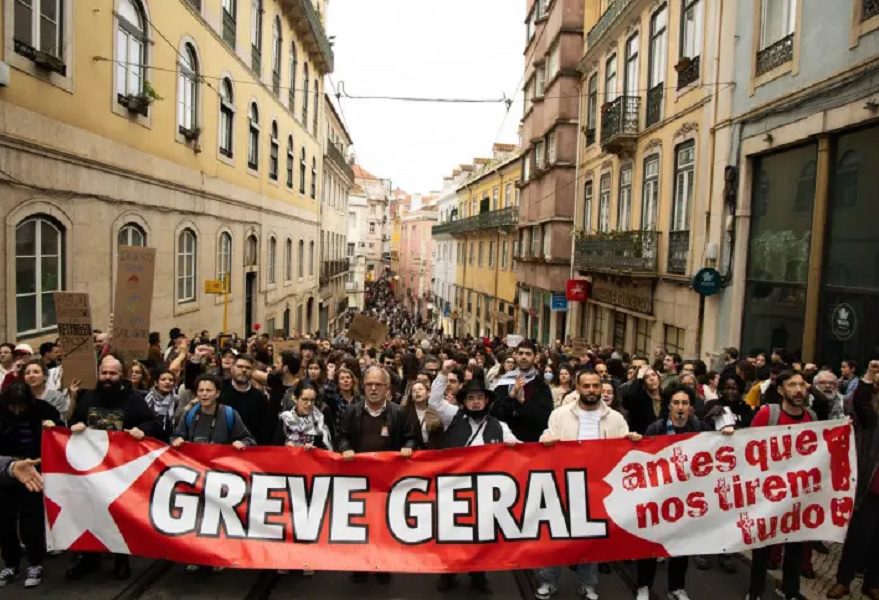
As of Thursday morning, unions have not announced an end to the strike, leaving businesses and travelers in limbo. The Portuguese government has ruled out further negotiations until the strike concludes, while opposition parties have called for a national debate on the reform’s impact. Meanwhile, airlines are bracing for potential losses, with industry analysts suggesting the cancellations could exceed €50 million in direct costs.
What’s Next for Portugal’s Labor Movement and Aviation Sector
With no clear resolution in sight, the strike’s duration remains the biggest unknown. If it extends into the weekend, as some union leaders have hinted, the economic and logistical fallout could deepen. Airlines have begun rerouting flights through Madrid and Paris, but capacity constraints in those hubs may limit relief for stranded passengers. For now, both sides appear dug in: unions demand the reform’s withdrawal, while the government insists it is necessary for economic modernization.
