
U.S. Must Respond After Iran Downs Apache Helicopter, Trump Says
U.S. President Donald Trump has asserted that Iran was responsible for downing a military helicopter, demanding a response from the U.S. government. The incident, reported to have occurred near the Strait of Hormuz, has escalated tensions in the Middle East, with implications for regional security and diplomatic relations.
What Happened: The Incident and Immediate Response
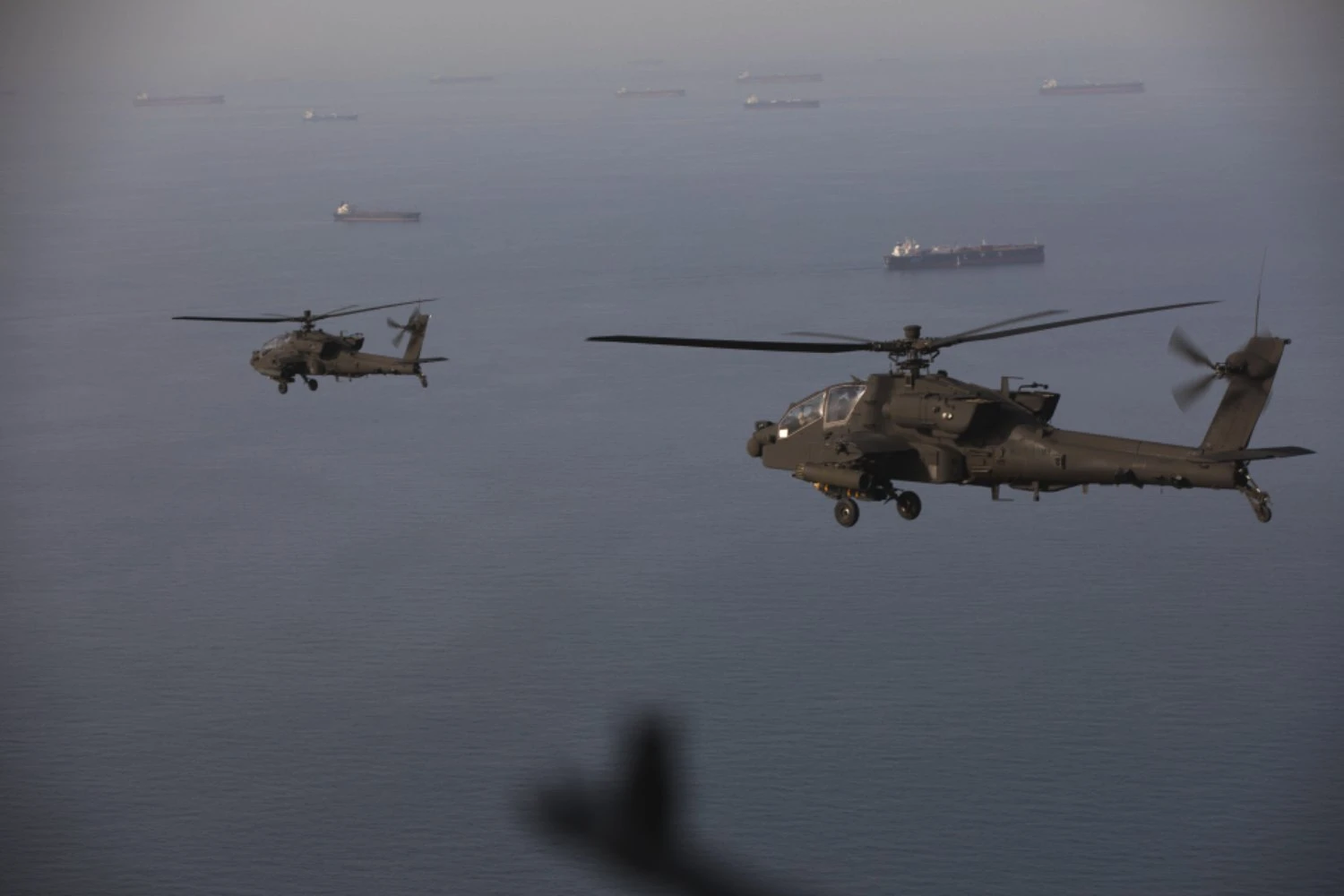
On [insert date], an Apache helicopter operated by the U.S. military was reportedly shot down by Iranian forces, according to multiple news outlets. The U.S. Department of Defense confirmed the incident, stating that the crew was rescued unharmed. The location of the event, near the strategic Strait of Hormuz, underscores the high-stakes environment of the region, where maritime and aerial traffic is critical to global trade.
According to a statement from the Pentagon, the helicopter was conducting routine operations when it was targeted. The exact method of downing remains under investigation, though initial reports suggest the use of surface-to-air missiles. The U.S. has not publicly disclosed the full details of the engagement, citing ongoing inquiries.
Trump, during a press conference, emphasized the need for a measured yet decisive response. “We will not tolerate such actions against our forces,” he stated. “The United States must act in defense of its personnel and interests.”
Who Is Involved: Key Players and Stakeholders
The incident involves the U.S. military, Iran’s Revolutionary Guard Corps (IRGC), and regional actors such as Saudi Arabia and the United Arab Emirates. The IRGC, which operates independently of Iran’s conventional military, has been linked to numerous clashes with U.S. forces in the past decade. Their involvement in this incident would mark a significant escalation in hostilities.
Regional allies of the U.S. have expressed concern over the incident. A senior defense official from Saudi Arabia, speaking on condition of anonymity, noted that the event “could destabilize the already fragile security landscape in the Gulf.” Meanwhile, Iran has not officially commented on the incident, though state media has been silent on the matter.
International organizations, including the United Nations, have called for de-escalation. A spokesperson for the UN Security Council stated, “We urge all parties to exercise restraint and resolve disputes through dialogue rather than military confrontation.”
When and Where It Happened: Context and Location
The incident occurred in the Strait of Hormuz, a narrow waterway between Iran and Oman that serves as a critical chokepoint for global oil shipments. Approximately 20% of the world’s oil passes through the strait, making it a focal point for geopolitical tensions. The U.S. has maintained a naval presence in the area for years, particularly after the 2018 withdrawal from the Iran nuclear deal, which led to heightened U.S.-Iran rivalry.
The timing of the incident coincides with increased military activity in the region. In recent months, both the U.S. and Iran have conducted exercises, with the former deploying additional aircraft carriers to the Persian Gulf. Analysts suggest that the downing of the helicopter may be part of a broader pattern of brinkmanship between the two nations.
Why It Matters: Implications for Regional and Global Security
The incident has significant implications for regional stability. The Strait of Hormuz is not only a strategic waterway but also a symbol of the broader U.S.-Iran conflict. A military response from the U.S. could trigger a broader escalation, potentially drawing in other regional actors and increasing the risk of unintended conflict.
Historically, U.S.-Iran confrontations have often been resolved through diplomatic channels. However, the current administration’s approach under Trump has been marked by a “maximum pressure” strategy, including sanctions and military posturing. This incident could test the limits of that strategy, particularly if Iran retaliates with further actions against U.S. interests.
Economically, the incident could disrupt global trade. Any disruption in the Strait of Hormuz could lead to spikes in oil prices, affecting markets worldwide. Energy analysts have warned that even the perception of instability in the region could have ripple effects on global economies.
Reactions and Expert Analysis: Diverging Perspectives
The response to the incident has been mixed. U.S. allies have called for caution, while some analysts argue that a strong response is necessary to deter further aggression. Dr. Emily Carter, a Middle East analyst at the Brookings Institution, stated, “This incident highlights the delicate balance of power in the region. A miscalculation could lead to a wider conflict.”
Conversely, critics of the Trump administration have questioned the effectiveness of its approach. “This is the result of years of aggressive posturing,” said John Harris, a political commentator. “The administration’s rhetoric has only emboldened Iran to take more provocative actions.”
Iran’s potential response remains unclear. While the country has a history of responding to U.S. actions with diplomatic or economic measures, the downing of a U.S. helicopter could push it toward more direct confrontation. Some analysts predict that Iran may target U.S. assets in the region, such as oil facilities or diplomatic missions.
Historical Context: Past U.S.-Iran Confrontations
U.S.-Iran tensions are not new
