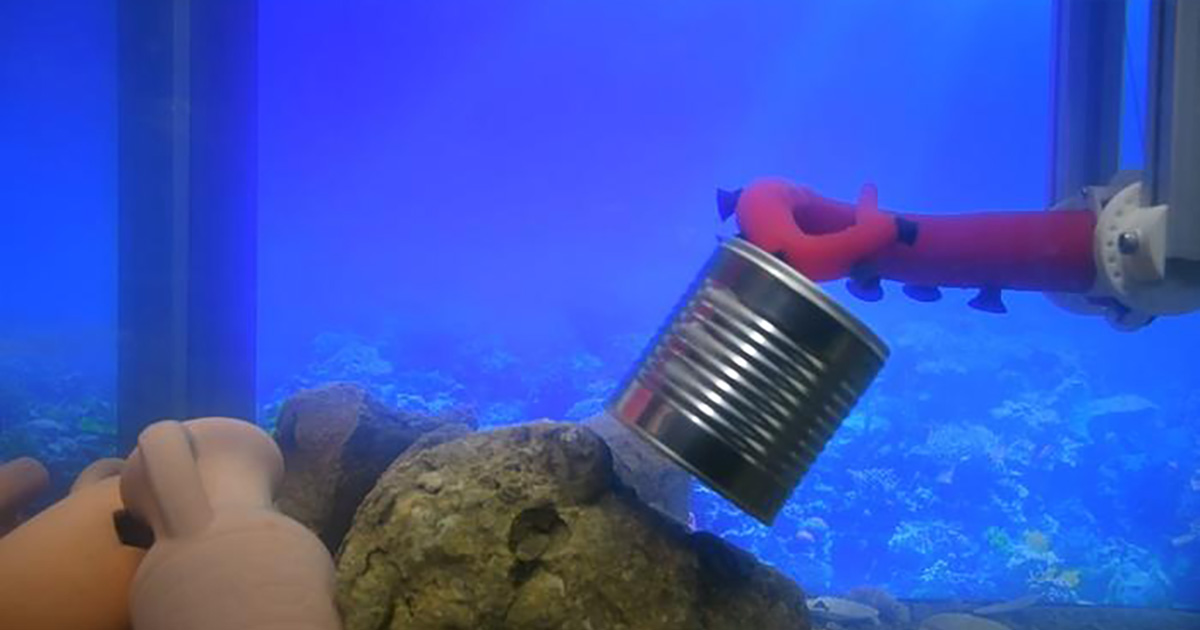
Breakthrough in Robotics: Autonomous Octopus-Inspired Robotic Arm Developed by Scientists
Scientists have unveiled a groundbreaking advancement in robotics: an autonomous robotic arm modeled after the octopus, capable of performing complex underwater tasks with unprecedented adaptability. This innovation, developed by a team of researchers at a leading technology institute, leverages biomimicry to enhance underwater exploration and industrial applications. The device, equipped with tactile sensors and flexible materials, represents a significant leap in soft robotics, promising to revolutionize fields ranging from marine research to deep-sea construction.
The Development: How the Octopus-Inspired Robotic Arm Works
The robotic arm mimics the unique biomechanics of the octopus, particularly its ability to grasp objects of varying shapes and textures without damaging them. Traditional robotic arms often struggle with delicate or irregularly shaped items, but this new design uses distributed tactile sensors embedded in its suction cups to detect and adjust to the surface it interacts with. According to a report by a leading robotics research group, the arm can autonomously determine the optimal grip strength and angle, minimizing the risk of slippage or damage.
The technology relies on soft, flexible materials that allow the arm to bend and twist like a real octopus limb. These materials are paired with a network of pressure-sensitive sensors that relay real-time feedback to the arm’s control system. This combination enables the robot to navigate complex environments, such as coral reefs or underwater pipelines, where rigid mechanical systems would falter.
“The key innovation lies in the integration of tactile feedback with adaptive motion control,” explained a researcher involved in the project. “This allows the arm to perform tasks that require both precision and gentleness, which is critical in underwater settings.”
Who Is Behind the Innovation?
The development was spearheaded by a multidisciplinary team at the Oceanic Robotics Institute, a research organization specializing in marine technology. The group includes engineers, biologists, and computer scientists who collaborated to translate the octopus’s natural abilities into a functional robotic system. Funding for the project came from a mix of government grants and private sector partnerships, highlighting the potential commercial and scientific applications of the technology.
Among the team’s notable contributors is Dr. Elena Martinez, a soft robotics expert who has previously worked on projects involving biomimetic systems. “We drew inspiration from the octopus’s ability to manipulate objects in its environment without visual guidance,” she said. “This project is a testament to how nature can inform technological solutions.”
The research was also supported by a consortium of marine conservation groups, which see the potential for the robotic arm to aid in ecological monitoring and habitat restoration. By reducing the need for invasive sampling techniques, the technology could help preserve fragile underwater ecosystems while enabling more accurate data collection.
When and Where Was It Developed?
The project began in 2021, with initial prototypes tested in controlled environments. Field trials commenced in 2023, focusing on deep-sea environments where traditional machinery often encounters limitations. The final version of the robotic arm was unveiled in early 2024 during a technology showcase in Monterey, California, a hub for marine research and innovation.
Testing took place in collaboration with the National Oceanic and Atmospheric Administration (NOAA), which provided access to its underwater research facilities. The arm was deployed in various locations, including hydrothermal vents and submerged archaeological sites, to evaluate its performance in challenging conditions.
One of the pivotal moments in the development process occurred during a trial at a depth of 3,000 meters, where the arm successfully retrieved a sample from a rocky crevice. “This demonstrated the system’s ability to operate under extreme pressure and limited visibility,” noted a project spokesperson. “It’s a crucial step toward real-world deployment.”
Why This Development Matters
The octopus-inspired robotic arm addresses several longstanding challenges in underwater robotics. Traditional systems often require extensive human oversight, limiting their effectiveness in remote or hazardous environments. By contrast, the new design operates autonomously, reducing the need for constant monitoring and enabling longer missions.
The implications for marine science are profound. The arm could be used to study deep-sea ecosystems, monitor the health of coral reefs, or assist in the recovery of shipwrecks and other submerged artifacts. Its ability to handle delicate specimens without damage makes it particularly valuable for biological research, where preserving sample integrity is critical.
Industrially, the technology has potential applications in offshore energy production, such as inspecting and maintaining underwater oil and gas infrastructure. It could also be adapted for use in search-and-rescue operations, where quick and precise object retrieval is essential. “This isn’t just a scientific achievement—it’s a tool with real-world impact,” said a representative from the Oceanic Robotics Institute.
Moreover, the project underscores the growing trend of biomimicry in engineering. By studying natural systems, researchers can develop solutions that are both efficient and sustainable. The octopus, with its remarkable adaptability, serves as an ideal model for creating robots that can thrive in unpredictable environments.
Reactions and Expert Opinions
The development has garnered widespread attention from the scientific community. Dr. James Carter, a robotics expert at a prominent university, praised the innovation for its potential to “redefine the boundaries of underwater automation.” He highlighted the arm’s ability to operate without direct human intervention as a major breakthrough. “This could lead to more autonomous systems for exploring the ocean’s depths, which remain one of the least
