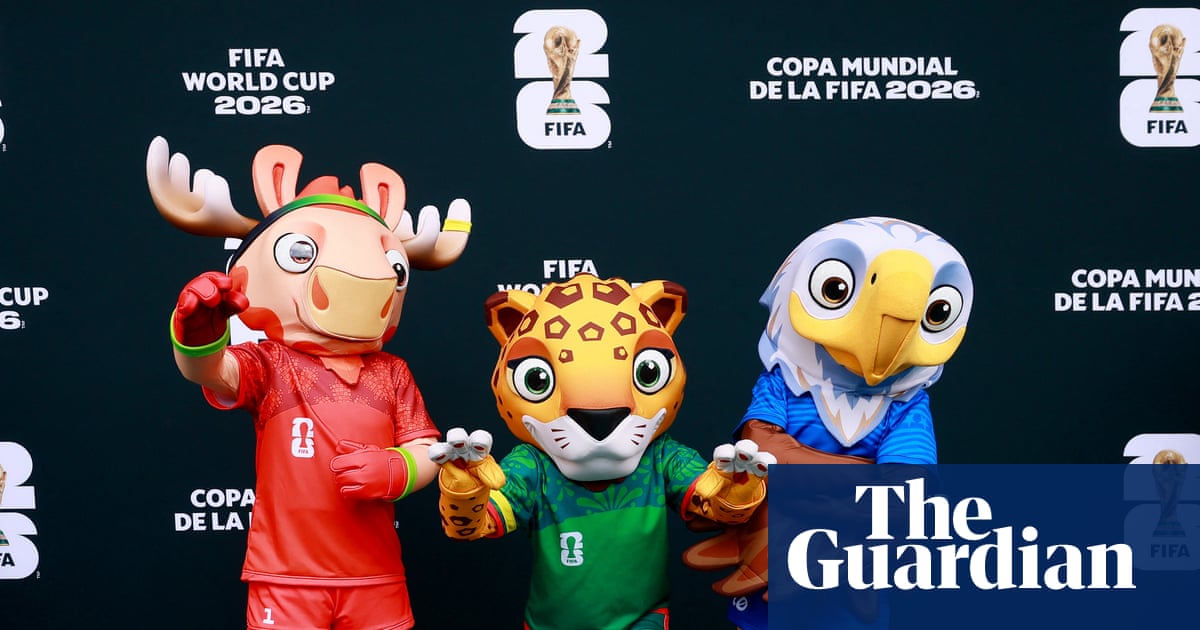
Clutch Time: Canadian and US World Cup Mascots Feature in Peruvian Drugs Raid
Peruvian police officers arrested a drug dealer using 2026 World Cup mascot costumes as disguises during a tactical operation, according to reports from The Guardian, The New York Times, and the New York Post. The officers donned the costumes to approach the suspect undetected before executing the arrest in a coordinated raid.
How did Peruvian police use World Cup mascots in a drug raid?
Law enforcement officials in Peru utilized costumes representing the mascots of the 2026 World Cup—hosted by Canada, the United States, and Mexico—to blend into the environment and surprise a narcotics target. According to the New York Post, the officers used these oversized suits as cover, allowing them to get within striking distance of the dealer without alerting them to the police presence.
The operation relied on the element of surprise. By appearing as promotional characters associated with the upcoming global soccer tournament, the officers bypassed the typical suspicions that accompany uniformed police patrols. Once the officers were in position, they transitioned from their roles as mascots to tactical arrest teams to secure the suspect.
Key details of the operation include:
- Tactic: Undercover infiltration via costume disguise.
- Theme: 2026 FIFA World Cup promotional characters.
- Objective: Apprehension of a suspected drug dealer.
- Outcome: Successful arrest of the target.
Why were 2026 World Cup costumes chosen for the operation?
The choice of 2026 World Cup mascots reflects the high visibility of the upcoming tournament, which will be the first to feature 48 teams and three host nations. According to reports from Yahoo News Canada, the surreal nature of the disguises provided a psychological advantage, as the sight of mascots in a non-sporting context is often viewed as a promotional stunt rather than a law enforcement action.
Peru has a deep cultural connection to soccer, and the 2026 tournament is a major point of international interest. Officers likely calculated that the costumes would not seem out of place in a busy urban area or near a commercial hub where promotional activities are common. This allowed the police to operate in “plain sight,” a core tenet of undercover work where the goal is to be seen but not recognized as a threat.
The 2026 World Cup’s unique structure, involving the US, Canada, and Mexico, makes its branding globally recognizable. By using these specific identities, the Peruvian police leveraged international sports marketing to facilitate a local criminal arrest.
What are the implications of unconventional police tactics in Peru?
The use of mascot suits is an example of “unconventional warfare” applied to domestic policing. In regions where drug trafficking organizations are highly vigilant and often employ their own lookouts (known as campanas), standard police vehicles and uniforms can alert suspects long before an arrest team arrives. According to the New York Times, such disguises are used to neutralize the surveillance networks of drug dealers.
Peru remains a critical focal point in the global fight against narcotics, particularly cocaine production. The National Police of Peru (PNP) frequently engage in high-stakes raids in urban centers and rural jungle regions. When traditional methods fail or risk alerting the target, the PNP has been known to employ creative infiltration strategies.
| Tactic Type | Standard Approach | Unconventional Approach (Mascot Raid) |
|---|---|---|
| Visibility | High (Uniforms/Marked Cars) | Low (Disguised as Civilians/Characters) |
| Suspect Reaction | Immediate flight or resistance | Confusion and delayed reaction |
| Primary Goal | Overwhelming force/Presence | Stealth and surprise |
While the mascot raid appears humorous in media reports, it highlights the desperation and creativity required to combat entrenched drug networks. The ability to deceive a suspect who is professionally paranoid about police presence is a tactical win for the Peruvian authorities.
How did global media outlets report the mascot arrest?
The reporting of this incident varies significantly across international outlets, reflecting different editorial priorities. A comparison of the coverage reveals a spectrum from straight news reporting to sensationalism.

The New York Times focused on the tactical nature of the event, framing it as a police operation that utilized disguises to “bust” a dealer. Their approach was more clinical, emphasizing the method of the raid over the absurdity of the costumes.
In contrast, the New York Post leaned into the dramatic and surreal elements of the story, using language that highlighted the “dramatic raid” and the visual irony of the situation. This framing prioritizes the “oddity” of the news, catering to a readership interested in bizarre crime stories.
The Guardian and Yahoo News Canada highlighted the specific connection to the 2026 World Cup hosts, Canada and the US. Yahoo News Canada, in particular, reflected the social media reaction to the event, noting the “WTF” nature of the arrest, which suggests that for many readers, the story functions more as a viral curiosity than a report on narcotics enforcement.
This divergence in framing shows how a single factual event—a police arrest in Peru—can be packaged as a tactical success, a surreal comedy, or a viral meme depending on the outlet’s target audience.
The broader context of narcotics enforcement in Peru
To understand why Peruvian police would resort to mascot costumes, one must look at the systemic challenges of drug enforcement in the region. Peru is consistently one of the world’s top producers of coca leaf, the raw material for cocaine. This industry supports a complex infrastructure of traffickers, chemists, and distributors.
According to regional security reports, drug traffickers in Peruvian cities often operate with a sophisticated intelligence network. They monitor police radio frequencies and maintain a network of informants who track the movement of official vehicles. This creates a “cat-and-mouse” dynamic where the police must constantly innovate their approach to avoid tipping off their targets.
The mascot raid is not an isolated instance of creativity. Law enforcement agencies globally have used similar tactics, including disguising officers as delivery drivers, utility workers, or street vendors. The use of World Cup mascots is simply a localized adaptation of these broader undercover strategies, tailored to a culture obsessed with the “beautiful game.”
For more information on how international sports events impact local security, see a related explainer on World Cup security protocols.
Common misconceptions regarding the mascot raid
Several misconceptions have emerged following the viral spread of this story. First, some social media users have suggested that the mascots were official representatives of FIFA. This is incorrect; the police used the costumes of the mascots as disguises, not the official personnel or sanctioned promotional teams.

Second, there is a belief that this was a “stunt” for publicity. However, reports from the New York Times and The Guardian indicate that this was a legitimate law enforcement operation aimed at a specific criminal target. The choice of costume was a tactical decision for stealth, not a marketing exercise.
Finally, some readers have confused this event with other World Cup-related news, such as the Hollywood Walk of Fame induction of soccer stars. While both occur within the orbit of soccer culture, the Peruvian drug raid is a matter of criminal justice, not sports celebrity.
Frequently Asked Questions
Which World Cup mascots were used in the Peru raid?
The police used costumes representing the mascots of the 2026 World Cup, which is being co-hosted by the United States, Canada, and Mexico.
Why did the police use costumes instead of uniforms?
According to reports, the disguises were used to avoid alerting the drug dealer and his lookouts, allowing officers to get close to the target without raising suspicion.
Was this an official FIFA operation?
No. This was a domestic police operation conducted by Peruvian law enforcement; FIFA was not involved in the raid.
Did the raid result in an arrest?
Yes, reports from multiple sources, including the New York Post and The Guardian, confirm that the drug dealer was successfully arrested.
Is this a common tactic for Peruvian police?
While mascot suits are rare, the use of undercover disguises to bypass criminal surveillance is a known tactic used by the National Police of Peru in narcotics operations.
The intersection of global sports branding and local crime enforcement in this instance provides a glimpse into the lengths to which law enforcement will go to secure an arrest. As the 2026 World Cup approaches, the visibility of its imagery will likely continue to permeate various aspects of global culture, including, unexpectedly, the tactical playbooks of police forces in South America.
