Astronomers use Webb telescope to study exoplanet that survived star death
A study of the exoplanet WD 1856 b provides the first evidence of an atmosphere on a planet transiting a white dwarf star.

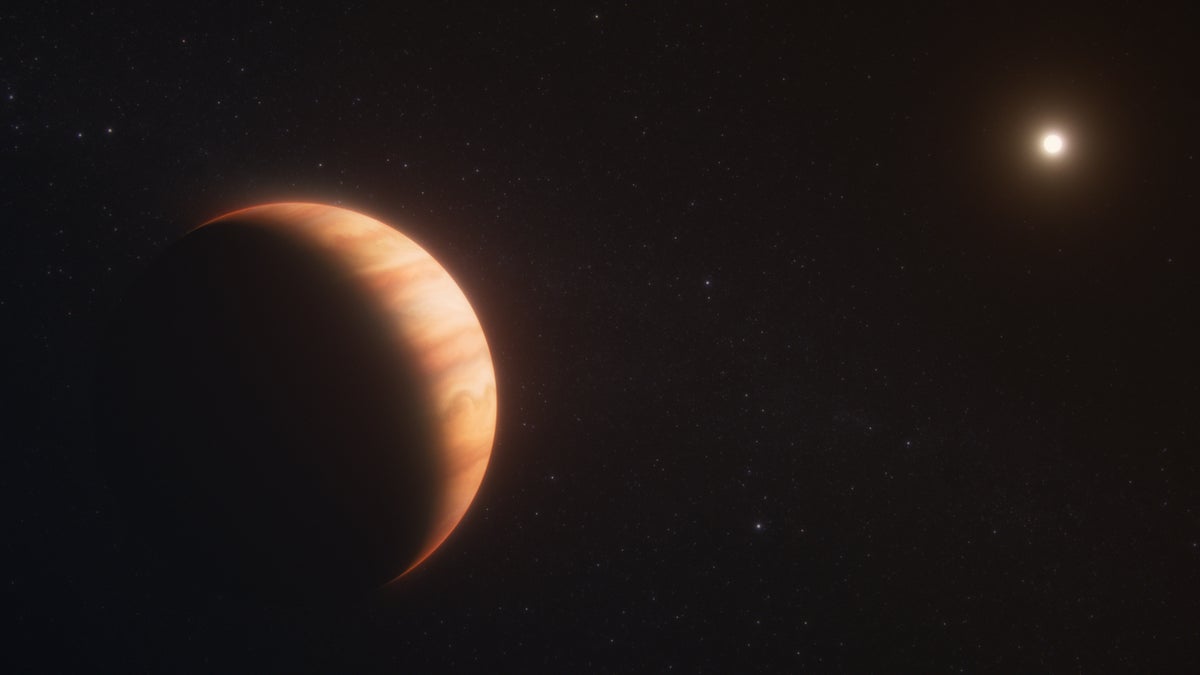
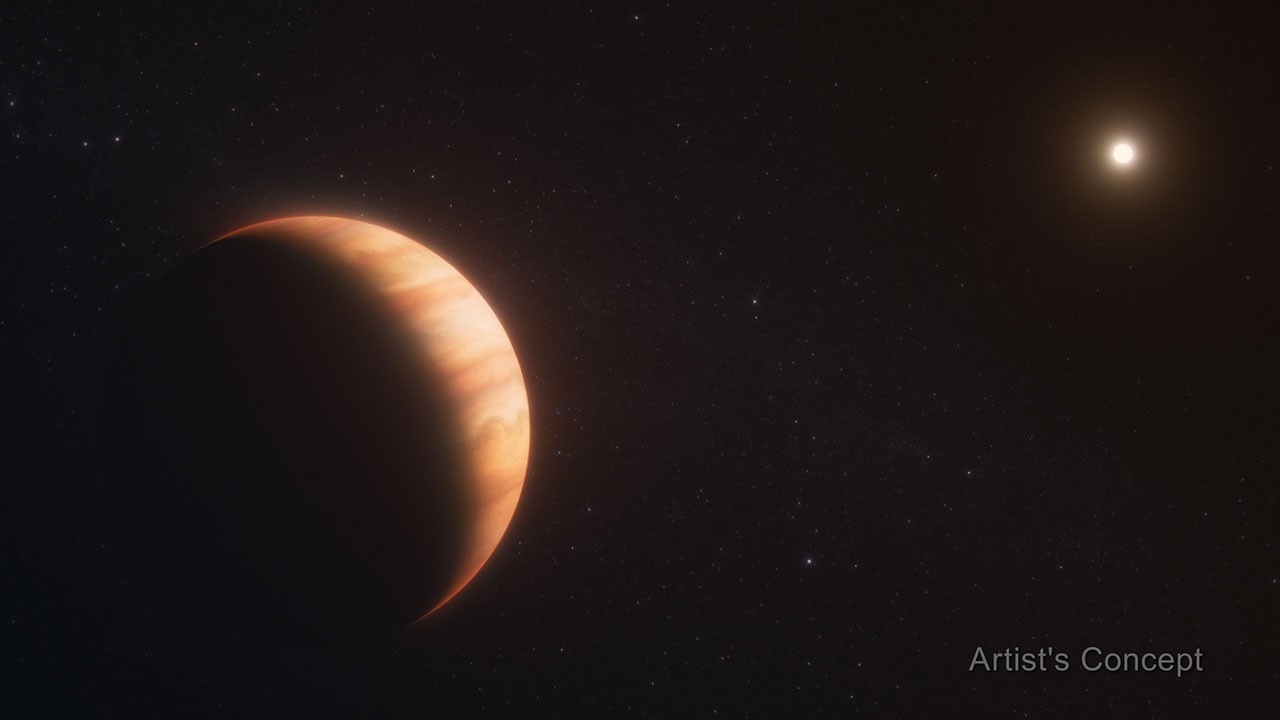
Astronomers using the James Webb Space Telescope have conducted a comprehensive study of WD 1856 b, a gas giant planet orbiting a white dwarf star located 81 light-years from Earth in the constellation Draco. The findings, published in the journal Nature on 1 July 2026, provide the first evidence of an atmosphere on a planet transiting a dead star. The study offers a potential look into the distant future of our own solar system, particularly the fate of outer gas giants following the eventual death of the Sun.
A Survivor of Stellar Evolution
The host star, WD 1856+534, is a white dwarf—a dense, Earth-sized remnant formed after a sun-like star exhausts its fuel, expands into a red giant, and sheds its outer layers. Under standard stellar evolution models, the expansion into a red giant would typically engulf and destroy any nearby planets. WD 1856 b, however, currently completes an orbit every 34 hours at a distance 50 times closer to its star than Earth is to the Sun. Initially discovered in 2020 via NASA’s Transiting Exoplanet Survey Satellite (TESS) and the Spitzer Space Telescope, the planet is estimated to be between four and eleven times the mass of Jupiter, while the white dwarf it orbits is approximately the size of Earth. Because of this size disparity, the planet is seven times larger than its host star.
Related media
Migration vs. Engulfment
The proximity of the planet to the white dwarf led researchers to analyze two primary theories regarding its survival. One hypothesis suggested the planet was engulfed by the star during its red giant phase but persisted inside the stellar atmosphere. The second theory proposed that the planet remained at a safer, outer distance during the star’s death throes and migrated inward later, influenced by the gravitational pull of other objects within the triple star system, which includes two red dwarf companions.
By using the James Webb Space Telescope to observe the planet transiting its host, the team determined its temperature to be approximately 126 °C (260 °F). This result was warmer than expected, indicating the planet retains internal heat. Christopher O’Connor of Northwestern University performed a "thermal history" calculation, projecting the planet's cooling over time. The researchers concluded that the heating likely occurred between 3 and 5.5 billion years after the star became a white dwarf. This timeline suggests the planet was not inside the star during the red giant phase but instead migrated inward later, generating heat through gravitational interactions with the white dwarf.
Atmospheric Composition
The study also marked a milestone in planetary science.
"We saw the telltale signatures of small cloud particles and hydrocarbons, most likely methane, which is the first time we have seen an atmosphere on a planet transiting a dead star."
Victoria Boehm, co-author, via ESA
Implications for the Solar System
These observations provide a perspective on the future of the Sun, which is expected to evolve into a white dwarf in approximately 5 billion years. While inner planets like Mercury and Venus will likely be destroyed by the Sun’s expansion into a red giant, the fate of the outer gas giants remains a subject of ongoing investigation.
"We’re used to looking back in time when we use telescopes, but this is the first time we have been able to look forward to what might happen to the outer planets around the remnant of a Sun-like star. It's like using a time machine to peer into the distant future of our solar system."
Ryan MacDonald, lead author, via University of St. Andrews
Future Research
Researchers have already conducted four additional transits of WD 1856 b using the James Webb Space Telescope to further refine their understanding of its atmospheric chemistry.
How significant is this development?
Contribute your assessment to the aggregated reader intelligence ledger.
Archypedia is dedicated to independent, evidence-backed reporting. This briefing was synthesized from primary source reporting, corroborated across independent newsrooms, and verified against our Editorial Standards.
Transparency record
Evidence behind this report
This report synthesizes 7 distinct sources. Open the source ledger below to compare the underlying coverage.
- science.nasa.gov
- devdiscourse.com
- yahoo.com
- esa.int
- scientificamerican.com
- thenews.com.pk
- earthsky.org
Prepared under the Archypedia Editorial Policy by the Niko Vale editorial desk profile. AI-assisted tools may support drafting and verification; public accountability remains with Archypedia. Report an error.