Virginia Tech researchers develop RNAbpFlow to map RNA structures
Virginia Tech researchers have developed RNAbpFlow, a tool that uses flow matching to map 3D RNA structures to aid in identifying potential drug targets. The system is particularly effective for analyzing RNAs that lack known relatives, offering an alternative to models dependent on evolutionary data.

Researchers at Virginia Tech have developed a computational tool designed to map the three-dimensional structures of RNA, a breakthrough that could accelerate the development of life-saving medications. The system, named RNAbpFlow, addresses a critical bottleneck in biotechnology: while proteins have long been the primary focus of structural biology, RNA molecules are equally vital to essential life functions and represent a growing field of interest for pharmaceutical innovation.
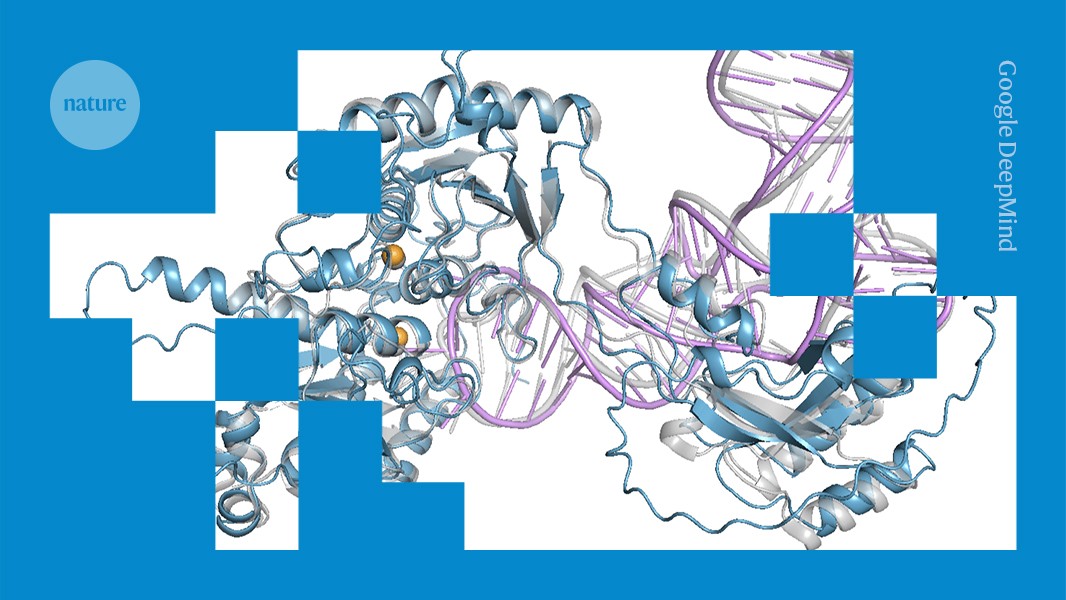
The new method, described in the study published on June 30 in Nature Methods, is a notable departure from standard industry practices. While many prevailing systems—including Google DeepMind’s AlphaFold 3—rely on vast evolutionary sequence databases to infer structural shapes, RNAbpFlow utilizes a technique known as flow matching. This approach, which shares a foundational technical lineage with image-generating artificial intelligence, allows the model to generate all-atom 3D structures from scratch using only a sequence and its corresponding base pairs. By bypassing the need for large, difficult-to-assemble datasets, the tool proves particularly effective for analyzing RNAs that lack known relatives.
Related media


Expanding the Frontier of Structural Biology
The ability to predict these shapes is essential for drug discovery. As noted by the Virginia Tech team, RNA is structurally flexible and often underrepresented in databases, which has made it far harder to model than proteins. Without a clear map of an RNA molecule's 3D shape, researchers struggle to identify the specific pockets where a potential drug molecule might attach. Success in this area has real-world implications, such as the development of treatments for conditions like spinal muscular atrophy, where drugs act by binding to specific RNA folds.
In a blind test against a widely used community benchmark, RNAbpFlow produced a correct overall structure for 12 of 14 RNA targets, compared with eight out of 14 for AlphaFold 3, the system from Google DeepMind. While established servers relying on evolutionary data continue to hold an edge regarding larger, highly complex RNA structures, the Virginia Tech researchers emphasized that their tool excels in cases where experimental data is sparse.
The project, led by doctoral student Sumit Tarafder and associate professor Debswapna Bhattacharya, is part of a broader shift in the scientific community toward open-source innovation. The team has made their full implementation, training data, and code publicly available, citing an obligation to public interest. This aligns with other recent developments in the field, such as the release of NuFold, a separate computational model developed at Purdue University by a team led by Daisuke Kihara. NuFold also aims to bridge the structural data gap and provides public access to its code and a Google Colab notebook for researchers.
The Evolving Landscape of AI in Medicine
These advances arrive as the scientific community continues to evaluate the long-term impact of protein-folding models that first rose to prominence with the success of AlphaFold. While those tools have revolutionized fields ranging from disease research to synthetic biology, experts note that they are not a universal solution for every biological puzzle. Critics and practitioners alike have cautioned that AI-generated structures come with the inherent caveats of predictive modeling, occasionally requiring manual validation in the laboratory to confirm the reality of a structure.
Despite these limitations, the integration of computational prediction into laboratory workflows is increasing. Researchers are now frequently using models to narrow the focus of experiments or to perform "off-label" investigations, such as using predictive tools to identify protein interactions that were previously unknown. The focus has increasingly turned toward improving the precision of these models, with newer initiatives attempting to reduce margins of error to below a single angstrom to ensure that predicted drug-binding interactions hold up under chemical reality.
What to Watch Next
- CASP Competition: The Virginia Tech team is currently preparing an improved version of RNAbpFlow to compete in the upcoming CASP, the community-wide prediction competition where Google DeepMind's protein-folding breakthrough first drew global attention.
- Beyond Proteins: Continued development in flow matching and other generative techniques is expected to further refine the mapping of RNA and other complex, flexible biological molecules.
- Data Integration: Experts are exploring ways to combine the narrow, high-accuracy structural prediction capabilities of current AI tools with the broader reasoning capabilities of large language models to create more comprehensive biological "search engines."
As the field progresses, the race to decode the "grammar of the genome" continues, with new models aiming to provide the structural insights necessary to target diseases ranging from Huntington’s and ALS to various viral infections. For researchers at Virginia Tech, the priority remains clear: providing the public with the tools necessary to unlock the therapeutic potential hidden within RNA's complex 3D architecture.
How significant is this development?
Contribute your assessment to the aggregated reader intelligence ledger.
Archypedia is dedicated to independent, evidence-backed reporting. This briefing was synthesized from primary source reporting, corroborated across independent newsrooms, and verified against our Editorial Standards.
Transparency record
Evidence behind this report
This report synthesizes 4 distinct sources. Open the source ledger below to compare the underlying coverage.
Prepared under the Archypedia Editorial Policy by the Niko Vale editorial desk profile. AI-assisted tools may support drafting and verification; public accountability remains with Archypedia. Report an error.