Why is Venus hotter than Mercury, when Mercury is closer to the Sun?
While Mercury is closer to the Sun, Venus maintains higher surface temperatures due to its dense, carbon dioxide-rich atmosphere that traps heat. This phenomenon serves as a vital case study for planetary climate evolution and atmospheric science.
It is a common misconception that proximity to the Sun is the sole determinant of planetary temperature. While Mercury occupies the inner-most orbit of our solar system, averaging between 46 and 69 million kilometers from the Sun, it is not the hottest planet. That distinction belongs to Venus, the second planet from the Sun, which maintains a scorching, near-constant surface temperature of approximately 465°C (867–872°F). The disparity between the two worlds highlights the profound influence of atmospheric composition over simple orbital distance, as detailed in NASA science reporting and analyses from The Conversation.
The Greenhouse Mechanism
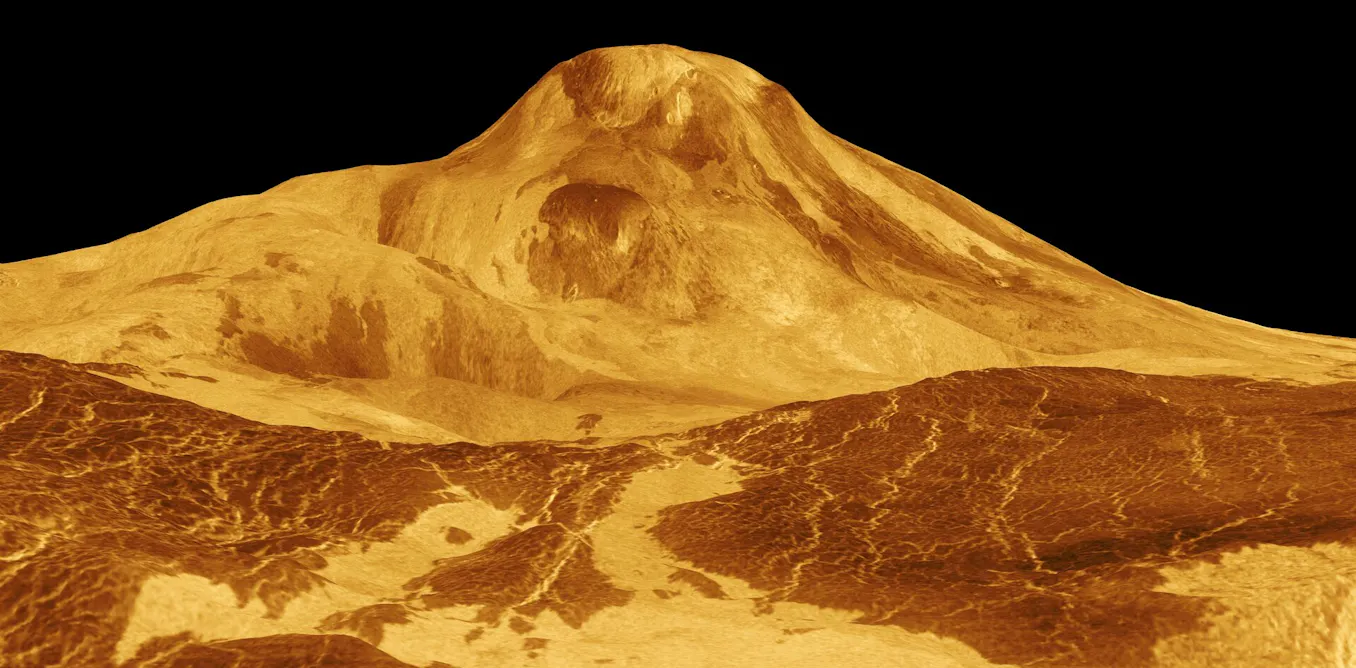
The primary factor in Venus’s extreme heat is its dense atmosphere, which is composed of roughly 96% carbon dioxide. According to Sky at Night Magazine, this carbon dioxide acts as a powerful greenhouse gas. It absorbs infrared radiation emitted from the planet's surface, preventing heat from escaping into space and effectively insulating the world. This process is exacerbated by an atmospheric pressure at the surface that is roughly 92 to 93 times that of Earth at sea level — a density comparable to being nearly one kilometer underwater in Earth's oceans, as reported by Sentinel Mission.
Related YouTube video


By contrast, Mercury possesses almost no atmosphere, containing only a thin exosphere of scattered atoms and molecules created by solar wind and meteoroid impacts. Without a blanket of gas to retain thermal energy, heat radiates directly back into space. This leads to dramatic temperature swings: while the sunlit side can reach 430°C (800°F), the night side can plummet to -180°C (-290°F), according to data cited by Explaining Space.
Historical Context and Planetary Evolution
Scientific models suggest that roughly 4 billion years ago, the early solar system was a different environment. At that time, the Sun emitted approximately 70% of the energy it does today. Research indicates that Venus may have once possessed oceans of water and a climate more comparable to early Earth. As the Sun’s brightness increased by an estimated 40% over the history of the solar system, a runaway greenhouse effect began. As surface water evaporated, the resulting water vapor — itself a greenhouse gas, trapped further heat, leading to a feedback loop that eventually stripped the planet of its liquid water. Without oceans to act as a carbon sink, carbon dioxide accumulated in the atmosphere, solidifying the current, inhospitable state of the planet.
Comparative Environmental Factors
The differences between the two planets are stark, as illustrated by the following observations:
| Feature | Mercury | Venus |
|---|---|---|
| Atmosphere | Virtually none (exosphere) | Extremely dense (CO2) |
| Surface Pressure | Negligible | ~93 times Earth sea level |
| Day/Night Temp | 430°C / -180°C | ~465°C / ~465°C |
| Rotation Direction | Normal | Retrograde (backwards) |
Further complicating the environment on Venus are clouds composed of sulfuric acid. While these clouds are highly reflective, giving the planet a bright appearance in the sky, they also contribute to the heat trap by preventing thermal energy from radiating back into space.
What to Watch Next
Understanding the divergence between Earth and Venus remains a high priority for planetary scientists. Current research is focusing on several key areas:
- Geologic Activity: Continued analysis of radar mapping data to understand the extent of volcanic resurfacing.
- Climate Modeling: Using the "runaway greenhouse" observed on Venus to better refine models of Earth's own climate sensitivity and the long-term impact of human-caused greenhouse gas emissions.
As noted in Yahoo News, while Earth is unlikely to reach the extremes of Venus, the study of our neighboring "evil twin" serves as a crucial case study in planetary habitability. Researchers continue to rely on data from legacy missions to piece together the history of a world that serves as a permanent, cautionary display of atmospheric influence.
Archypedia is dedicated to independent, evidence-backed reporting. This briefing was synthesized from primary source reporting, corroborated across independent newsrooms, and verified against our Editorial Standards.
Transparency record
Evidence behind this report
This report synthesizes 10 distinct sources. Open the source ledger below to compare the underlying coverage.
- science.nasa.gov
- yahoo.com
- theconversation.com
- skyatnightmagazine.com
- explainingspace.com
- sentinelmission.org
- nasa.gov
- stellarstrategy.substack.com
- spaceyv.com
- bbc.co.uk
Prepared under the Archypedia Editorial Policy by the Niko Vale editorial desk profile. AI-assisted tools may support drafting and verification; public accountability remains with Archypedia. Report an error.