UK to see deepest partial solar eclipse in decades on August 12
With over 90% of the sun obscured in many regions, medical experts warn that the event's reduced brightness can suppress the natural reflex to look away, risking retinal damage.

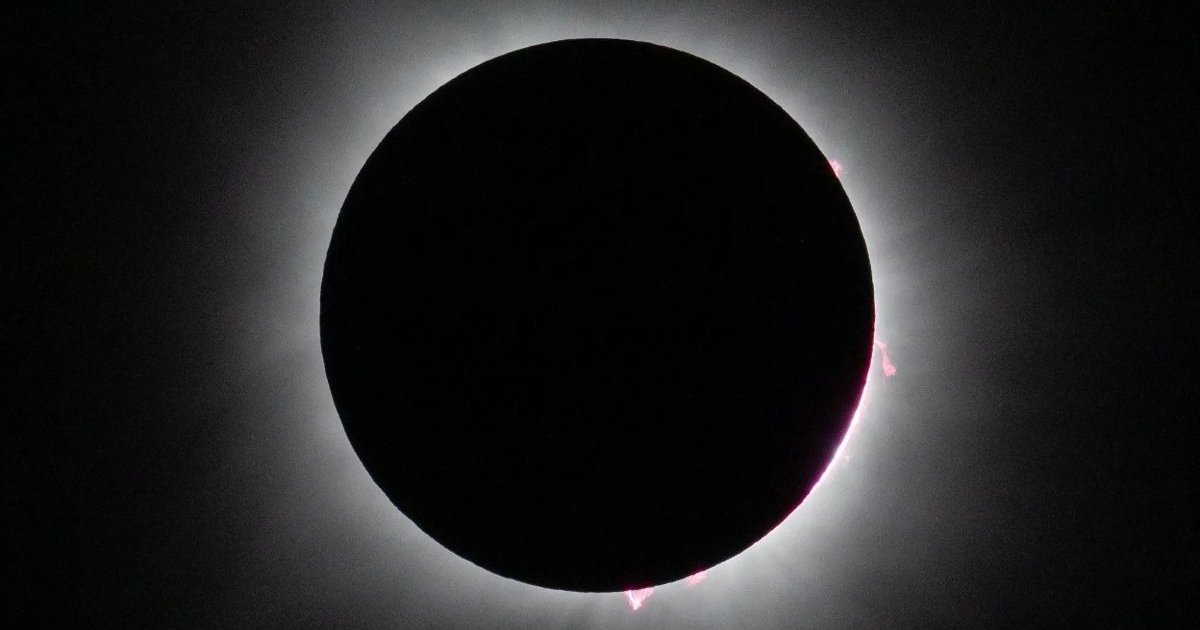
The United Kingdom will experience its deepest partial solar eclipse since 1999 on Wednesday, August 12, 2026, but the rarity of the event is matched by a severe risk of permanent blindness for those using improper eyewear. While the moon will obscure more than 90% of the sun across much of Britain, health officials warn that the retina lacks pain receptors, meaning viewers will not feel cellular damage as it occurs.
Medical experts emphasize that the danger is compounded by a biological override: the sun's reduced brightness during the eclipse can suppress the body's natural reflex to look away, allowing intense radiation to strike the eye. According to Mohamed Elalfy, president of the Royal College of Ophthalmologists, this can damage cells responsible for sharp central vision, leading to blurred vision, distorted perception, or a permanent central blind spot.
Related YouTube video


The risks are not theoretical. Following the total eclipse in 1999, the Royal College of Ophthalmologists reported approximately 70 cases of vision problems; notably, about 40% of those affected had looked at the sun for less than a minute.
The event will begin at approximately 6.17pm and conclude around 8.06pm. Because the eclipse occurs during the early evening, the sun will be low on the horizon, creating a specific geographical and logistical challenge for viewers. Astronomer Ed Bloomer of the Royal Observatory Greenwich stated that a clear, flat western horizon is essential to avoid obstructions from buildings or terrain.
There is a distinct conflict between where the eclipse will be deepest and where it is most likely to be visible. The most significant solar coverage will occur in the west and southwest, while the most favorable weather forecasts are concentrated in the south and east.
| Region | Estimated Solar Coverage | Weather Prospect (per Met Office) |
|---|---|---|
| Cornwall / Land's End | ~95% to 95.8% | Higher risk of cloud/rain |
| Plymouth | 94.66% | Higher risk of cloud/rain |
| Cardiff / Belfast | ~93% | Higher risk of cloud/rain |
| London | ~90% | Largely dry and bright |
| Norfolk / Aberdeenshire | 88% to 90% | Varies; Scotland faces significant cloud |
The deep obscuration is expected to produce an eerie twilight effect
, with the sun appearing as a crescent or as if the moon is taking a giant bite
out of it. This level of coverage is exceptionally rare; the moon will not obscure this much of the sun over the UK again until 2081, and the next total eclipse is not due until 2090.
To view the event safely, experts insist on equipment meeting the ISO 12312-2 (or ISO 12312-2:2015) safety standard. The Royal Observatory Greenwich warns that ordinary sunglasses, regardless of how dark they are, only reduce glare and still allow harmful radiation to reach the retina. Due to high demand, some safety-approved glasses have sold out online, leading to warnings against using knock-off
alternatives.
For those without certified glasses, astronomers suggest indirect viewing methods:
- The Colander Method: Pointing a colander toward the sun with one's back to the light, allowing the eclipse to be visible in the projected shadow.
- Pinhole Projectors: Using two sheets of card to project the sun's image.
- Natural Projections: Observing the shadows cast by leaves on the ground.
Public viewing events are scheduled across the country. In Cornwall, the Falmouth Hotel is hosting a Shanties and Skylines
festival, and the Plymouth Astronomical Society is providing free ISO-certified glasses at Lowry Cross in Yelverton. In Bristol, the Bristol Astronomical Society will offer solar telescopes at the Sea Walls Viewpoint on the Clifton Downs. London viewers can access high vantage points such as Primrose Hill or Parliament Hill, while the Royal Observatory Greenwich will host a livestream from 6.10pm featuring astronomer Dr Greg Brown.
While the UK experiences a partial event, totality — where the sun is completely obscured for more than two minutes — will sweep across Iceland, Greenland, and northern Spain, including cities such as Valencia, Bilbao, and Zaragoza.
Final visibility for UK residents will depend on localized cloud cover. Grahame Madge of the Met Office advises those in northern and western regions to use the hourly-feature on the Met Office weather app on Wednesday to make a final decision on whether the sky will be clear enough to view the event.
Regional Timing and Peak Coverage
The precise timing of the eclipse varies by geography, with the peak occurring earlier in the north than in the south. According to Ibtimes, viewers in Edinburgh and Glasgow can expect the maximum eclipse at approximately 7.05pm, while those in Manchester and Liverpool will reach the peak around 7.10pm. In London, the maximum occurs at 7.13pm, and the event peaks latest in Cornwall at approximately 7.16pm.
While the south-west offers the deepest obscuration, other regions will still witness significant coverage. The Mirror reports that the rest of Wales, Northern Ireland, parts of the West Midlands, the South West, and westernmost Scotland can expect 92% to 94% solar coverage. Conversely, the easternmost areas, including the coasts of Norfolk, Yorkshire, and Aberdeenshire, as well as the Orkney and Shetland Islands, will see the lowest coverage, ranging from 88% to 90%.
For those attempting to photograph the event, the BBC advises placing a pair of eclipse glasses over a smartphone lens or using a solar filter to protect the camera equipment.
Equipment Access and Verification
As certified eyewear has become scarce online, the UK Health Security Agency and other officials reiterate that only ISO 12312-2 or ISO 12312-2:2015 certified glasses are safe. These filters are designed to block almost all light, meaning users should not be able to see anything through them except the sun. According to The National, certified glasses remain available through museums, observatories, and selected branches of major chains including Boots, Specsavers, and Jessops.
To ensure a successful viewing experience, Grahame Madge of the Met Office suggests a practical test: observers should check their planned location around 7pm over the two nights preceding the event to verify that the western horizon is truly unobstructed. For those in cloud-prone regions, the next step is to monitor the hourly-feature on the Met Office weather app on Wednesday to make a final determination on visibility.
How significant is this development?
Contribute your assessment to the aggregated reader intelligence ledger.
Archypedia is dedicated to independent, evidence-backed reporting. This briefing was synthesized from primary source reporting, corroborated across independent newsrooms, and verified against our Editorial Standards.
Transparency record
Evidence behind this report
This report synthesizes 8 distinct sources. Open the source ledger below to compare the underlying coverage.
- mirror.co.uk
- heraldscotland.com
- kalw.org
- uk.style.yahoo.com
- ibtimes.co.uk
- thenational.scot
- en.tempo.co
- leeds-live.co.uk
Prepared under the Archypedia Editorial Policy by the Niko Vale editorial desk profile. AI-assisted tools may support drafting and verification; public accountability remains with Archypedia. Report an error.