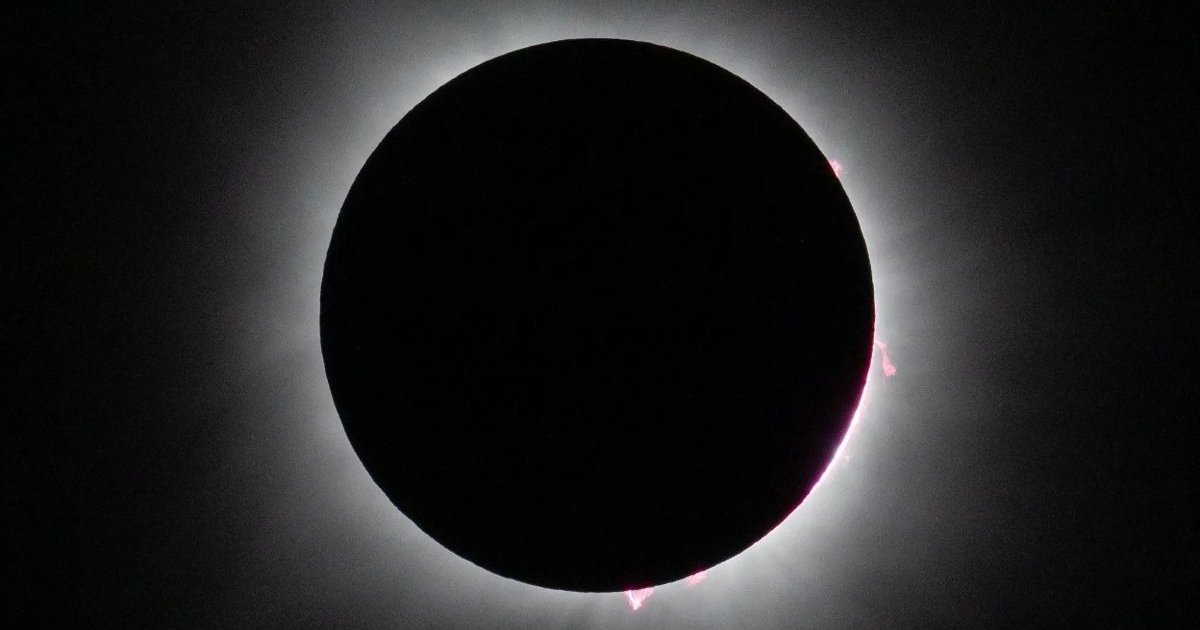
North America prepares for partial solar eclipse and Perseids on August 12-13
While mainland Europe experiences its first total solar eclipse since 1999, North American skywatchers will see a partial eclipse followed by optimum dark-sky viewing conditions for the Perseids.

Skywatchers across the Northern Hemisphere are preparing for a rare astronomical double feature on Wednesday, August 12, 2026, though what individuals witness will depend entirely on their geography. While millions of travelers in Europe and Iceland crowd into a narrow path of totality to watch day turn to twilight, observers in North America will experience only a modest partial eclipse during daylight hours, followed by the peak of the annual Perseid meteor shower overnight into Thursday, August 13.
The total solar eclipse marks mainland Europe's first full eclipse since 1999, driving soaring hotel prices and sold-out accommodations across Spain, according to Tempo. In Reykjavík, Iceland, the partial phase opens in the afternoon, with totality lasting from 5:48 to 5:49 p.m. Local time.
Related YouTube video
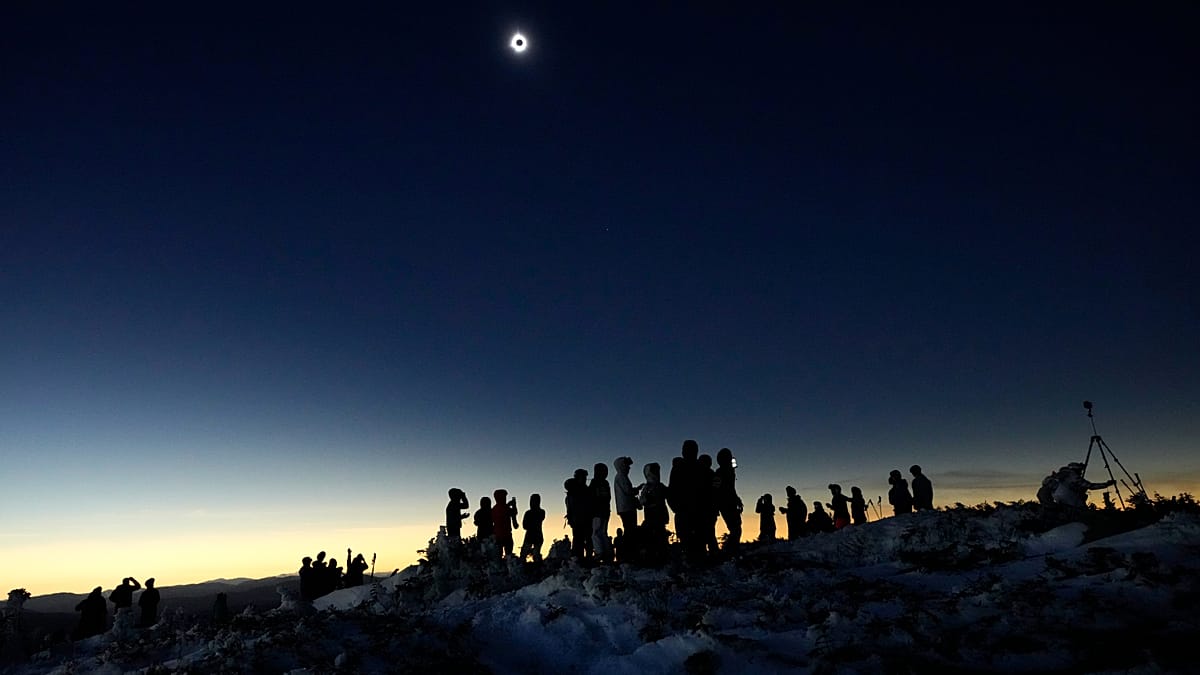
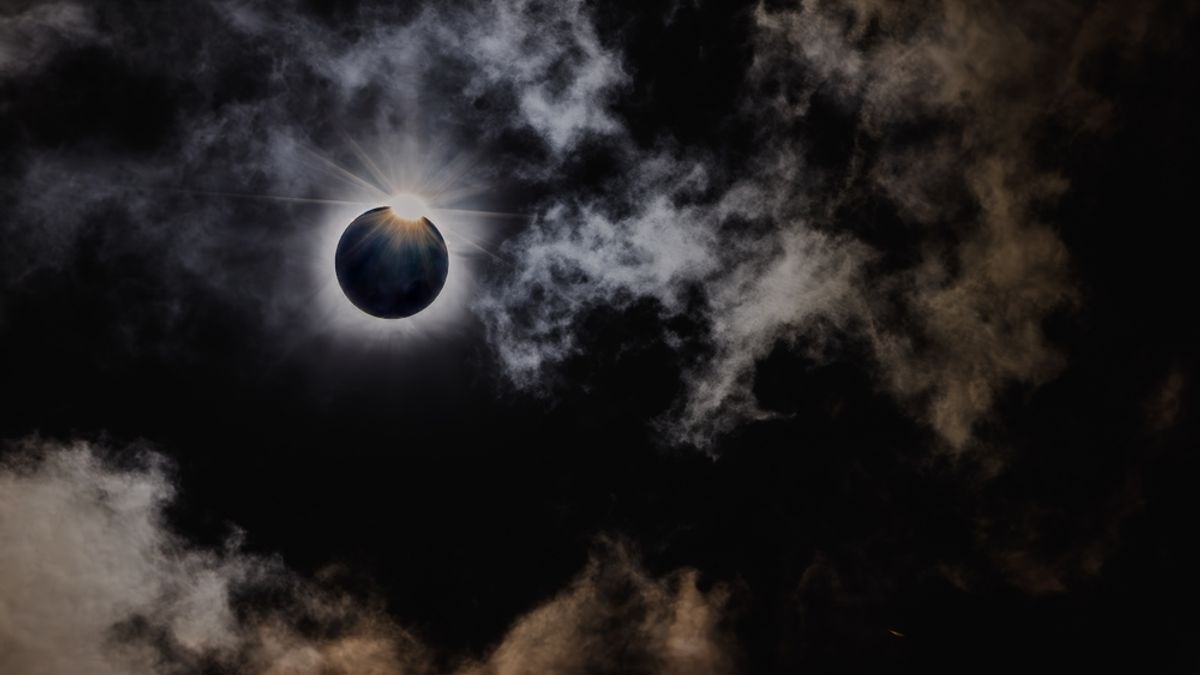
In Spain, the spectacle coincides with sunset, placing the eclipsed Sun low on the western horizon. Spanish provincial capitals within the path of totality will experience the peak in the late afternoon and early evening: La Coruña will see totality from 20:27 to 20:28 local time; Oviedo between 20:27 and 20:28; Santander between 20:26 and 20:28; and Bilbao at around 20:27, where totality will last just 27 seconds, according to Euronews and AOL. Further east, Zaragoza will witness totality from 20:29 to 20:30, Valencia from 20:32 to 20:33, and Palma de Mallorca from 20:31 to 20:32. Major cities such as Madrid and Barcelona sit just outside the official band of totality.
Across the Atlantic, North Americans face a starkly different reality. The continent lies entirely outside the path of totality, relegated instead to the outer penumbral shadow. According to Mashable and Discover Magazine, 26 U.S. States and Washington, D.C., along with every Canadian province and territory, will witness a partial solar eclipse on August 12. In the United States, Alaska and the northern tier will catch the most noticeable views. Fairbanks will see up to 37 percent of the Sun covered in the morning. Canada secures a deeper view, with Nunavut seeing up to 61 percent obscuration and Newfoundland and Labrador exceeding 50 percent coverage, ending in St. John's at 4:38 p.m. NDT.
Astronomical authorities emphasize strict safety parameters for viewing the phenomenon. Because North America and major European urban centers outside the narrow path will not experience full totality, specialized protection is mandatory. According to Tempo and Mashable, viewers must wear ISO 12312-2-certified eclipse glasses at all times during partial phases, as ordinary sunglasses are insufficient. Telescopes, binoculars, and camera lenses require securely fitted solar filters on their front optics to prevent severe eye injury.
Once the daytime shadow clears, attention shifts upward to the night sky. Just hours after the solar eclipse concludes, the annual Perseid meteor shower reaches its peak overnight from August 12 to August 13. According to Tempo and another source, viewing conditions are rated as optimum because the peak coincides with a nearly moonless new moon, leaving skies exceptionally dark. The meteors originate from debris shed by Comet 109P/Swift-Tuttle, striking Earth's atmosphere at 37 miles (59 kilometers) per second. Under dark rural conditions, observers away from city lights can expect to see between 60 and 100 meteors per hour, featuring bright fireballs.
The optimum viewing window for the Perseid meteor shower opens after midnight, with activity intensifying towards the pre-dawn hours between 2:00 and 4:00 a.m. Local time on Thursday, August 13.
Global Viewership Options and Future Total Eclipse Windows
For those outside the path of totality, space agencies and astronomical institutions have organized digital broadcasts. According to Mashable, NASA will stream telescope views and commentary starting at 1:15 p.m. ET via NASA+ and YouTube, featuring footage from research aircraft flying under the lunar shadow. The European Space Agency plans to broadcast from the Observatorio Astrofísico de Javalambre in Teruel, Spain, while the Exploratorium and the Royal Observatory Greenwich will offer separate live feeds from Spain and London, where the United Kingdom anticipates about 90 percent sun coverage.
Observers tracking future occurrences can look to forthcoming paths outlined by Tempo. The next total solar eclipse visible from the United States is scheduled for March 30, 2033, crossing northern Alaska and Nome with totality lasting about two and a half minutes. That event will be followed on August 23, 2044, by a total eclipse crossing Montana, North Dakota, and South Dakota before entering Canada, and subsequently by a broad eclipse sweeping from California to Florida on August 12, 2045.
- August 12, 2026: Partial solar eclipse in North America followed by the Perseid meteor shower peak.
- March 30, 2033: Total solar eclipse crossing northern Alaska, including Nome.
- August 23, 2044: Total eclipse crossing parts of Montana, North Dakota, and South Dakota.
- August 12, 2045: Coast-to-coast total eclipse sweeping from California to Florida.
As observers prepare for the immediate double feature, the next step for enthusiasts across North America remains securing certified ISO 12312-2 eclipse glasses and planning dark-sky trips for the post-midnight Perseid window.
How significant is this development?
Contribute your assessment to the aggregated reader intelligence ledger.
Archypedia is dedicated to independent, evidence-backed reporting. This briefing was synthesized from primary source reporting, corroborated across independent newsrooms, and verified against our Editorial Standards.
Transparency record
Evidence behind this report
This report synthesizes 6 distinct sources. Open the source ledger below to compare the underlying coverage.
Prepared under the Archypedia Editorial Policy by the Niko Vale editorial desk profile. AI-assisted tools may support drafting and verification; public accountability remains with Archypedia. Report an error.