UK record for hottest June day broken for third consecutive day at 37.3C
The United Kingdom has recorded its hottest June day with temperatures reaching 37.3C in Suffolk. This heatwave has caused widespread disruption to transport, schools, and healthcare services.
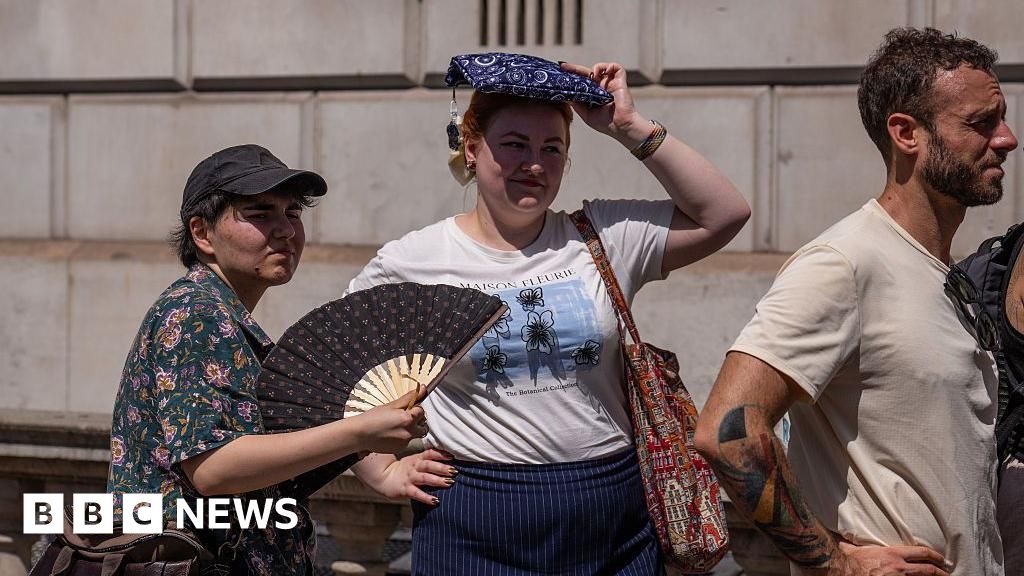
The United Kingdom established a new record for its hottest June day on Friday, marking the third consecutive day that temperature records have been eclipsed. A provisional high of 37.3C was recorded in Santon Downham, Suffolk, surpassing the previous record of 36.7C set in Merryfield, Somerset, on Thursday. These temperatures break a long-standing record from 1976 by more than 1C, a shift forecasters and scientists describe as unprecedented for the month of June.
The intensity of the heatwave, driven by a high-pressure system known as a "heat dome" trapping air over Western Europe, has placed significant strain on public infrastructure. The UK Health Security Agency (UKHSA) issued a red warning for extreme heat across London, the south-east, and the east of England, which remained in effect until 21:00 on Friday. While this has been downgraded to an amber alert, that status remains active in several regions, including the Midlands and North West, until 09:00 on Sunday.
Healthcare services have struggled to manage the surge in demand. At least five NHS trusts have declared critical incidents, including the Royal Devon and Exeter Hospital, which cited the difficulty of maintaining service delivery due to both extreme heat and high humidity. According to Dr. Hilary Williams of the Royal College of Physicians, the heat has also compromised hospital infrastructure, leading to failures in specialized medical equipment such as MRI scanners. In London, the ambulance service reported a substantial increase in life-threatening emergency calls, prompting the service to cancel non-essential meetings and training to prioritize front-line deployment.
The transport network faced widespread disruption throughout the week. Rail operators, including Avanti West Coast and Great Western Railway, implemented service changes, and Network Rail advised passengers to avoid travel unless absolutely necessary. In Sheffield, the tram network was suspended due to the heat. Road travel was similarly affected, with the M5 closed in Somerset following a fault with National Grid infrastructure, leading to significant delays.
Education was also interrupted, with hundreds of schools across England and Wales closing their doors either partially or completely on Friday. In some cases, educational institutions sought creative solutions; one primary school in Cumbria took students to a nearby stream to cool off, while a circus in east London removed the sides of its tent to improve ventilation.
Tragedy struck during the heatwave when a 13-year-old boy, Hayden Jones-Powell, died after entering a lake in Leicestershire. His death has led authorities to reiterate warnings regarding the dangers of swimming in open water. Additionally, emergency services have been managing wildfire incidents, including a blaze on Tintwistle Moor in Derbyshire that affected approximately 200 hectares of land.
Environmental concerns have surfaced alongside the heat, with reports from the campaign group Surfers Against Sewage indicating that sewage has been discharged into UK waters for thousands of hours this week. Utility companies, including South East Water, have initiated precautionary measures, such as establishing emergency bottled water stations, following the implementation of a hosepipe ban in Kent.
As the weekend approaches, the Met Office anticipates a gradual shift in conditions. While eastern and south-eastern England may retain heat into Saturday, most of the country is expected to see a return to more manageable temperatures by Sunday. A yellow warning for thunderstorms remains in place for parts of northern England and Scotland as the heatwave begins to dissipate.
How significant is this development?
Contribute your assessment to the aggregated reader intelligence ledger.
Archypedia is dedicated to independent, evidence-backed reporting. This briefing was synthesized from primary source reporting, corroborated across independent newsrooms, and verified against our Editorial Standards.
Transparency record
Evidence behind this report
This report synthesizes 6 distinct sources. Open the source ledger below to compare the underlying coverage.
Prepared under the Archypedia Editorial Policy by the Samir Haddad editorial desk profile. AI-assisted tools may support drafting and verification; public accountability remains with Archypedia. Report an error.

