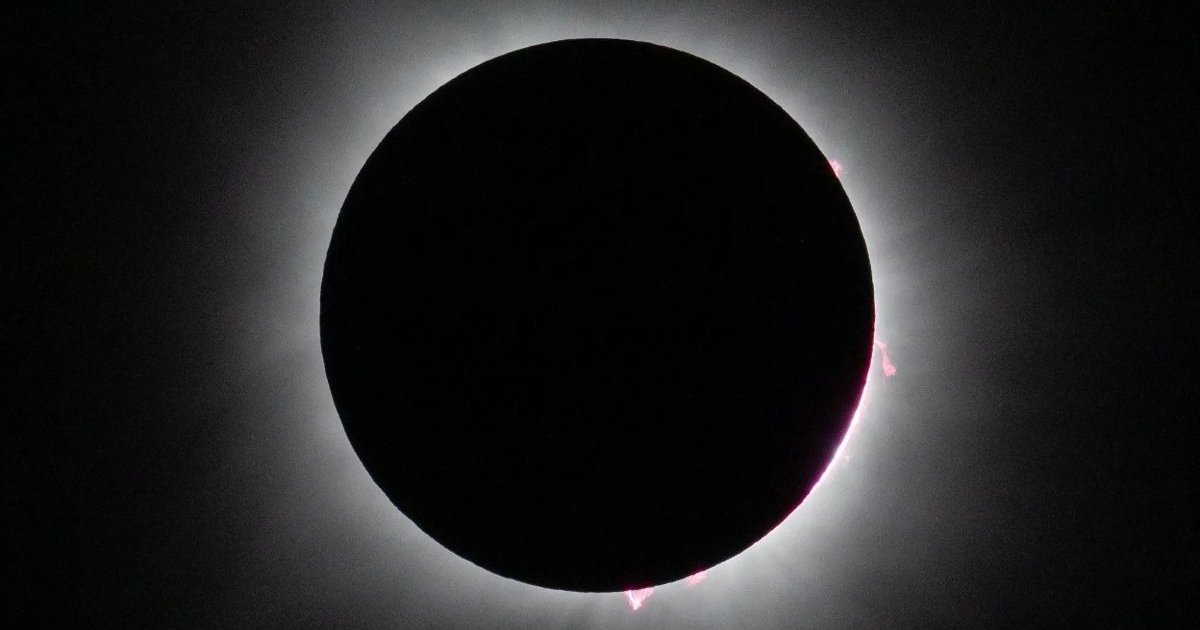
When and where to see the solar eclipse in Scotland
The most dramatic eclipse visible from the UK since 1999 will see the Moon obscure up to 95% of the Sun, though weather patterns may shift the best viewing spots.
Scotland will experience a solar eclipse on Wednesday, August 12, 2026, described by Astronomer Royal for Scotland Prof. Catherine Heymans as agonisingly, frustratingly close
to totality. Up to 95% of the Sun will be obscured by the Moon, representing the most dramatic eclipse visible from the UK since August 1999, according to reports from yahoo.com and the ibtimes.co.uk.
While the deepest coverage is found in the west, a Met Office spokesperson warned that weather fronts grazing that region may hamper ideal views. Consequently, viewers in the south and east of Scotland might secure better views due to clearer skies, even though the Moon will cover less of the Sun in those areas.
Related YouTube video


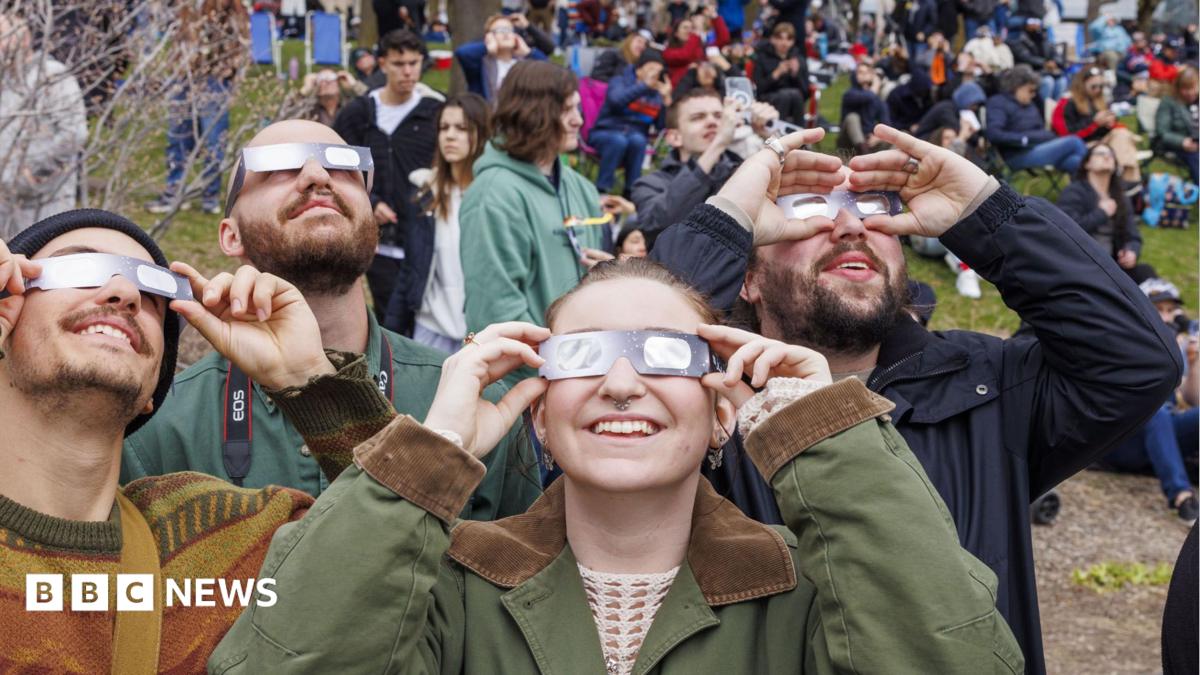
The event is slow-moving and will last approximately two hours. Prof. Heymans stated that the Moon will begin moving in front of the Sun between 18:01 and 18:10 BST, with the peak occurring about an hour later. For viewers in Glasgow and Edinburgh, the peak is expected around 7.05pm, and the event will conclude just before 20:00.
Scotland holds a geographic advantage over England regarding the Sun's position. Prof. Heymans noted that because the Sun sets later in Scotland—approximately 21:00—it will remain higher in the sky during the eclipse. This reduces the need to struggle for a clear western horizon, a concern for observers in England.
Safe Viewing Protocols
The risk of permanent retina damage is high, even if the Sun appears dimmed. Prof. Heymans warned that it is really dangerous to keep looking
during the two-hour event and cautioned that looking at the Sun through clouds can still harm the eyes.
The Royal College of Ophthalmologists provided data following the 1999 eclipse, reporting about 70 cases of vision problems. Approximately 40% of those affected had looked at the eclipse for less than a minute.
To prevent injury, the UK Health Security Agency and the Bbc state that ordinary sunglasses, regardless of how dark they are, do not provide adequate protection. Safe viewing requires:
- Certified Glasses: Only use glasses with the ISO 12312-2 or ISO 12312-2:2015(E) safety certification printed on the frames.
- Indirect Projection: Using a pinhole projector or a household object with small holes, such as a colander, to project an indirect image of the Sun onto a wall or the ground. Prof. Heymans explained that during the eclipse,
chunks will be eaten out of the Sun
, and at the peak, only an arc will be visible in the shadow. - Equipment: Solar telescopes or specialized solar camera filters must be used to protect both eyes and phone camera sensors.
Community Viewing Hubs
Various sites across Scotland are offering guided viewing and safety equipment. In the Highlands, the Jim Savage-Lowden Observatory at Culloden Moor will host observers, while the Rum Bunkhouse will set up solar telescopes at its campsite from 18:00. Other northern options include the Tomintoul Skyhide Stargazing Pavillion and the Midhowe Broch Car Park in Orkney.
Urban and lowland hubs include the Edinburgh Playfair Observatory on Calton Hill, the Mills Observatory at Broughty Castle in Dundee, and the Whitelee Windfarm Visitor Centre in East Renfrewshire. In the south, Beirhope Farm in the Scottish Borders will begin events at 17:30, and the Dark Space Planetarium in Kirkcudbright plans to move to the harbour with a solar telescope if skies remain clear.
For those in the west, the Kintyre and Gigha Night Sky Group will be at Westport Beach Car Park in Campbeltown, and a walking group will meet at Gigha Village Hall at 17:30.
Regional Coverage and Alternatives
While Scotland can expect up to 95% coverage, the Royal Observatory Greenwich reports that the greatest coverage will occur in the south-west of the British Isles. Variations across the UK include:
| Location | Estimated Solar Coverage |
|---|---|
| Cornwall | Roughly 95% |
| Londonderry | 93% |
| London | About 90% |
| Lerwick | 88% |
The experience will differ from those in northern Spain, northern Russia, and parts of Greenland and Iceland, where a total eclipse will be visible. Prof. Heymans described Scotland as being a stone's throw away
from totality, noting that while it will feel a little eerie
, the sky will not go completely dark.
For those facing heavy cloud cover or obstructed horizons, remote access is available. The European Space Agency will host a live webcast from Spain's Astrophysical Observatory of Javalambre, and the Royal Observatory Greenwich will offer a free livestream starting at 6.10pm. NASA and the Virtual Telescope Project in Italy are also providing coverage.
The next total solar eclipse is not expected until September 23, 2090. For those remaining at viewing sites after the eclipse ends at 20:00, the clear skies forecasted for some regions provide a transition to watching the Perseids meteor shower.
Determining the ideal viewing location remains dependent on the weather. The final step for observers is to monitor the Met Office cloud cover forecast closely as the date approaches to finalize their plans.
How significant is this development?
Contribute your assessment to the aggregated reader intelligence ledger.
Archypedia is dedicated to independent, evidence-backed reporting. This briefing was synthesized from primary source reporting, corroborated across independent newsrooms, and verified against our Editorial Standards.
Transparency record
Evidence behind this report
This report synthesizes 5 distinct sources. Open the source ledger below to compare the underlying coverage.
Prepared under the Archypedia Editorial Policy by the Niko Vale editorial desk profile. AI-assisted tools may support drafting and verification; public accountability remains with Archypedia. Report an error.