Want to own a real T. rex? It could cost you $30 million
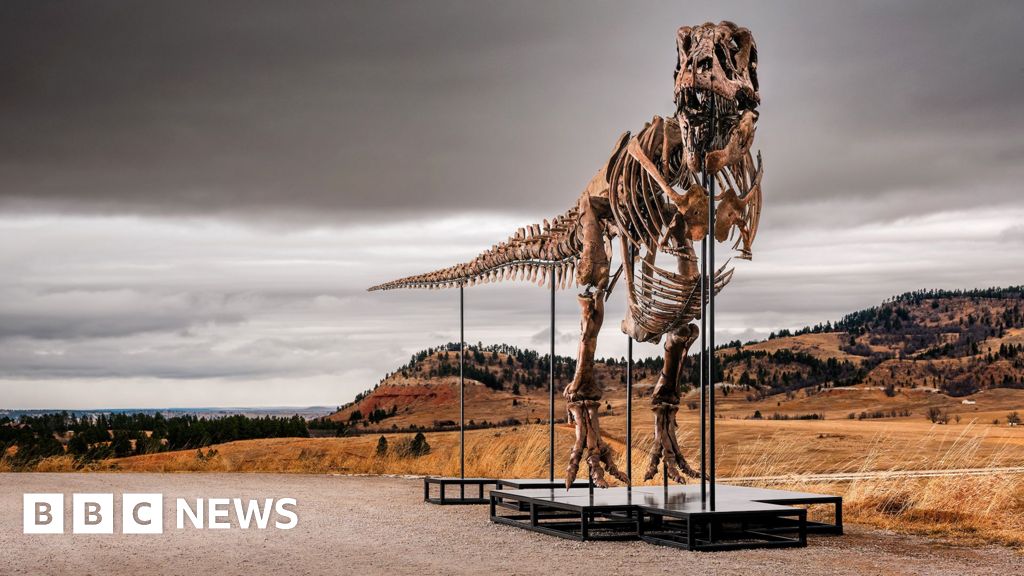
The T. rex skeleton 'Gus' is set to headline a New York City auction, reflecting a widening global market for prehistoric fossils.
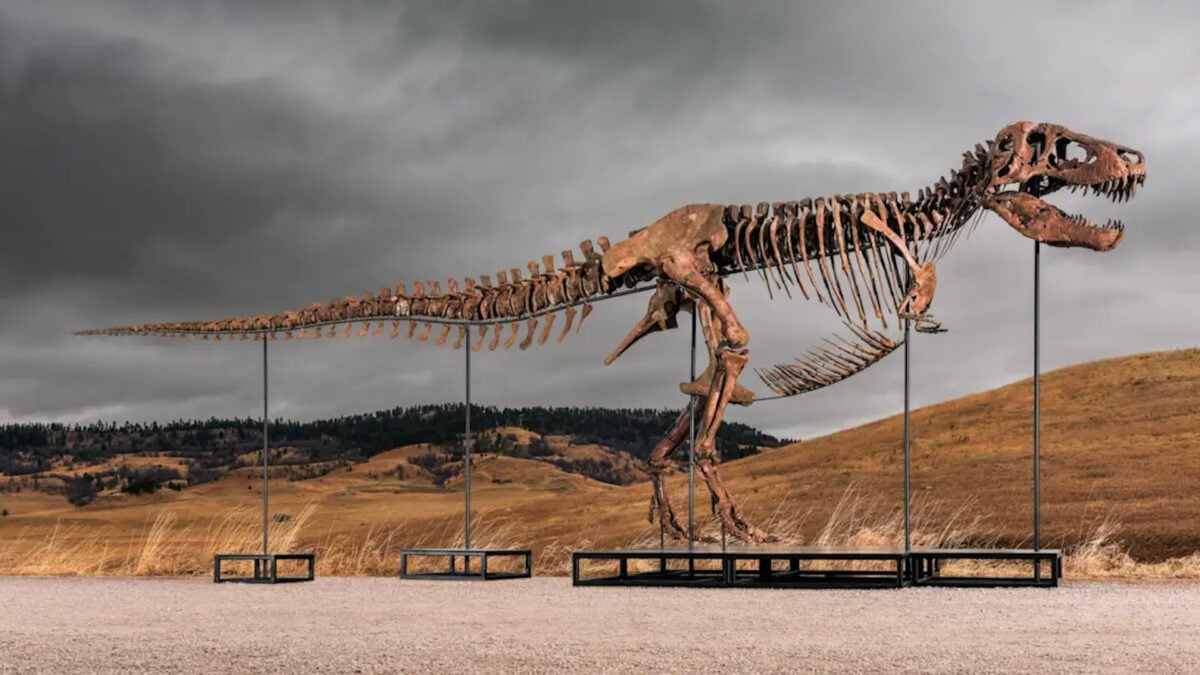
A Tyrannosaurus rex skeleton of immense scale and preservation is heading to the auction block in New York City, carrying the highest price estimate ever placed on a dinosaur fossil. Known as Gus
, the specimen is expected to realize between $20 million and $30 million at Sotheby's.
The fossil will headline the auction house's Natural History sale on July 14, 2026. Bidding is set to open at $19 million. Gus is viewed as a generational opportunity due to his size and integrity, according to Cassandra Hatton, Sotheby’s vice chairman and global head of science and natural history.
Related media


Discovery in the Hell Creek Formation
The skeleton was discovered in 2021 on a 6,500-acre ranch in Harding County, South Dakota. The land is part of the Hell Creek Formation, a geological region spanning northwestern South Dakota and parts of Wyoming, Montana, and North Dakota where dinosaur finds are common. This region previously yielded the famous T. Rex known as Sue.
The find was the result of a long-term hunch by the ranch's owner, the late Gary Gus
Licking. After years of finding T. Rex teeth and small bone fragments on his property, Licking recruited Thomas Heitkamp and the team from Theropoda Expeditions to investigate a specific parcel of land. Heitkamp confirmed that the team found the fossil on the exact land Licking had suggested.
The excavation was a grueling process. In total, nearly 1,000 artifacts were collected. The project spanned five years: three years of excavation and research from 2021 through 2023, followed by two years of cleaning, cataloging, and assembly, which concluded earlier this year.
The dinosaur is named in honor of Gary Licking, who died in February 2022 at age 67, one year into the excavation. He never saw the skeleton fully assembled.
Physical Specifications and Scientific Value
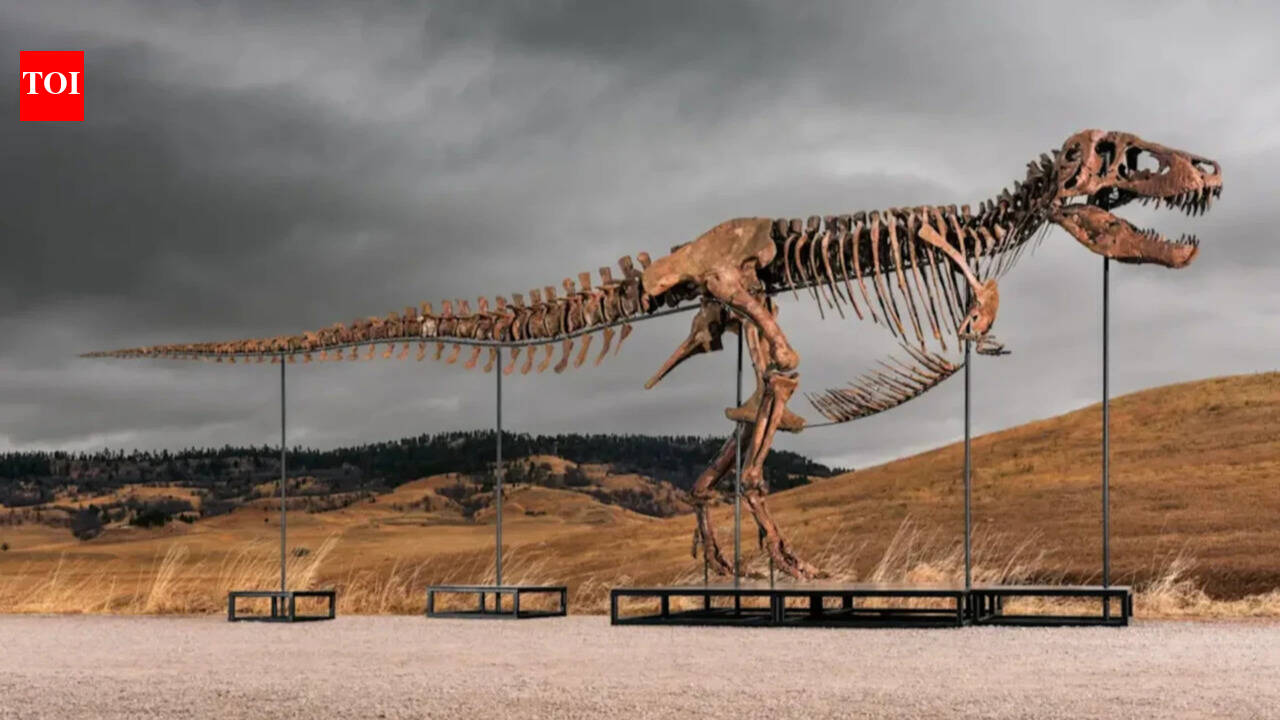
Gus is described as a very large, robust, adult individual from the late Cretaceous period, approximately 67 million years ago. The skeleton measures 38 feet long and stands 12.5 feet tall.
According to Sotheby's, the specimen is among the most complete T. Rex fossils ever found. It consists of 183 fossil bone elements, making it approximately 63% complete by bone count. These elements represent between 75% and 80% of the animal's total bone mass. The collection includes several rare or well-preserved features:
- A skull spanning 53 to 54 inches, with 82% of possible bones present.
- A rare wishbone, known as a furcula.
- Two well-represented feet and a completely represented pelvis.
- A femur measuring 50.39 inches.
Physical evidence on the bones suggests a violent life; some elements show healed fractures, and the skull bears marks indicating Gus was bitten in the head by another T. Rex.
A Volatile Market for Prehistory
The valuation of Gus reflects a widening global market for prehistoric fossils. Hatton noted that interest now extends beyond U.S. Museums and private collectors to include international foundations, museums, and individuals creating their own destinations.
The trajectory of dinosaur sales at auction has climbed sharply over three decades. In 1997, Sotheby's sold Sue the T. Rex for $8.4 million. By 2020, a specimen named Stan brought in $31.8 million at Christie's. The current record is held by Apex, a Stegosaurus sold in 2024 for $44.6 million to billionaire Ken Griffin, who subsequently loaned the fossil to the American Museum of Natural History for four years.
Recent sales indicate the market remains "red-hot." A juvenile Ceratosaurus sold last year for $30.5 million, far exceeding its $6 million estimate. Other auction houses have also entered the fray: Phillips sold a Triceratops for $5.4 million in November 2025, and Joopiter brokered a $5.55 million Triceratops sale in March 2026.
Ethics and the Scientific Divide
The commercialization of fossils is a point of contention among paleontologists. Scott Persons, curator of natural history at the South Carolina State Museum, told NPR that the "ridiculous prices" reflect an increase in market demand. He argued that the sums spent at auction could instead endow research programs at public museums, funding careers of fieldwork and the discovery of new species.
Critics further argue that private sales incentivize hoaxes and create a financial barrier that prevents public museums and research institutions from acquiring important specimens. Some nations, including Canada, Brazil, and South Africa, have responded by placing heavy restrictions on the movement of significant fossils.
Hatton defended the auctions, stating that these sales help locate fossils that would otherwise be lost to everyone.
Comparison of Record T. Rex Specimens
| Specimen | Length | Height | Completeness/Mass | Sale Price |
|---|---|---|---|---|
| Sue | 40–42 ft | 13 ft | 90% bone mass | $8.4 million (1997) |
| Stan | 40–42 ft | 13 ft | Over 60% complete | $31.8 million (2020) |
| Gus | 38 ft | 12.5 ft | ~63% complete / 75–80% mass | $20–$30 million (est.) |
What to watch next: Gus will be on public view at Sotheby's Breuer building in New York City from July 1 to July 14, 2026, leading up to the final auction on Tuesday morning, July 14.
Archypedia is dedicated to independent, evidence-backed reporting. This briefing was synthesized from primary source reporting, corroborated across independent newsrooms, and verified against our Editorial Standards.
Transparency record
Evidence behind this report
This report synthesizes 11 distinct sources. Open the source ledger below to compare the underlying coverage.
- ktiv.com
- tspr.org
- gizmodo.com
- nypost.com
- timesofindia.indiatimes.com
- news.artnet.com
- popsci.com
- robbreport.com
- northernpublicradio.org
- knpr.org
- finance.yahoo.com
Prepared under the Archypedia Editorial Policy by the Niko Vale editorial desk profile. AI-assisted tools may support drafting and verification; public accountability remains with Archypedia. Report an error.