Discarded SpaceX rocket stage will accidentally collide with the moon
A 10,000-pound upper stage is expected to strike the lunar surface at 5,400 mph. NASA and South Korean orbiters are positioned to capture the impact and its aftermath.
A SpaceX rocket upper stage is on an unintentional collision course with the moon, transforming a disposal failure into a live-fire experiment for planetary scientists. While the rocket's original mission successfully delivered the Blue Ghost private lander — the first private spacecraft to achieve a fully successful lunar touchdown — the vehicle that carried it was left in a precarious trajectory.
The discarded segment is expected to strike the lunar surface on Wednesday, August 5. According to space tracking expert Bill Gray, the impact will occur near Einstein Crater on the moon's sunlit western limb at a speed of 5,400 mph, which is approximately seven times the speed of sound. The collision is projected to release energy equivalent to three tons of TNT.
Related YouTube video
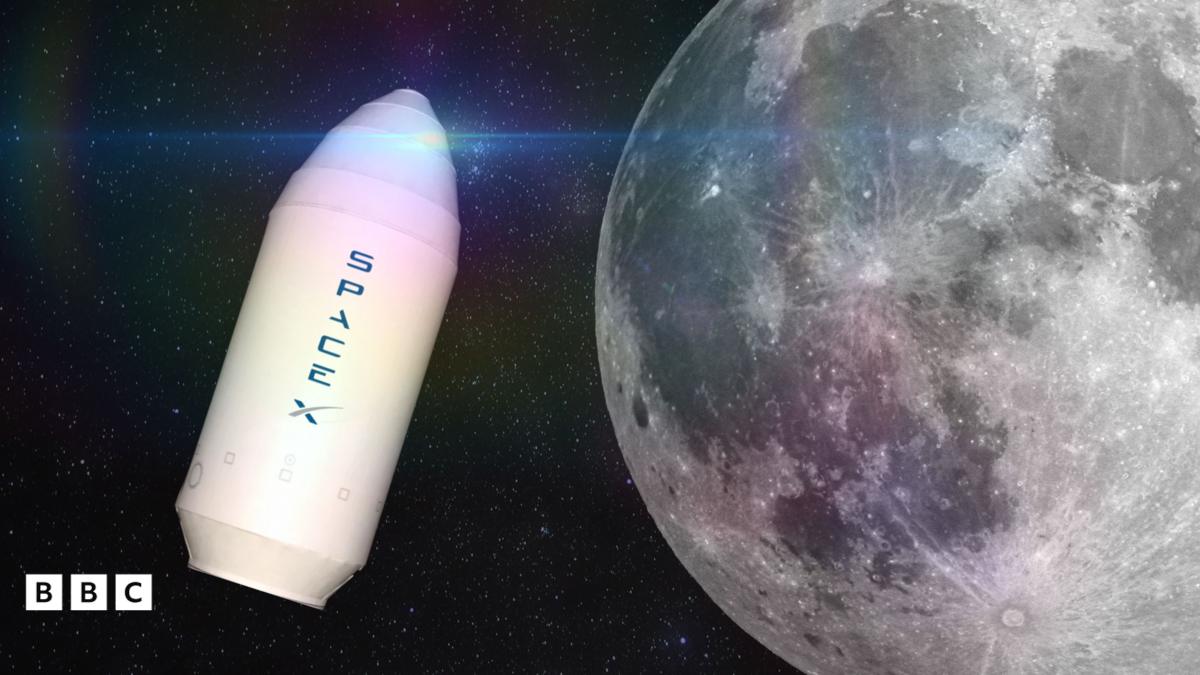

The crash was not intentional. Experts noted that the impact could have been avoided if the upper stage had been nudged into an orbit around the sun. Instead, the stage was left in a long, looping orbit around Earth. This path eventually carried it into a region where the moon's gravity altered its trajectory, pulling it toward the lunar surface.
Scientists are treating this accident as a rare data-gathering opportunity. Unlike natural meteoroid strikes, which offer little warning, this strike is well-tracked, allowing researchers to observe the exact mechanics of a high-velocity impact. Benjamin Fernando of the Los Alamos National Laboratory stated that the interest lies in determining how much of a hazard debris impacts pose to future astronauts
.
Because the moon has low gravity and no wind to disperse dust, the aftermath will be uniquely preserved. Fernando anticipates the collision will carve out a crater roughly 90 feet wide and 16 feet deep (approximately 27 meters wide). While the initial impact flash, lasting less than a second, will likely be too dim for the naked eye, the resulting ejecta plume of dust and rubble could stretch for several miles into space and remain visible to telescopes for tens of minutes.
This event marks the second known instance of a rocket part accidentally striking the moon, following a 2022 incident involving a Chinese rocket segment that created two craters on the lunar far side. It differs fundamentally from intentional lunar impacts; during the Apollo era, NASA crashed rocket sections and lunar modules specifically for seismic measurements, and in 2009, the LCROSS spacecraft was intentionally crashed to search for ice near the south pole.
To capture the event's precise effects, two orbiters are positioned for observation:
- Danuri: The South Korean lunar orbiter is expected to pass within one or two miles of the rocket just two minutes before impact.
- Lunar Reconnaissance Orbiter (LRO): NASA's orbiter will work alongside Danuri to provide before-and-after imagery of the crash site.
The abandoned segment, weighing around 10,000 pounds and measuring some 40 feet in height, originally launched on January 15, 2025. It carried two landers: Blue Ghost and the Japan-based ispace lander known as HAKUTO-R, the latter of which wrecked in June 2025 after contact was lost shortly before touchdown.
The incident highlights the risks of leaving hardware in chaotic orbits
, according to retired astrophysicist Jonathan McDowell. While this specific impact is not considered a problem, McDowell warned that such collisions would be a significant issue for future long-term lunar bases.
As the United States and China compete to land astronauts and the companies SpaceX and Blue Origin vie to provide landers for NASA's Artemis IV missions, the risk of orbital crowding increases. Scientists assert that improving debris monitoring and traffic control is now critical before the arrival of the next generation of astronauts.
Lunar Impact Timeline and Logistics
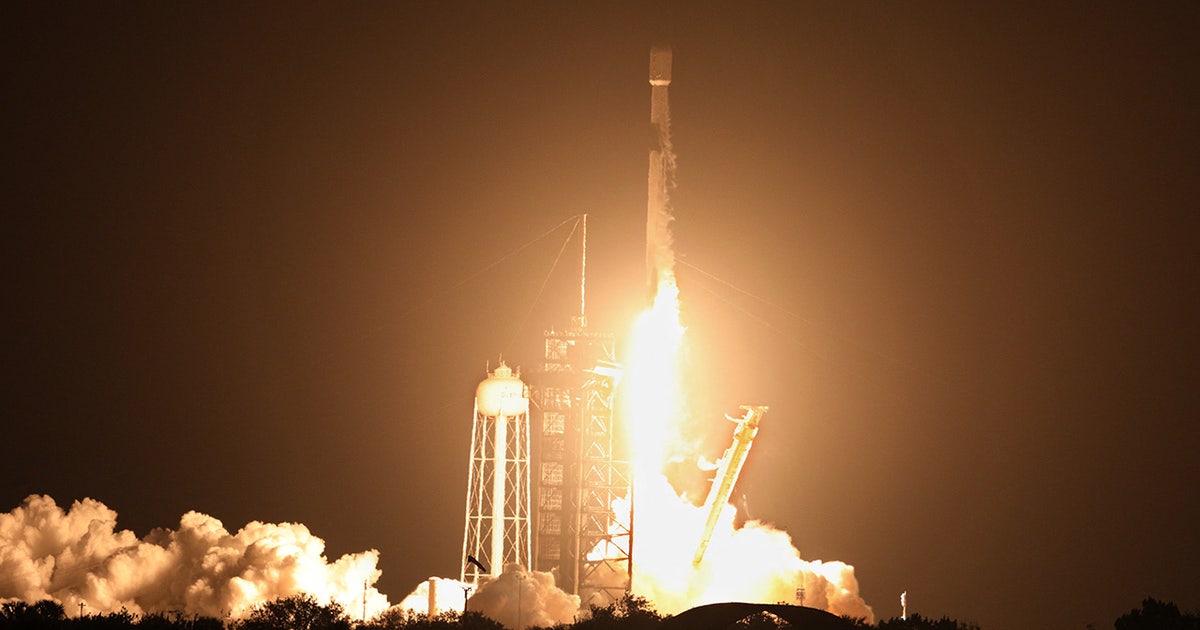
The upper stage's journey toward the lunar surface began with its launch from Kennedy Space Center's Launch Complex 39A on January 15, 2025. This segment served as the delivery vehicle for two robotic missions: the Blue Ghost lander, which reached the surface in March 2025, and the HAKUTO-R lander, which crashed in June 2025. Following these deployments, the stage entered a looping Earth orbit that eventually drifted into the moon's gravitational influence.
The collision is scheduled for Wednesday, August 5, with the BBC reporting a projected impact time of approximately 7.35 am UK time. Because the strike will occur on the moon's near side, observers in much of South America and the eastern portions of Canada and the U.S. Are expected to have the best vantage points, according to reports from Tnonline.
The physical scale of the debris is comparable to a five-storey building, weighing around 10,000 pounds. While the impact flash is expected to be too dim for the naked eye, astronomers can use powerful telescopes to monitor the ejecta plume. The Associated Press, via Fox9, notes that this event provides a critical opportunity for researchers to study the hazards posed by human-made space junk, as the moon's lack of wind and low gravity ensure that the resulting debris remains undisturbed.
The immediate focus for the scientific community remains the data captured by the Danuri and LRO orbiters. Comparing the before-and-after imagery will allow researchers to determine exactly how such crashes alter the lunar surface. For those managing future lunar traffic, the next step is the implementation of improved debris monitoring and traffic control to protect upcoming robotic and human missions.
How significant is this development?
Contribute your assessment to the aggregated reader intelligence ledger.
Archypedia is dedicated to independent, evidence-backed reporting. This briefing was synthesized from primary source reporting, corroborated across independent newsrooms, and verified against our Editorial Standards.
Transparency record
Evidence behind this report
This report synthesizes 4 distinct sources. Open the source ledger below to compare the underlying coverage.
Prepared under the Archypedia Editorial Policy by the Niko Vale editorial desk profile. AI-assisted tools may support drafting and verification; public accountability remains with Archypedia. Report an error.