Vyalev eases motor, nonmotor symptoms in advanced Parkinson's
The subcutaneous infusion therapy Vyalev offers a non-invasive alternative to traditional Parkinson's treatments by maintaining steady medication levels. Real-world data show symptom reduction alongside challenges regarding treatment retention.

Patients living with advanced Parkinson’s disease are navigating a shifting landscape of treatment options as new continuous infusion therapies reach clinical practice. Vyalev, a subcutaneous infusion therapy designed to provide a steady 24-hour delivery of foslevodopa and foscarbidopa. By maintaining consistent medication levels, the therapy aims to mitigate the motor fluctuations and "off" periods—times marked by the return of tremors, stiffness, and immobility—that often plague patients relying on traditional oral regimens.
The therapy, known in Europe and the U.K. As Produodopa, is delivered via a wearable pump that bypasses the digestive system. This represents a departure from earlier standard-of-care treatments, such as the levodopa-carbidopa intestinal gel, which required invasive surgical procedures to place a feeding tube. By contrast, the Vyalev delivery system is designed to be worn on the body and can be managed by patients or their caregivers at home.
Related media
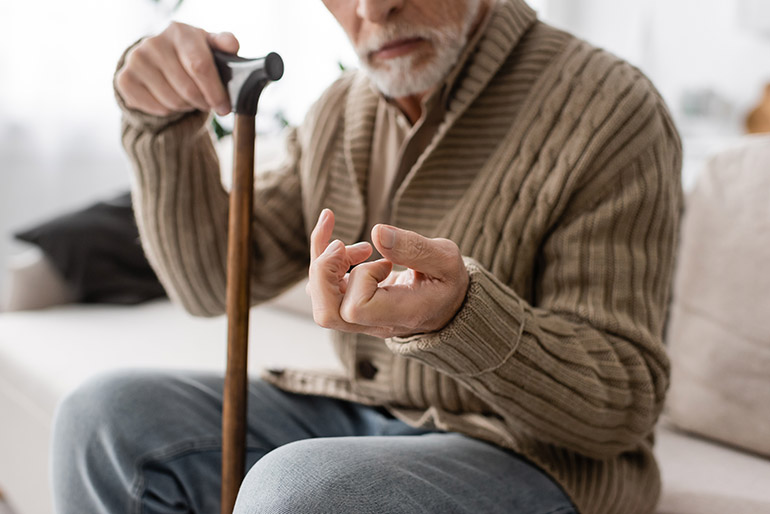
Interim results from the ongoing, international ROSSINI observational study provide a real-world perspective on the therapy’s impact. The study tracks 427 adults with advanced Parkinson’s across 10 countries. Data from an initial cohort of 105 treatment-naive participants indicated that after six months of therapy, daily "off" time was reduced by a mean of 2.7 to 2.8 hours. Participants also reported improvements in sleep quality, pain, gastrointestinal dysfunction, and overall quality of life, alongside significant reductions in motor symptoms like freezing of gait and dyskinesia.
Despite these clinical benefits, the real-world data highlight significant challenges regarding patient retention. Analysis of the first 105 participants showed that 29% to 32.4% of patients discontinued the therapy within the first six months. Among those who withdrew, 8.6% cited adverse events as the primary reason. The most frequently reported side effects included hallucinations and infusion-site infections, each affecting 5.7% of the cohort. Additionally, serious adverse events were documented in 12.4% of patients, though researchers noted that the safety profile remains consistent with findings from earlier, controlled clinical trials.
The implementation of Vyalev in the United States follows a period of regulatory review. The therapy received approval after an initial rejection by the FDA in March 2023, which was driven by questions regarding the pump mechanism. Clinicians are advised to provide specialized training to patients before initiation. Medical experts emphasize the necessity of keeping a backup supply of oral carbidopa and levodopa in the event of pump failure or prolonged disconnection, as the interruption of the continuous infusion can lead to underdosing.
The treatment landscape remains highly competitive. Other subcutaneous infusion therapies, such as the ND-0612 treatment, are undergoing late-stage clinical evaluation. Researchers involved in the ROSSINI study intend to conduct a second interim analysis focusing on 200 patients who complete 12 months of follow-up, which is expected to further validate the long-term safety and efficacy of the 24-hour infusion model.
As the field of neurology moves toward these continuous-delivery models, the focus of care is shifting. Rather than attempting to manage the hourly fluctuations of disease symptoms through intermittent oral doses, the goal is increasingly centered on maintaining stability throughout the day. While this transition offers potential improvements in daily function, the reported rates of side effects and treatment discontinuation suggest that patient monitoring and ongoing clinical support remain essential components of the treatment process.
How significant is this development?
Contribute your assessment to the aggregated reader intelligence ledger.
Archypedia is dedicated to independent, evidence-backed reporting. This briefing was synthesized from primary source reporting, corroborated across independent newsrooms, and verified against our Editorial Standards.
Transparency record
Evidence behind this report
This report synthesizes 9 distinct sources. Open the source ledger below to compare the underlying coverage.
- parkinsonsnewstoday.com
- parkinsonhope.org
- drugdiscoverytrends.com
- pharmaphorum.com
- vyalevhcp.com
- practicalneurology.com
- yahoo.com
- latimes.com
- aol.com
Prepared under the Archypedia Editorial Policy by the Lina Park editorial desk profile. AI-assisted tools may support drafting and verification; public accountability remains with Archypedia. Report an error.