US death rate hits record low as life expectancy reaches new peak
The United States recorded its lowest death rate since federal tracking began, with a decline in mortality observed across all age groups. While life expectancy has reached a new record, public health experts continue to monitor long-term risks like cardiometabolic health.

The United States has recorded its lowest death rate since federal government tracking began. Provisional data released on July 2, 2026, by the National Center for Health Statistics — a division of the Centers for Disease Control and Prevention — reveals that the national mortality rate in 2025 fell by 4.6% compared to the previous year. This historic milestone signals a sustained recovery from the mortality surges observed during the COVID-19 pandemic.
According to the report, there were approximately 689.2 deaths for every 100,000 people in 2025, a significant decrease from the 722.1 deaths per 100,000 people recorded in 2024. The total estimated number of deaths in the United States for 2025 stands at 3,094,593. Federal health officials noted that these statistics are provisional, as additional death certificates are still being processed; final annual mortality figures are expected to be released later this year.
Related media
A Shift in Mortality Trends
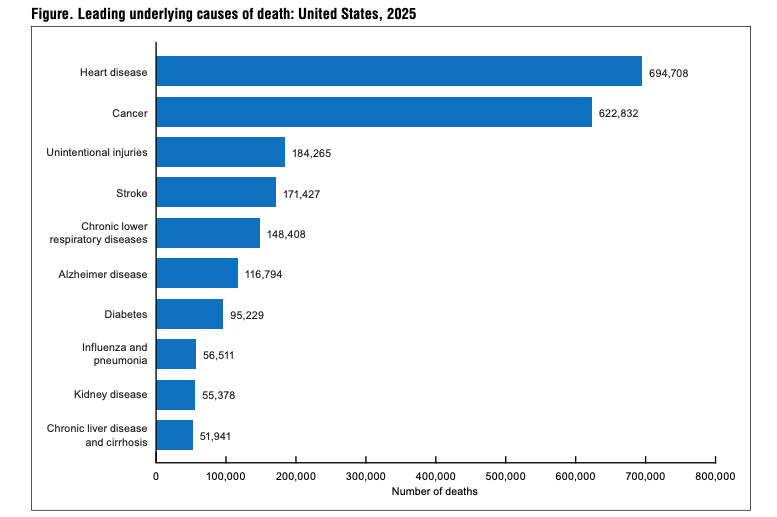
The decline in death rates was consistent across all age groups and applied to both males and females. For 2025, the top three causes of mortality were identified as heart disease, with 694,708 deaths; cancer, with 622,832 deaths; and unintentional injuries, which accounted for 184,265 deaths. Health officials attributed a portion of the record-low death rate to a marked reduction in drug overdose fatalities, which are categorized within the unintentional injuries group.
While the overall trend is positive, COVID-19, which caused over 1 million deaths at the height of the pandemic and was the fourth leading cause of death in 2022, has continued its decline, falling to the 10th leading cause by 2023.
Context and Expert Analysis
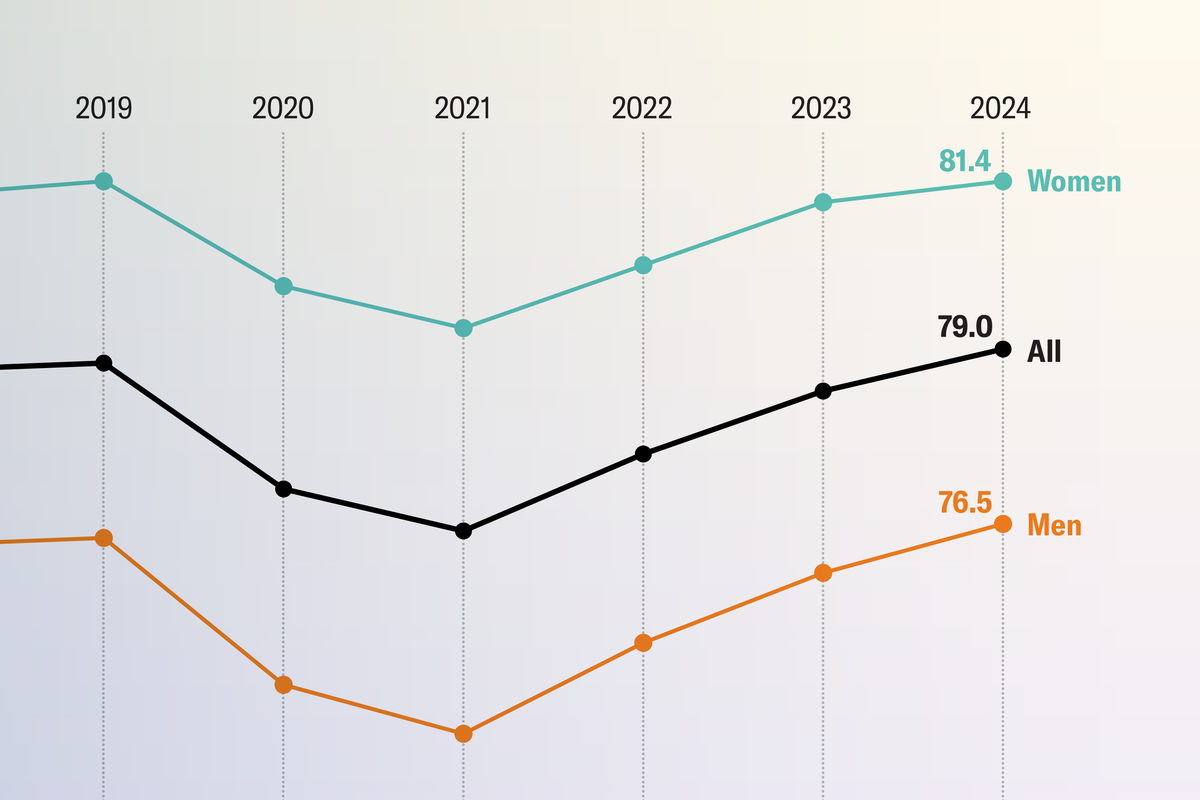
The 2025 figures follow a rebound in life expectancy that began after the pandemic, when the U.S. Saw a significant decrease from pre-pandemic levels. Life expectancy for an American born in 2024 reached 79 years, surpassing the previous record.
Demographers and public health researchers have offered mixed reactions to these trends. Philip Cohen, a sociologist and demographer at the University of Maryland, College Park, noted the breadth of the improvement, stating:
"The rise in life expectancy is welcome news, and it is good to see that it was widespread across race, ethnicity and gender."
Philip Cohen, sociologist and demographer at the University of Maryland, College Park, via Scientific American
Despite this, experts remain cautious regarding the U.S. Position relative to other developed nations. Andrew Stokes of Boston University pointed out that the U.S. Continues to trail countries where life expectancy typically reaches the low-to-mid 80s. Stokes cautioned that the current momentum may mask underlying issues, such as the stagnation of public health improvements seen in the decade preceding the pandemic. He and other researchers emphasize that rising rates of cardiometabolic risks, such as obesity and high blood pressure, continue to present long-term challenges to the American health profile.
As the country monitors these trends, research into longevity continues to evolve. Recent studies are exploring the impact of short bursts of physical activity, sometimes referred to as "exercise snacks", on overall health, as well as the potential role of the Bacillus Calmette-Guérin (BCG) vaccine in modulating immune responses that may correlate with a lower risk of Alzheimer’s disease.
How significant is this development?
Contribute your assessment to the aggregated reader intelligence ledger.
Archypedia is dedicated to independent, evidence-backed reporting. This briefing was synthesized from primary source reporting, corroborated across independent newsrooms, and verified against our Editorial Standards.
Transparency record
Evidence behind this report
This report synthesizes 7 distinct sources. Open the source ledger below to compare the underlying coverage.
Prepared under the Archypedia Editorial Policy by the Lina Park editorial desk profile. AI-assisted tools may support drafting and verification; public accountability remains with Archypedia. Report an error.