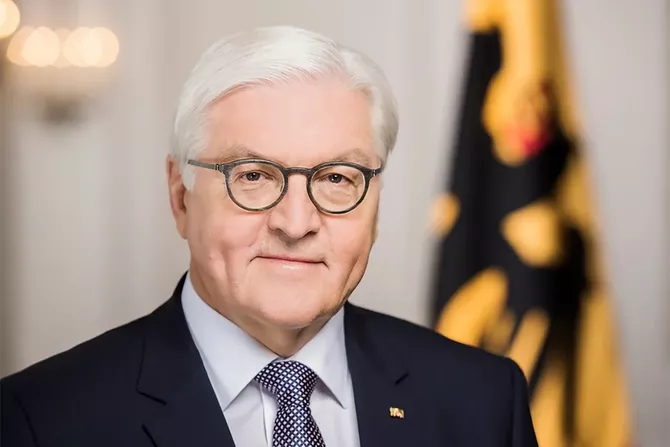
German President Frank-Walter Steinmeier Visits Uzbekistan to Boost Trade and Investment Ties
TASHKENT, Uzbekistan — German President Frank-Walter Steinmeier arrived in Uzbekistan today to kick off a three-day state visit focused on expanding economic cooperation, trade, and investment between the two nations. The visit, which includes high-level talks with Uzbek officials, marks a significant step in deepening relations between Germany and Central Asia, a region increasingly seen as a strategic bridge between Europe and Asia.
According to the German Foreign Office, Steinmeier’s trip—his first to Uzbekistan since taking office—aims to “strengthen political dialogue and explore new opportunities for German businesses in Uzbekistan’s growing economy.” Uzbek officials have signaled openness to German investment in energy, infrastructure, and technology sectors, with both sides expected to sign memorandums of understanding (MoUs) during the visit.
This visit comes as Germany seeks to diversify its trade partnerships beyond traditional European markets, while Uzbekistan positions itself as a key player in Central Asia’s economic revival. Analysts say the timing is critical, given rising geopolitical tensions and shifting global supply chains.
—
Why This Visit Matters: Germany’s Push Into Central Asia
Steinmeier’s trip to Uzbekistan is part of a broader German strategy to strengthen ties with Central Asian nations, a region often overlooked in European foreign policy. Germany’s trade with Uzbekistan totaled €2.1 billion in 2023, with exports dominated by machinery, chemicals, and pharmaceuticals, while imports include textiles, minerals, and agricultural products.
Yet the potential for deeper cooperation is significant. Uzbekistan, Central Asia’s most populous country, has launched ambitious economic reforms, including a $20 billion investment plan announced last year to modernize its infrastructure, energy sector, and digital economy. German companies—particularly in renewable energy, automotive manufacturing, and logistics—stand to benefit.
Key drivers behind the visit:
- Energy security: Germany, which has accelerated its phase-out of Russian gas, is exploring partnerships with Uzbekistan’s expanding gas and renewable energy sectors.
- Supply chain diversification: Uzbekistan’s strategic location along the New Silk Road trade corridors makes it an attractive hub for German firms looking to reduce reliance on Chinese or Russian intermediaries.
- Technological collaboration: German expertise in automation and digital infrastructure aligns with Uzbekistan’s push to digitize its economy, including plans to launch a national blockchain platform.
Uzbek officials have emphasized that the visit is not just about trade but also about political stability and regional cooperation. “Uzbekistan values its partnership with Germany as a key European democracy,” said a statement from the Uzbek Foreign Ministry, noting that the two countries share interests in countering extremism and promoting human rights.
However, challenges remain. Germany’s export controls and sanctions regime—particularly those tied to Russia—could complicate certain deals, while Uzbekistan’s state-dominated economy may limit the flexibility of foreign investors. Both sides are expected to address these issues during the talks.
—
Who’s Involved: Key Players in the Talks
The visit brings together some of Central Asia’s most influential political and economic figures, with both sides sending high-level delegations.
| German Delegation | Uzbek Delegation |
|---|---|
| Frank-Walter Steinmeier President of Germany |
Shavkat Mirziyoyev President of Uzbekistan |
| Annalena Baerbock German Foreign Minister |
Abdulla Aripov Prime Minister of Uzbekistan |
| Peter Altmaier German Economy Minister |
Elmirbek Shonazarov Deputy Prime Minister (Economic Affairs) |
| Representatives from: – Siemens – Volkswagen – BASF – Deutsche Bank |
CEOs from: – Uzbekneftegaz (oil & gas) – UzAutoDealer (automotive) – UzDigital (tech infrastructure) |
German companies are particularly keen on the visit. Siemens, for example, has already secured contracts to modernize Uzbekistan’s power grids, while Volkswagen is exploring partnerships with local automakers to assemble vehicles for the Central Asian market. BASF, the chemical giant, has expressed interest in Uzbekistan’s expanding agricultural sector, which could benefit from German fertilizers and irrigation technology.
On the Uzbek side, President Mirziyoyev has made economic diversification a cornerstone of his administration. Since taking office in 2016, he has reduced state control over the economy, attracted foreign direct investment (FDI), and pushed for reforms in sectors like banking and telecommunications. The visit with Steinmeier is seen as a test of whether these reforms are bearing fruit.
—
What’s on the Agenda: Expected Outcomes of the Visit
While exact details of the talks remain under wraps, officials from both countries have outlined several priority areas. Based on past state visits and public statements, here’s what to expect:
1. Trade and Investment Agreements
Both sides are expected to sign memorandums of understanding (MoUs) in key sectors, including:
- Energy: Potential deals for German companies to invest in Uzbekistan’s gas liquefaction projects and renewable energy infrastructure, particularly solar and wind power.
- Infrastructure: German firms may secure contracts for railway modernization, urban development, and digital connectivity projects.
- Automotive: Discussions on assembling electric vehicles (EVs) in Uzbekistan, leveraging German technology and Uzbek manufacturing capacity.
Germany’s KfW Development Bank has already indicated it may provide financing for joint projects, though exact figures have not been disclosed.
2. Political and Security Cooperation
Beyond economics, Steinmeier and Mirziyoyev are likely to discuss:
- Counterterrorism: Uzbekistan has been a key partner in Germany’s efforts to combat extremism in Central Asia, particularly in regions bordering Afghanistan.
- Human rights: While Uzbekistan has made progress in reforms, Germany will likely raise concerns about press freedom and political opposition, areas where Uzbek civil society groups say more needs to be done.
- Regional stability: Talks may touch on Uzbekistan’s role in mediating between Russia and the West, given its neutral stance in the Ukraine war.
3. Cultural and Educational Exchanges
As part of the visit, Germany and Uzbekistan will announce new programs to:
- Expand scholarship opportunities for Uzbek students in German universities, particularly in STEM fields.
- Strengthen cultural ties, including exhibitions of German art in Tashkent and Uzbek music in Berlin.
- Promote German language education in Uzbek schools, building on existing programs in other Central Asian countries.
Steinmeier is also scheduled to meet with German expats and Uzbek-German business associations to discuss challenges and opportunities for cross-border collaboration.
—
How This Compares to Past Visits: A Look at Germany-Uzbekistan Relations
Steinmeier’s visit is the highest-level German-Uzbek diplomatic engagement in years, but it follows a pattern of gradual but steady growth in bilateral relations. Here’s how this trip stacks up against past milestones:
| Year | Event | Key Outcomes | Significance |
|---|---|---|---|
| 2001 | First German-Uzbek Intergovernmental Commission | Establishment of a framework for economic cooperation; initial MoUs in trade and energy. | Laying the groundwork for future investments. |
| 2011 | Visit by German Foreign Minister Guido Westerwelle | Agreement on €100 million in development aid; focus on education and infrastructure. | First major German aid package to Uzbekistan. |
| 2017 | Uzbek President Mirziyoyev’s visit to Germany | Signing of €250 million in trade deals; discussions on gas exports to Europe. | Marked a shift toward deeper economic ties post-reforms. |
| 2023 | German Chancellor Olaf Scholz’s virtual meeting with Mirziyoyev | Agreement to explore joint projects in renewable energy and digitalization. | Reflected Germany’s post-Ukraine war energy strategy. |
| 2024 | Steinmeier’s state visit (current) | Expected MoUs in trade, energy, and security; high-level political dialogue. | First presidential-level visit in over a decade; signals long-term commitment. |
What stands out this time is the scope and ambition of the discussions. Unlike past visits, which often focused on aid or small-scale projects, this trip is centered on large-scale investments and strategic partnerships. Analysts attribute this shift to:
- Germany’s urgent need to diversify energy and trade routes away from Russia.
- Uzbekistan’s economic reforms and openness to foreign investment.
- A broader European push into Central Asia to counter Chinese and Russian influence.
—
Potential Challenges: Obstacles to Closer Ties
While the visit is being framed as a success, several challenges could complicate the partnership:
1. Sanctions and Export Controls
Germany’s strict export regulations, particularly those tied to Russia, could limit cooperation in certain sectors. For example:
- Uzbekistan’s oil and gas sector relies on Russian technology, which Germany may restrict under sanctions.
- German firms may hesitate to invest in dual-use technologies (e.g., drones, encryption) due to potential misuse risks.
A German Foreign Office spokesperson acknowledged these concerns but noted that “flexibility will be discussed” to ensure deals align with both countries’ interests.
2. Economic and Political Risks in Uzbekistan
Despite reforms, Uzbekistan remains a high-risk market for foreign investors due to:
- State dominance in key sectors: Many industries are controlled by government-linked entities, which can make negotiations complex.
- Corruption concerns: While Mirziyoyev has cracked down on graft, Transparency International ranks Uzbekistan 137th out of 180 countries in its Corruption Perceptions Index (2023).
- Currency volatility: The Uzbek som has faced fluctuations, which could affect German investors’ returns.
German business groups have urged the government to “proceed with caution” but also see long-term potential given Uzbekistan’s young population (median age: 28) and growing middle class.
3. Geopolitical Tensions
Uzbekistan’s neutral stance in the Russia-Ukraine war has drawn criticism from Western allies, including Germany. While Mirziyoyev has avoided outright support for Russia, his refusal to impose sanctions has strained relations with the EU.
During the visit, Steinmeier is expected to privately raise concerns about Uzbekistan’s position, though public statements will likely emphasize shared interests over differences.
—
What Happens Next: Watching for Signs of Progress
The immediate outcomes of Steinmeier’s visit will be clear within days, with both governments expected to release joint statements and MoU summaries. However, the real test of whether this visit translates into lasting cooperation will unfold over the next 12–18 months. Here’s what to watch:
- Investment announcements: Will German companies like Siemens, Volkswagen, or BASF sign concrete deals, or will this remain at the MoU stage?
- Energy projects: Will Uzbekistan and Germany finalize plans for gas exports to Europe, potentially bypassing Russian pipelines?
- Reform momentum: Will Uzbekistan accelerate economic liberalization in response to German demands, or will progress stall?
- Follow-up visits: Will German officials return to Uzbekistan soon, or will this visit remain a one-off high-level engagement?
One sign of success could be an increase in German direct investment in Uzbekistan. Currently, Germany ranks as Uzbekistan’s 10th-largest trade partner, but if the visit leads to major projects, that ranking could improve significantly.
Analysts at the German Institute for International and Security Affairs (SWP) suggest that “the biggest hurdle is not political will but bureaucratic hurdles on both sides”. “German companies are eager to engage, but red tape and sanctions risks slow them down,” said a recent SWP report. “Uzbekistan, meanwhile, needs to show it can deliver on reforms.”
—
Common Questions About Germany’s Visit to Uzbekistan
Q: Why is Germany visiting Uzbekistan now, and what’s different this time?
A: Germany is seeking to diversify its trade and energy partners after reducing reliance on Russian gas. Uzbekistan’s economic reforms and strategic location make it an attractive alternative. This is the first presidential-level visit in over a decade, signaling a long-term commitment rather than a short-term opportunity.
Q: What sectors are German companies most interested in?
A: The top priorities are energy (gas, renewables), infrastructure (railways, digital networks), and automotive manufacturing. German firms also see potential in agriculture, pharmaceuticals, and IT services.
Q: Will this visit lead to more German tourists visiting Uzbekistan?
A: While not the main focus, the visit could boost cultural exchanges, including tourism. Germany has eased visa requirements for Uzbek citizens in recent years, and more business ties may encourage leisure travel.
Q: How does this compare to Germany’s relations with other Central Asian countries?
A: Germany has stronger ties with Kazakhstan (major oil/gas deals) and Turkmenistan (energy), but Uzbekistan—with its larger population and faster-growing economy—is seen as the most promising market. Unlike Kazakhstan, Uzbekistan is not an OPEC member, making it a more flexible energy partner.
Q: Could this visit affect Germany’s stance on the Ukraine war?
A: Unlikely directly. While Uzbekistan has avoided condemning Russia, Germany will privately discuss the issue but focus on shared economic interests. Publicly, both sides will emphasize neutrality and cooperation.
Q: What’s the timeline for seeing results from this visit?
A: Short-term (0–6 months): MoUs signed, initial investment announcements.
Medium-term (6–18 months): First major projects launched (e.g., energy deals, infrastructure contracts).
Long-term (2–5 years): Significant increase in German-Uzbek trade and investment, potential for Uzbekistan to become a key transit hub for European goods.
—
Frank-Walter Steinmeier’s visit to Uzbekistan underscores a pivotal moment in Central Asian diplomacy, where economic pragmatism is reshaping old alliances. For Germany, the trip is about securing new partners in a turbulent world. For Uzbekistan, it’s a chance to prove its reforms are working—and that Central Asia remains a region of opportunity, not just geopolitical risk.
As talks unfold, one thing is clear: the stakes are high, and the watchlist for progress is long. The next few months will determine whether this visit marks the beginning of a new era in Germany-Uzbekistan relations—or just another diplomatic handshake with little follow-through.
