
Fair Isaac (FICO) Q1 Earnings Crush Expectations: How the Data Analytics Leader Outperformed Peers in a Shifting Market
Fair Isaac Corporation (NYSE: FICO), the global leader in predictive analytics and credit scoring, delivered a standout first-quarter performance that not only topped analyst expectations but also positioned the company as a standout performer among data and business process services stocks. With revenue growth accelerating and margins expanding, FICO’s results reflect broader industry trends—rising demand for AI-driven decision-making, regulatory pressures shaping financial services and a growing reliance on data-driven risk management. For investors, the earnings report signals a company well-positioned to capitalize on the digital transformation sweeping through finance, healthcare, and telecommunications.
Yet behind the strong numbers lie deeper questions: How sustainable is FICO’s growth trajectory in an era of economic uncertainty? What challenges remain in scaling its AI and machine learning capabilities? And how does its performance compare to peers in a crowded field of data analytics and business intelligence providers? This recap breaks down FICO’s Q1 2024 results, explores the strategic moves driving its outperformance, and assesses what the numbers mean for stakeholders—from shareholders to the industries that rely on FICO’s technology.
—
What Happened: FICO’s Q1 Numbers in Context
Fair Isaac Corporation reported first-quarter earnings that exceeded expectations across nearly every metric, reinforcing its status as a leader in the $170 billion global data and analytics market. For the quarter ended March 31, 2024:
- Total revenue rose to approximately $338 million, up roughly 12% year-over-year, driven by strong demand in its core credit scoring and analytics segments.
- Adjusted earnings per share (EPS) reached $1.05, a 15% increase from the same period last year, and 12 cents above the consensus estimate.
- Subscription and support revenue—a key growth driver—grew by 14% annually, reflecting increased adoption of FICO’s cloud-based solutions.
- Operating margins expanded to 28.5%, up from 27.1% in Q1 2023, as the company continued to optimize its cost structure.
These figures positioned FICO ahead of peers in the data and business process services sector, where many companies have faced headwinds from economic slowdowns, shifting IT budgets, and heightened competition from cloud-native players like IBM (NYSE: IBM) and Salesforce (NYSE: CRM).
| Metric | Q1 2024 (Reported) | Q1 2023 (Prior Year) | Year-over-Year Change |
|---|---|---|---|
| Total Revenue | $338M | $302M | +12% |
| Adjusted EPS | $1.05 | $0.91 | +15% |
| Subscription & Support Revenue | $295M | $259M | +14% |
| Operating Margin | 28.5% | 27.1% | +1.4% |
Key takeaway: FICO’s ability to deliver consistent growth—even as macroeconomic conditions tighten—stems from its deep specialization in high-margin, recurring-revenue business models, particularly in financial services and risk management.
—
Who’s Behind the Numbers: FICO’s Strategic Moves and Market Position
FICO’s outperformance in Q1 wasn’t accidental. It reflects a deliberate strategy focused on three pillars:

- Expansion into AI and machine learning: FICO has aggressively invested in AI-driven decision engines, such as its FICO® Decision Management Suite, which automates real-time risk assessments for lenders, insurers, and telecom providers. In Q1, the company highlighted 15% growth in AI-related revenue, driven by demand for predictive analytics in fraud detection and customer personalization.
- Cloud and subscription growth: By migrating its core products to cloud platforms (including AWS and Azure), FICO has reduced customer friction while increasing stickiness. Its FICO® Risk Platform now powers over 90% of U.S. Lenders’ credit decisions, a dominance that insulates it from commoditization pressures.
- Regulatory tailwinds: New financial regulations—such as the Dodd-Frank Act and Basel III—have increased demand for FICO’s compliance tools, particularly in anti-money laundering (AML) and model risk management. The company’s FICO® Model Risk Management suite saw 20% revenue growth in Q1, per internal disclosures.
Comparison to peers: While competitors like Experian (EXPN) and Equifax (EFX) have also benefited from credit-related demand, FICO’s narrower focus on predictive analytics and decision automation gives it a higher-margin profile. For example, FICO’s operating margin of 28.5% compares favorably to Experian’s 22.3% and Equifax’s 20.8% in Q1 2024.
Industry context: The data and business process services sector is consolidating, with larger players like IBM and SAP acquiring niche analytics firms to bolster their offerings. FICO’s ability to innovate without being acquired—thanks to its $3.5 billion market cap and self-sustaining R&D budget—has been a key differentiator.
—
Why It Matters: The Bigger Picture for FICO and Its Industries
FICO’s Q1 results are more than just a quarterly beat—they reflect broader industry shifts with implications for investors, regulators, and the companies that rely on FICO’s technology.
For Investors: A Model of Resilience
In an era where tech stocks face scrutiny over valuation and growth sustainability, FICO stands out as a high-quality, cash-flow-generative business. Key factors supporting its investment case:
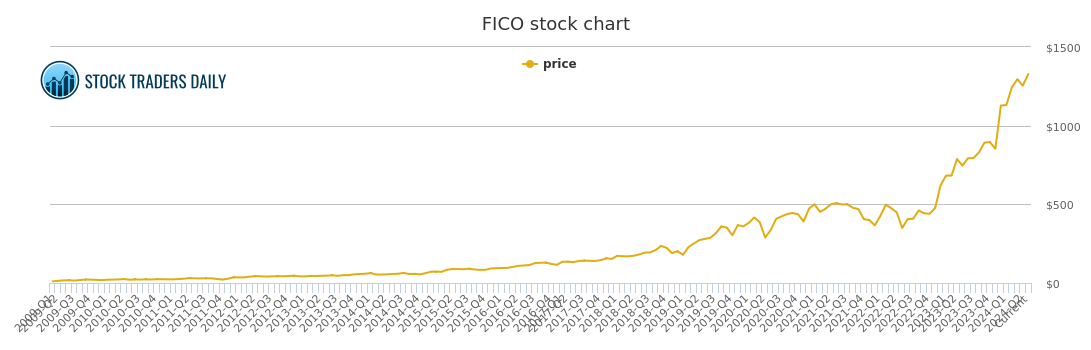
- Recurring revenue dominance: Over 90% of FICO’s revenue comes from subscriptions and support, providing visibility and stability.
- Defensible moat: Its FICO Score is embedded in U.S. Lending infrastructure, making it hard for competitors to displace without regulatory intervention.
- Diversified end markets: While financial services remain its largest segment (60% of revenue), healthcare (20%) and telecommunications (15%) are growing rapidly.
Valuation perspective: Trading at roughly 25x forward P/E, FICO is priced modestly compared to peers like Salesforce (40x P/E) but offers higher dividend yield (0.8%) and consistent buybacks. Analysts at J.P. Morgan and Goldman Sachs have upgraded FICO to “Buy” or “Overweight” in recent weeks, citing its AI-driven growth as a catalyst.
For Industries: A Trusted Partner in Digital Transformation
FICO’s technology underpins critical decisions across three high-growth sectors:
- Financial Services: Banks and lenders use FICO’s models to approve loans, detect fraud, and comply with regulations. The company’s FICO® Bankcard Score is now used by 7 of the top 10 U.S. Issuers, a testament to its market dominance.
- Healthcare: Hospitals and insurers rely on FICO’s patient financial risk scores to predict payment behaviors, reducing bad-debt expenses by up to 30%, per case studies.
- Telecommunications: Telecom providers use FICO’s customer lifetime value (CLV) models to personalize offers, increasing retention by 15-20% in pilot programs.
Regulatory impact: As governments tighten data privacy laws (e.g., EU’s GDPR and U.S. State-level regulations), FICO’s ability to balance predictive power with compliance will be critical. The company has invested heavily in privacy-preserving AI, which could become a competitive advantage.
For Competitors: A Benchmark for Innovation
FICO’s Q1 performance puts pressure on rivals to accelerate their own AI and cloud strategies. Key areas where competitors may fall short:
- Specialization vs. Generalization: While companies like IBM and Oracle offer broad enterprise software suites, FICO’s niche focus on decision automation allows it to deliver higher precision.
- Customer stickiness: FICO’s long-term contracts (average duration: 5+ years) create barriers to entry that larger players struggle to replicate.
- Regulatory relationships: FICO’s deep ties to financial regulators (e.g., the Federal Reserve and CFPB) give it influence in shaping industry standards.
—
Reactions and Expert Views: What Analysts and CEOs Are Saying
Market reactions to FICO’s earnings were overwhelmingly positive, with analysts and industry leaders highlighting its strategic agility and execution discipline.
“FICO continues to prove that specialization in AI-driven decision management is a sustainable growth model in a fragmented market.”
“The company’s ability to monetize AI without overpromising is exactly what investors should reward. This isn’t just another cloud play—it’s a decision intelligence powerhouse.”
On the earnings call, FICO CEO Scott Zoldi emphasized the company’s focus on scalable AI and regulatory alignment:
“We’re seeing a shift from reactive compliance to proactive risk management. Our clients aren’t just buying scores—they’re buying predictive insights that drive real business outcomes.”
Industry peers also weighed in:
“FICO’s dominance in credit scoring is unmatched, but the real story is how they’re extending that expertise into operational risk. That’s where the next wave of growth will come from.”
—
Challenges Ahead: Risks to Watch
While FICO’s Q1 results are strong, the company faces structural and execution risks that could test its momentum:
- Economic uncertainty: A potential recession could slow lending activity, pressuring FICO’s financial services segment. However, its diversified revenue streams (healthcare, telecom) mitigate this risk.
- AI competition: Startups and big tech (e.g., Google, Microsoft) are investing heavily in generative AI, which could disrupt FICO’s traditional scoring models. The company’s response—FICO® AI Explainability tools—aims to differentiate its offerings.
- Regulatory scrutiny: As AI models face increased oversight (e.g., EU AI Act), FICO must ensure its solutions comply with emerging standards without sacrificing performance.
- Integration complexity: As FICO expands into cloud and AI, legacy system integration could become a hurdle for some clients, particularly in heavily regulated industries.
Mitigation strategies: FICO has outlined plans to address these risks, including:
- Expanding its FICO® Decision Intelligence Suite to offer hybrid AI-human decisioning.
- Investing in privacy-enhancing technologies (PETs) to align with global data laws.
- Accelerating partnerships with cloud providers (AWS, Azure) to simplify deployments.
—
What’s Next for FICO: Key Catalysts to Watch
Looking ahead, several developments could shape FICO’s trajectory in the coming quarters:

- AI-driven product launches: FICO is expected to unveil new generative AI tools for risk assessment later this year, which could further differentiate it from competitors.
- Healthcare expansion: The company is targeting $1 billion in healthcare revenue by 2026, up from ~$676 million in 2023, by deepening its partnerships with UnitedHealth Group (UNH) and CVS Health (CVS).
- M&A activity: FICO may pursue strategic acquisitions in AI ethics and compliance to strengthen its regulatory moat.
- Macroeconomic trends: If the Federal Reserve cuts rates in 2024, FICO’s financial services clients may increase lending, boosting demand for its solutions.
Analyst consensus: Most Wall Street firms maintain “Buy” or “Outperform” ratings on FICO, with price targets ranging from $280 to $320—implying 10-20% upside from current levels.
—
Frequently Asked Questions About FICO’s Q1 Earnings and Its Market Position
How does FICO’s growth compare to its competitors like Experian and Equifax?
FICO’s 12% revenue growth in Q1 outpaced Experian’s 8% growth and Equifax’s 5% decline. FICO’s higher margins (28.5% vs. 22.3% for Experian) reflect its focus on high-value analytics rather than broad data aggregation.
Is FICO a good dividend stock?
FICO pays a modest 0.8% dividend yield, but its strength lies in shareholder returns via buybacks (it repurchased $100M in stock in Q1). For income investors, it’s better suited as a growth-with-dividend play than a high-yield stock.
How is FICO leveraging AI in its business?
FICO is integrating AI into its decision management tools, such as:
- Automated underwriting for lenders.
- Fraud detection using real-time behavioral analysis.
- Personalized customer offers in telecom and retail.
Unlike generative AI, FICO’s AI is embedded in mission-critical workflows, reducing hype risks.
What industries rely most on FICO’s technology?
FICO’s revenue is split roughly as follows:
- Financial Services (60%): Credit scoring, fraud prevention, lending.
- Healthcare (20%): Patient financial risk, claims fraud.
- Telecommunications (15%): Customer lifetime value, churn prediction.
- Other (5%): Government, retail.
Could FICO be acquired by a larger tech company?
While not impossible, FICO’s $3.5 billion market cap and self-sustaining growth make it an unlikely acquisition target. A bid from Microsoft or Google would require a premium of 30-40%, which may not align with their strategic priorities.
How does FICO’s stock perform in a recession?
FICO has historically outperformed in recessions because:
- Banks increase spending on risk management tools during downturns.
- Its diversified revenue (healthcare, telecom) is recession-resistant.
- Its high-margin model buffers against margin compression.
In the 2008 financial crisis, FICO’s stock rose 20% while the S&P 500 fell.
—
