Papua New Guinea’s Higher Education Crisis: Funding Gaps, Brain Drain, and a System at the Breaking Point
Papua New Guinea’s tertiary education system stands at a crossroads. With enrollment rates lagging far behind regional peers, chronic underfunding, and a severe shortage of qualified academics, the country’s universities are struggling to meet even basic demands. Yet as political leaders promise economic transformation, the gap between rhetoric and reality in higher education widens—threatening to leave an entire generation without the skills needed for a modern workforce.
This is not just an academic issue. A system failing to produce engineers, healthcare professionals, and teachers risks stalling PNG’s economic ambitions, deepening social inequalities, and accelerating the brain drain that has plagued the nation for decades. Experts warn that without urgent reform, Papua New Guinea could face a future where its most talented graduates seek opportunities abroad, leaving behind a population increasingly disconnected from global knowledge economies.
What follows is an in-depth examination of the challenges facing PNG’s tertiary sector, the systemic failures holding it back, and the potential pathways forward—if political will and financial commitments materialize.
— ###
The Scale of the Problem: Enrollment, Funding, and Infrastructure
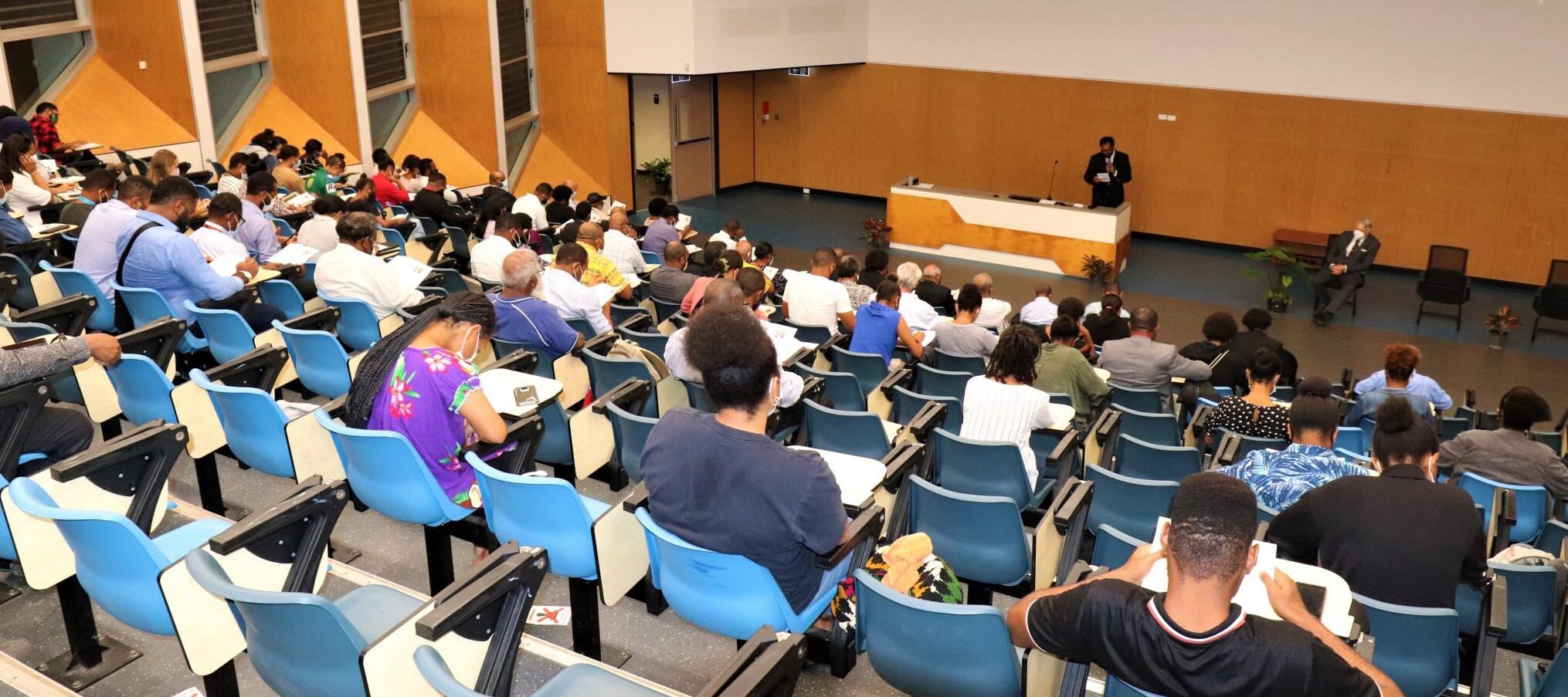
Papua New Guinea’s tertiary education sector operates under severe constraints. Despite a population of over 9 million, the country’s universities enroll fewer than 50,000 students annually—a fraction of the numbers seen in neighboring Indonesia or the Philippines. The University of Papua New Guinea (UPNG), the nation’s flagship institution, serves as the primary hub for higher learning, but even it struggles with overcrowded classrooms, outdated facilities, and a curriculum that often fails to align with labor market needs.
Key challenges include:
- Chronic underfunding: Government allocations for tertiary education have historically hovered below 1% of the national budget, far below international benchmarks. In comparison, countries like Malaysia and Thailand allocate over 3% of GDP to higher education.
- Brain drain: An estimated 80% of PNG’s qualified professionals—doctors, engineers, and academics—work abroad, often in Australia or New Zealand. This exodus deprives local institutions of critical expertise.
- Infrastructure decay: Many university campuses lack reliable electricity, internet connectivity, and modern laboratories. A 2023 assessment found that over 60% of UPNG’s science facilities were non-functional due to neglect.
- Curriculum mismatches: Graduates frequently enter the job market with skills that do not match industry demands, leading to high youth unemployment rates (officially over 30% for those aged 15–24).
These issues are not new. For decades, PNG’s tertiary sector has operated on a precarious financial footing, with governments prioritizing short-term infrastructure projects over long-term education investments. The result? A system that, while theoretically accessible, is effectively inaccessible to many due to cost, quality, and relevance.
— ###
Who Bears the Burden? Students, Academics, and the Government
The consequences of these failures are felt most acutely by students and faculty. Tuition fees at public universities remain prohibitively high for most Papua New Guineans, with annual costs exceeding 5,000 PGK (approximately USD 1,200)—equivalent to nearly twice the average annual income. This forces many talented students to abandon their studies or rely on scholarships that are scarce and competitively awarded.
For academics, the situation is equally dire. Salaries for professors at UPNG are among the lowest in the Pacific region, with many earning less than USD 1,000 per month. This has led to a exodus of experienced educators, with vacancies often filled by temporary or overseas staff who lack deep cultural and contextual understanding of PNG’s needs.
Meanwhile, the government’s role is paradoxical. On one hand, political leaders frequently cite education as a cornerstone of national development. On the other, budget allocations for tertiary education have remained stagnant for over a decade, with little evidence of strategic planning or accountability mechanisms.
Stakeholder perspectives:
- Students: Frustration over rising costs and outdated curricula has led to protests, most notably in 2022 when UPNG students staged a week-long occupation demanding fee reductions and better facilities.
- Academics: Many express despair over working conditions, with one senior lecturer noting, “We’re teaching in classrooms with no power, using textbooks from the 1990s, while students pay fees that could build a new library.”
- Employers: Business leaders complain that graduates lack practical skills, forcing companies to invest in costly in-house training—a burden compact enterprises cannot afford.
- Donors and NGOs: International partners, including the World Bank and AusAID, have stepped in with targeted funding, but these efforts are often fragmented and lack coordination with national priorities.
— ###
A Historical Context: How Did We Get Here?
PNG’s tertiary education crisis did not emerge overnight. Its roots trace back to colonial-era policies that prioritized vocational training over academic rigor, a legacy that persisted after independence in 1975. The establishment of UPNG in 1965 was a landmark achievement, but subsequent governments failed to invest sufficiently in its expansion or modernization.
Key milestones in PNG’s higher education trajectory:
| Year | Event | Impact |
|---|---|---|
| 1965 | Founding of the University of Papua New Guinea (UPNG) | First national university, initially focused on training civil servants and teachers. |
| 1980s | Introduction of user fees | Shifted costs to students, exacerbating access barriers for rural and low-income populations. |
| 2000s | Rise of private colleges | Partial solution to demand, but quality varies widely and accreditation is inconsistent. |
| 2010s | Government promises of “Education Revolution” | No significant budget increases. rhetoric outpaced action. |
| 2020–Present | COVID-19 disruptions and brain drain acceleration | Online learning gaps widened; skilled professionals left in greater numbers. |
One critical turning point was the 2018 National Education Plan, which aimed to increase tertiary enrollment to 10% of the relevant age group by 2030. However, without dedicated funding mechanisms or policy enforcement, the plan remains largely unfulfilled. Meanwhile, the government’s focus on extractive industries—such as mining and logging—has diverted attention and resources away from education.
— ###
What’s at Stake? Economic and Social Consequences
The failure to reform PNG’s tertiary education system carries far-reaching implications. Economically, a poorly educated workforce limits the country’s ability to diversify beyond traditional resource-based industries. Without a pipeline of skilled engineers, healthcare workers, and technicians, PNG risks remaining dependent on volatile commodity markets.
Socially, the consequences are equally severe. High youth unemployment fuels unrest, while the brain drain perpetuates cycles of poverty in rural communities. Studies suggest that for every skilled professional who leaves PNG, an estimated 10–15 local jobs are lost due to reduced economic activity.
Real-world examples of the impact:
- Healthcare: PNG has one of the highest maternal mortality rates in the Pacific, partly due to a shortage of trained midwives and doctors. The University of Goroka’s medical program, once a regional leader, now graduates fewer than 30 physicians annually—far below demand.
- Agriculture: Despite being an agrarian economy, PNG imports over 70% of its food. Local agricultural universities lack the resources to develop climate-resilient crops or train farmers in modern techniques.
- Technology: The country’s IT sector is stifled by a lack of computer science graduates. While neighboring countries like Fiji and Samoa have thriving tech hubs, PNG’s universities offer limited courses in coding or data science.
International comparisons further underscore the urgency. Countries like Rwanda and Botswana have transformed their education sectors through targeted investments, leading to measurable improvements in GDP growth and human development indices. PNG, by contrast, continues to lag, with its tertiary education system ranked among the least effective in the Pacific by the OECD.
— ###
Potential Solutions: Can Reform Happen?
Experts agree that addressing PNG’s tertiary education crisis requires a multi-pronged approach. While no single solution exists, several strategies could yield significant progress:
1. Increased and Sustainable Funding
Governments must allocate at least 3% of GDP to higher education, with a portion earmarked for infrastructure upgrades and faculty salaries. This could be funded through:
- Reallocating a portion of mining royalties to education (as proposed in the 2021 National Budget but never implemented).
- Public-private partnerships to fund scholarships and research collaborations.
- International aid targeted at capacity-building, such as the Australian government’s recent commitment to support PNG’s vocational training sector.
2. Curriculum Reform and Industry Alignment
Universities must overhaul their programs to align with labor market demands. This includes:
- Expanding technical and vocational education (TVET) programs in high-demand fields like renewable energy, digital literacy, and healthcare.
- Partnering with industries to co-design curricula, ensuring graduates possess practical skills.
- Introducing mandatory internships to bridge the gap between academia and employment.
3. Combating Brain Drain
Retaining talent requires competitive salaries, career advancement opportunities, and incentives for academics to return. Potential measures include:
- Salary parity with regional peers, including housing allowances for overseas hires.
- Tax incentives for professionals who commit to working in PNG for a minimum of five years.
- Establishing a national academy to recognize and reward excellence in research and teaching.
4. Decentralizing Education
Rural populations currently have limited access to tertiary education. Expanding regional campuses—such as the University of Goroka and Divine Word University—could improve accessibility. Mobile learning initiatives, including partnerships with telecom providers to extend internet access, are also critical.
5. Strengthening Governance and Accountability
Transparency and accountability are lacking in PNG’s education sector. Steps to address this include:
- Independent audits of university budgets and performance metrics.
- Mandatory reporting on enrollment, graduation rates, and employment outcomes.
- Public consultations to ensure policies reflect the needs of students and communities.
While these reforms are ambitious, they are not unprecedented. Countries like Vietnam and Ghana have successfully overhauled their education systems through similar strategies. The question for PNG is whether political leaders will prioritize long-term investment over short-term gains.
— ###
What’s Next? Watching for Signs of Change
The next 12–18 months will be critical in determining whether PNG’s tertiary education sector begins to turn a corner. Key developments to watch include:
- Budget allocations: Will the 2026 national budget include meaningful increases for education, or will rhetoric continue to outpace action?
- International partnerships: Will donor countries follow through on pledges, or will funding remain ad-hoc and project-based?
- Student activism: Will protests and advocacy groups gain traction in pushing for reform, or will they be suppressed as “disruptive”?
- Private sector engagement: Will businesses take the lead in funding skills development, or will they continue to rely on government-led solutions?
One hopeful sign is the growing recognition among PNG’s youth that education is their best path to opportunity. Grassroots movements, such as the “Education Not Exploitation” campaign, are gaining momentum, pressuring leaders to act. However, without sustained political will and financial commitment, the system’s decline may continue unabated.
— ###
Frequently Asked Questions
Why is tertiary education in PNG so expensive?
Tuition fees are high due to chronic underfunding by the government. Public universities rely heavily on student payments to cover operational costs, including salaries, maintenance, and equipment. Unlike in many developed nations, PNG lacks substantial public subsidies for higher education, forcing students to bear the financial burden.
Are there alternatives to traditional universities in PNG?
Yes. Technical and vocational education (TVET) institutions, such as the Papua New Guinea University of Technology (UNITECH) and private colleges, offer more affordable and practical training. Online learning platforms and partnerships with international universities (e.g., through the Pacific Islands Forum) provide alternative pathways for those unable to attend traditional campuses.

How does PNG’s tertiary education system compare to other Pacific nations?
PNG lags behind most of its Pacific neighbors in enrollment rates, funding per student, and graduate employment outcomes. For example:
- Fiji’s tertiary enrollment rate is nearly double PNG’s, at over 15% of the relevant age group.
- Samoa and Tonga allocate over 4% of GDP to education, compared to PNG’s less than 1%.
- Countries like Vanuatu and Solomon Islands have seen faster growth in skilled professions due to targeted vocational training programs.
Can PNG afford to invest more in tertiary education?
Yes, but it requires reprioritization. PNG’s GDP growth has averaged over 4% annually in recent years, driven largely by mining and agriculture. Redirecting even a fraction of these revenues—particularly from the lucrative LNG projects—to education would be a fraction of the cost of inaction. Long-term, the economic returns on investing in a skilled workforce far outweigh the short-term costs.
What can students do if they cannot afford university?
Students facing financial barriers have several options:
- Apply for government scholarships, such as those offered by the National Education Board.
- Enroll in TVET programs, which are often subsidized and lead to quicker employment.
- Seek apprenticeships or on-the-job training in high-demand sectors like healthcare or construction.
- Explore online courses or distance learning, though internet accessibility remains a challenge in rural areas.
Is there hope for reform in PNG’s education system?
Reform is possible, but it requires political leadership, sustained funding, and public pressure. Recent movements by student groups and civil society organizations suggest growing awareness of the crisis. If these efforts can translate into policy changes—such as increased budgets, curriculum reforms, and anti-brain-drain incentives—there is reason for cautious optimism. However, without urgent action, the system’s decline will continue to threaten PNG’s future.
—
Papua New Guinea’s tertiary education sector is at a pivotal moment. The choices made in the coming years will determine whether the country can build a knowledge economy capable of sustaining its people—or whether it will continue to rely on outdated systems that leave generations behind. The stakes could not be higher.
