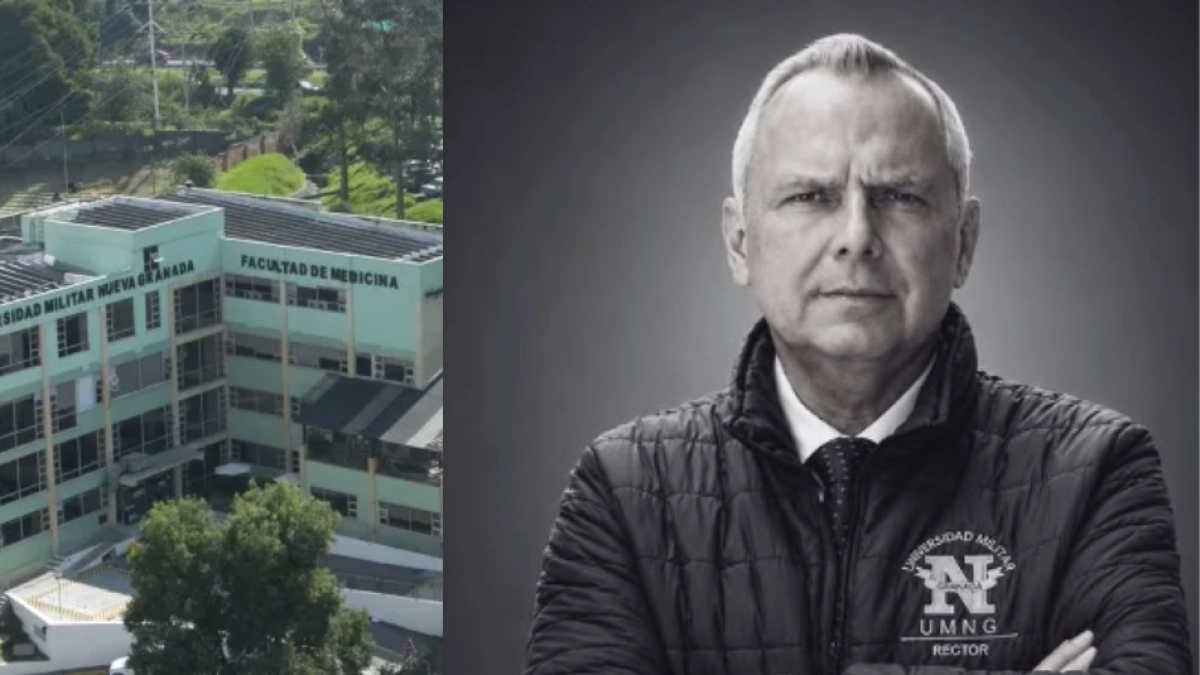
The man who redefined military education as a force for peace has died, leaving behind a legacy that extends far beyond the barracks. Major General (ret.) Javier Alberto Ayala Amaya, rector of Colombia’s Universidad Militar Nueva Granada, passed away recently, marking the end of an era for an institution that under his leadership became a symbol of reconciliation and academic innovation in a country still healing from decades of conflict.
Ayala Amaya’s tenure as rector was defined by an ambitious vision: to transform the university’s mission from one rooted in tradition to one actively committed to fostering dialogue, research and education as tools for social cohesion. His approach was not just academic—it was cultural. By positioning the university as a hub for interdisciplinary studies, particularly in conflict resolution and peacebuilding, he challenged the conventional role of military-affiliated institutions in Latin America. The move was bold, especially in a region where universities are often seen as either bastions of ideological purity or purely technical training grounds.
From Soldier to Scholar: A Career Built on Unconventional Paths
Ayala Amaya’s journey from military service to academic leadership was itself a testament to the kind of institutional transformation he championed. After retiring from active duty, he earned a Ph.D. and dedicated his career to bridging the gap between military discipline and civilian education. His appointment as rector in 2021—following a period of internal reflection at the university—coincided with a broader push in Colombia to redefine the purpose of its military academies in the post-conflict era.

Under his leadership, the Universidad Militar Nueva Granada launched initiatives that went beyond traditional curricula. Programs focused on educación para la paz—education for peace—became cornerstones of the institution, attracting students from diverse backgrounds, including former combatants and community leaders. The university also expanded partnerships with international organizations, positioning itself as a regional leader in peace studies.
A Legacy That Outlasts the Classroom
While Ayala Amaya’s death was announced by the university’s leadership, his impact was already being felt in the broader cultural landscape. In a statement, the university’s high command described him as “a visionary who understood that true security begins with education and dialogue.” The words echo a philosophy that resonated far beyond the university’s walls, particularly in a country where education has long been a battleground for identity and progress.
His passing also underscores a quiet but significant shift in Latin American academia: the growing recognition that universities—even those with military roots—can and should play a role in shaping societal narratives. Ayala Amaya’s work at the Universidad Militar Nueva Granada proved that institutions don’t have to choose between tradition and progress; they can redefine themselves entirely.
What’s Next for an Institution in Transition
The university has not yet announced a successor or immediate plans for restructuring, but Ayala Amaya’s departure leaves a void in both leadership and vision. His initiatives, however, are likely to endure. The programs he championed—particularly those focused on peacebuilding—remain active, and his influence is already being cited by educators and policymakers across Colombia as a model for how military-affiliated institutions can adapt to modern challenges.
For now, the focus remains on honoring his legacy. In a region where education has often been a tool of division, Ayala Amaya’s life’s work stands as a reminder that the most powerful classrooms are those that dare to ask hard questions—and seek answers together.
