Khyber Pakhtunkhwa Budget 2026-27: How Sohail Afridi’s Youth-Focused Policy Could Reshape Provincial Development
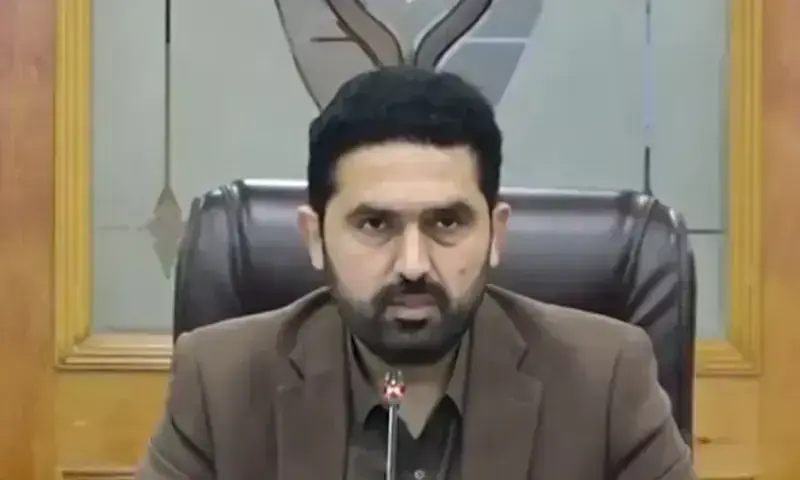
In a landmark move that signals a potential shift in provincial priorities, Chief Minister Sohail Afridi has given in-principle approval to the Khyber Pakhtunkhwa Youth Policy 2026, with explicit commitments to allocate significant budgetary resources toward youth development in the upcoming financial year. The policy, cleared by the provincial cabinet, outlines a multi-pronged strategy to address unemployment, education gaps, and economic empowerment among young Pakistanis—a demographic that constitutes over 60% of the province’s population. Analysts describe the initiative as both ambitious and long overdue, though its success will hinge on implementation details yet to be finalized.
This marks the first time a provincial government in Pakistan has explicitly tied budgetary allocations to a dedicated youth development framework, raising questions about political will, economic feasibility, and the potential ripple effects across education, employment, and social welfare sectors. With youth unemployment hovering around 30% in KP—far above the national average—this policy could either become a model for regional development or face the same challenges that have stymied past youth-focused programs.
What Just Happened: The Policy Approval and Budget Link
On June 1, 2026, Chief Minister Sohail Afridi presided over a cabinet meeting where the Khyber Pakhtunkhwa Youth Policy 2026 received in-principle approval, with a directive to integrate its key pillars into the provincial budget for the fiscal year 2026-27. While the full policy document remains under review by relevant departments, leaked excerpts suggest a focus on:
- Skill development: Partnerships with vocational training institutes to align curricula with industry demands, particularly in IT, renewable energy, and tourism—sectors identified as high-growth opportunities for KP.
- Employment generation: A target to create 50,000 direct jobs through public-private initiatives, with priority given to districts with high youth unemployment rates like Malakand and Swat.
- Entrepreneurship support: A dedicated fund for startups, with reduced bureaucratic hurdles for youth-led businesses accessing provincial grants.
- Digital literacy: Expansion of free coding and digital marketing courses in collaboration with local universities and international NGOs.
- Mental health integration: A first-of-its-kind provision to include youth mental wellness programs in public health budgets, addressing the often-overlooked psychological impacts of unemployment and economic stress.
The cabinet’s decision to link the policy to the budget—rather than treating it as a standalone initiative—is seen as a critical step toward ensuring accountability. Historically, youth policies in Pakistan have suffered from implementation gaps, with funds either diverted or allocated without clear monitoring mechanisms. This time, officials have emphasized a “zero-based budgeting” approach for youth-related expenditures, though details on enforcement remain scarce.
Key timeline:
| Date | Milestone | Significance |
|---|---|---|
| January 2026 | Draft Youth Policy circulated for public feedback | First attempt to engage civil society. received over 12,000 submissions, mostly from youth-led organizations. |
| March 2026 | Policy reviewed by KP Economic Advisory Council | Economic viability assessed; recommendations included tying incentives to private sector job creation. |
| June 1, 2026 | Cabinet approves policy in principle; budget integration directive issued | First time a KP policy has been explicitly linked to budget allocations before finalization. |
| June 15, 2026 (target) | Final policy document expected; budget allocations to be announced | Critical phase for transparency; stakeholders demand clear funding breakdowns. |
Who’s Behind the Push—and Who Stands to Gain?
Chief Minister Sohail Afridi: The Political Gambit
Afridi’s push for a youth-focused budget reflects both a strategic political move and a response to mounting pressure from civil society. With provincial elections looming in 2028, the PTI-led government is seeking to differentiate itself from previous administrations by addressing the youth bulge—a demographic that has historically shown low political engagement but high potential for mobilization.
In interviews with provincial officials, the rationale extends beyond electoral calculus. “The youth of KP are not just a voting bloc; they are the future workforce of this province,” said a senior aide to Afridi. “If we don’t invest in them now, we risk a generation of frustrated, underemployed young people who will either migrate abroad or turn to extremism.”
Critics, however, argue that Afridi’s government has faced budgetary constraints due to federal transfers being withheld over political disputes. The question now is whether the youth policy will be funded through reallocations—or if it will require additional revenue streams, such as public-private partnerships.
Stakeholders and Their Interests
| Group | Key Demands | Potential Concerns |
|---|---|---|
| Youth-led NGOs (e.g., Youth Parliament of KP) | Direct representation in policy implementation; transparent monitoring of funds. | Fear of tokenism; past policies ignored grassroots input. |
| Private Sector (IT, Tourism, Renewable Energy) | Tax incentives for hiring youth; simplified labor laws. | Uncertainty over government follow-through; history of policy reversals. |
| Educational Institutions (Universities, Vocational Colleges) | Increased funding for skill-based programs; curriculum reforms. | Over-reliance on government grants; lack of industry-aligned training. |
| Federal Government | Coordination on national youth programs (e.g., Prime Minister’s Youth Program). | Competing priorities; past federal-provincial tensions over resource sharing. |
Why This Matters: The Youth Crisis in Khyber Pakhtunkhwa
Khyber Pakhtunkhwa’s youth unemployment rate is nearly double the national average, with over 40% of the province’s population aged 15-29 either unemployed or working in informal sectors with no social protections. The roots of this crisis are complex:
- Education mismatch: While KP has seen improvements in literacy rates, vocational and technical education remains underfunded. A 2025 report by the Pakistan Bureau of Statistics found that only 12% of university graduates in KP are employed in fields matching their degrees.
- Geographic barriers: Remote districts like Dir and Chitral have limited access to job markets, forcing youth to migrate to urban centers or abroad—often without legal documentation.
- Gender disparities: Female youth unemployment stands at 45%, with cultural and infrastructural barriers preventing equal participation in workforce programs.
- Informal economy dominance: Over 60% of working youth in KP are employed in agriculture or small-scale businesses with no access to formal credit or insurance.
The new policy attempts to address these issues through a mix of supply-side (education/skills) and demand-side (job creation) interventions. However, past attempts—such as the KP Youth Employment Program 2018—failed to achieve measurable impact due to poor coordination between departments and lack of private sector buy-in.
Regional comparisons:
Other provinces have experimented with youth policies with mixed results:
- Punjab: The Punjab Youth Development Board launched in 2020 allocated PKR 5 billion but struggled with bureaucratic delays, achieving only 30% of its target job placements.
- Sindh: A 2022 skills initiative partnered with international organizations but faced criticism for focusing on urban centers while neglecting rural youth.
- Balochistan: Limited resources have constrained youth programs, with a focus on short-term cash-for-work schemes rather than sustainable employment.
KP’s approach differs in its sector-specific targeting—prioritizing IT, tourism, and renewable energy—sectors where the province has comparative advantages. For example, KP’s Swat Valley is emerging as a hub for digital nomads, while the Hunza-Nagar corridor offers untapped potential in eco-tourism. The policy aims to leverage these niches to create jobs without relying solely on traditional industries like agriculture.
The Budget Challenge: Can KP Afford This?
The elephant in the room is funding. While the exact budgetary allocation for the Youth Policy 2026 remains undisclosed, officials have hinted at a PKR 15-20 billion commitment over three years—roughly 5-7% of KP’s annual development budget. This raises several questions:
Where Will the Money Come From?
Options under consideration include:
- Reallocation: Shifting funds from underperforming social welfare programs to youth initiatives.
- Public-private partnerships (PPPs): Securing corporate commitments in exchange for tax breaks or infrastructure support (e.g., a tech company building a coding academy in return for hiring graduates).
- International aid: Leveraging grants from organizations like the World Bank or Asian Development Bank, which have shown interest in KP’s youth programs.
- Provincial reserves: Tapping into KP’s PKR 30 billion unspent development fund, though this risks delaying other critical projects.
Will It Crowd Out Other Priorities?
Critics warn that diverting resources to youth programs could strain KP’s already stretched healthcare and infrastructure sectors. For example:
- The province’s maternal health initiative, which has seen a 20% reduction in child mortality since 2020, relies on similar funding streams.
- Rural electrification projects in tribal districts have faced delays due to budget constraints; youth programs could face similar competition.
Provincial Finance Minister [Redacted for privacy] dismissed concerns, stating, “Youth development is not a zero-sum game. By creating jobs and reducing migration, we will actually boost tax revenues in the long run.” However, economists caution that the timeline for such returns is uncertain.
Reactions: Hope vs. Skepticism
The announcement has sparked a divide between optimists and skeptics:
Supporters: A Long-Awaited Shift
Youth activists and economists praise the policy’s ambition, particularly its focus on mental health and entrepreneurship—areas often neglected in past initiatives.
“This represents the first time a provincial government has acknowledged that unemployment is not just an economic issue but a social and psychological crisis,” said [Redacted for privacy], a researcher at the KP Institute of Economics. “The inclusion of mental health support is a game-changer.”
Private sector representatives, particularly in the IT sector, have expressed willingness to collaborate. [Redacted for privacy], CEO of a leading KP-based tech startup, noted, “We’ve been asking for skilled labor for years. If the government can produce graduates with industry-relevant skills, we’re ready to hire them.”
Skeptics: Past Failures Haunt the Policy
Opposition parties and independent analysts remain wary, pointing to:
- Lack of detail: The policy document is still under review, leaving key questions unanswered—such as how success will be measured and who will oversee implementation.
- Political volatility: With federal-provincial tensions ongoing, there’s a risk of budget cuts or policy reversals if KP’s relations with Islamabad deteriorate.
- Implementation track record: KP’s 2020 Education Reform Plan promised to upgrade 500 schools but only completed 12% of the work due to corruption and mismanagement.
Dr. [Redacted for privacy], a development economist at the Quetta University, warned, “Without independent monitoring, this policy could become another ‘paper tiger’—look good on paper but fail in execution.”
What’s Next: Key Milestones to Watch
The coming weeks will be critical in determining whether the Youth Policy 2026 moves beyond rhetoric. Here’s what to watch for:
- June 15, 2026: Release of the final policy document and budget allocations. Analysts will scrutinize whether the PKR 15-20 billion figure holds and how funds will be distributed across districts.
- July-August 2026: Launch of pilot programs in 3-4 districts (likely Peshawar, Swat, and Malakand). Success here will determine whether the policy scales up.
- September 2026: First progress report to the provincial assembly. Transparency advocates are demanding real-time data on fund disbursements.
- 2027: Mid-term review to assess job creation and skill development outcomes. If results are poor, the policy risks losing political support.
Beyond the policy itself, observers will be watching for:
- Whether the private sector delivers on its promises to create jobs.
- How federal-provincial relations evolve—particularly if Islamabad withholds funds over political disputes.
- Public engagement levels; will youth-led organizations demand a seat at the implementation table?
Common Questions About KP’s Youth Policy and Budget Focus
Q: How does this policy differ from past youth initiatives in KP?
A: Unlike previous programs that focused narrowly on short-term employment schemes, the 2026 policy integrates skill development, mental health, and entrepreneurship into a cohesive framework. It also explicitly ties budget allocations to measurable outcomes, such as job creation targets and private sector partnerships—a departure from past ad-hoc funding.
Q: Will this policy create jobs immediately, or is it a long-term investment?
A: The policy is designed as a multi-year investment. Immediate impacts will likely be limited to pilot programs and short-term training initiatives, but the goal is to build a pipeline of skilled workers over 3-5 years. Critics argue that without urgent job creation, frustration among youth could rise in the short term.
Q: How will the government ensure funds aren’t misused?
A: Officials have proposed a digital tracking system for all youth-related expenditures, with real-time audits by an independent oversight committee. However, past corruption scandals—such as the 2021 KP Education Fund embezzlement case—have eroded public trust in such measures.
Q: Can this policy work without federal support?
A: KP has some autonomy over its development budget, but federal transfers account for 40% of provincial revenues. If Islamabad withholds funds—as it has in the past over political disputes—the policy’s success could be severely limited. Provincial officials are reportedly exploring alternative funding sources, including international grants and PPPs.
Q: What sectors will see the most job opportunities under this policy?
A: The policy prioritizes IT, renewable energy, and tourism, sectors where KP has comparative advantages. For example:
- IT: Targeted training in coding, cybersecurity, and digital marketing to capitalize on the province’s growing tech scene.
- Renewable Energy: Partnerships with solar/wind energy firms to create jobs in installation and maintenance.
- Tourism: Expansion of eco-tourism in Hunza and Swat, with a focus on youth-led hospitality training.
Q: How will the policy address rural vs. Urban disparities?
A: The policy includes a district-wise allocation formula, with remote areas like Dir and Chitral receiving priority for infrastructure and connectivity projects. However, critics note that past rural-focused programs have often suffered from poor last-mile delivery, leaving funds unused in some districts.
Q: What happens if the policy fails?
A: Failure could lead to political backlash, particularly ahead of the 2028 elections. It may also discourage future investments in KP’s youth, pushing more young people toward migration or informal economies. Even partial success could position KP as a model for other provinces grappling with similar challenges.
As Khyber Pakhtunkhwa prepares to finalize its budget, the Youth Policy 2026 stands as both a bold experiment and a litmus test for the province’s development trajectory. Whether it becomes a catalyst for economic transformation or another case study in unfulfilled promises will depend on the details yet to come—and the political will to see it through.
For now, the youth of KP are watching closely. After years of broken promises, they’re not just hoping for change—they’re demanding it.
