
Gravitational Wave Astronomy Has Arrived: How Ripples in Spacetime Are Redefining Our Understanding of the Universe
For over a century, Einstein’s theory of general relativity predicted the existence of gravitational waves—subtle ripples in the fabric of spacetime generated by cataclysmic cosmic events. Yet, it wasn’t until 2015 that humanity finally detected these elusive signals, opening a revolutionary new window onto the universe. A decade later, gravitational wave astronomy has transitioned from a cutting-edge experiment to a fully mature scientific discipline, reshaping astrophysics, black hole research and our fundamental understanding of the cosmos.
This transformation wasn’t instantaneous. It required decades of theoretical groundwork, billions in investment, and the painstaking collaboration of thousands of scientists across the globe. Today, the field stands at a crossroads: gravitational wave observatories like LIGO, Virgo, and KAGRA are not just detecting waves—they’re uncovering hidden populations of black holes, probing the edges of neutron star physics, and even offering clues about the early universe. The question now isn’t whether gravitational wave astronomy is here to stay, but how deeply it will redefine astronomy in the decades ahead.
From the discovery of “impossible” black holes to the first-ever image of a neutron star merger’s aftermath, this is the story of how a single scientific breakthrough has become the foundation of a new era in space exploration.
—
The Birth of a New Astronomy: From Theory to Detection
Einstein first proposed gravitational waves in 1916 as a natural consequence of his general theory of relativity, which described gravity not as a force but as the warping of spacetime by mass and energy. For nearly 50 years, these waves remained purely theoretical—an elegant prediction with no experimental confirmation. The challenge was immense: gravitational waves are incredibly faint, stretching and compressing spacetime by fractions smaller than the width of an atom over the distance of a light-year.
It took until 1969 for physicist Joseph Weber to attempt the first direct detection using massive aluminum bars designed to vibrate in response to passing waves. Though Weber’s claims of detection were later debunked, his work sparked a global race to build more sensitive instruments. By the 1990s, scientists at Caltech and MIT launched the Laser Interferometer Gravitational-Wave Observatory (LIGO), a project that would eventually cost over $1 billion and involve more than 1,000 researchers.
Key Milestones in Gravitational Wave Astronomy
| Year | Event | Significance |
|---|---|---|
| 1916 | Einstein predicts gravitational waves in general relativity | First theoretical foundation |
| 1969 | Joseph Weber claims first detection (later disputed) | Inspires future experiments |
| 1992 | Russell Hulse and Joseph Taylor win Nobel Prize for indirect detection via pulsars | Confirms gravitational wave theory |
| 2002 | LIGO begins initial operations | First generation of detectors online |
| 2015 | LIGO detects first gravitational waves (GW150914) | Direct confirmation of Einstein’s prediction |
| 2017 | First multi-messenger observation (neutron star merger GW170817) | Combines gravitational waves with electromagnetic observations |
| 2023 | LIGO-Virgo-KAGRA network detects over 90 confirmed events | Field reaches maturity with routine detections |
The breakthrough came on September 14, 2015, when LIGO’s twin detectors in Louisiana and Washington state picked up a faint but unmistakable signal: GW150914, the gravitational waves from two black holes—each 30 times the mass of the Sun—spiraling into each other and merging 1.3 billion light-years away. The event released more energy in an instant than all the stars in the observable universe combined, and it confirmed Einstein’s vision of spacetime as a dynamic, rippling medium.
Within two years, the collaboration had detected a dozen more black hole mergers, proving that such extreme events were not rare but relatively common in the cosmos. By 2017, the field reached a new milestone with GW170817, the first gravitational wave event linked to an electromagnetic signal—a neutron star merger visible across the spectrum, from radio waves to gamma rays. This “multi-messenger astronomy” era marked the birth of gravitational wave astronomy as a fully independent discipline.
—
A “Lost World” of Black Holes: What Gravitational Waves Revealed
One of the most surprising discoveries from gravitational wave astronomy has been the existence of a hidden population of black holes—objects that defy conventional expectations about stellar evolution. Before LIGO’s first detection, astronomers had only observed black holes through their X-ray emissions or by watching them devour nearby stars. These were typically stellar-mass black holes (5–20 times the Sun’s mass) or supermassive black holes at galaxy centers.
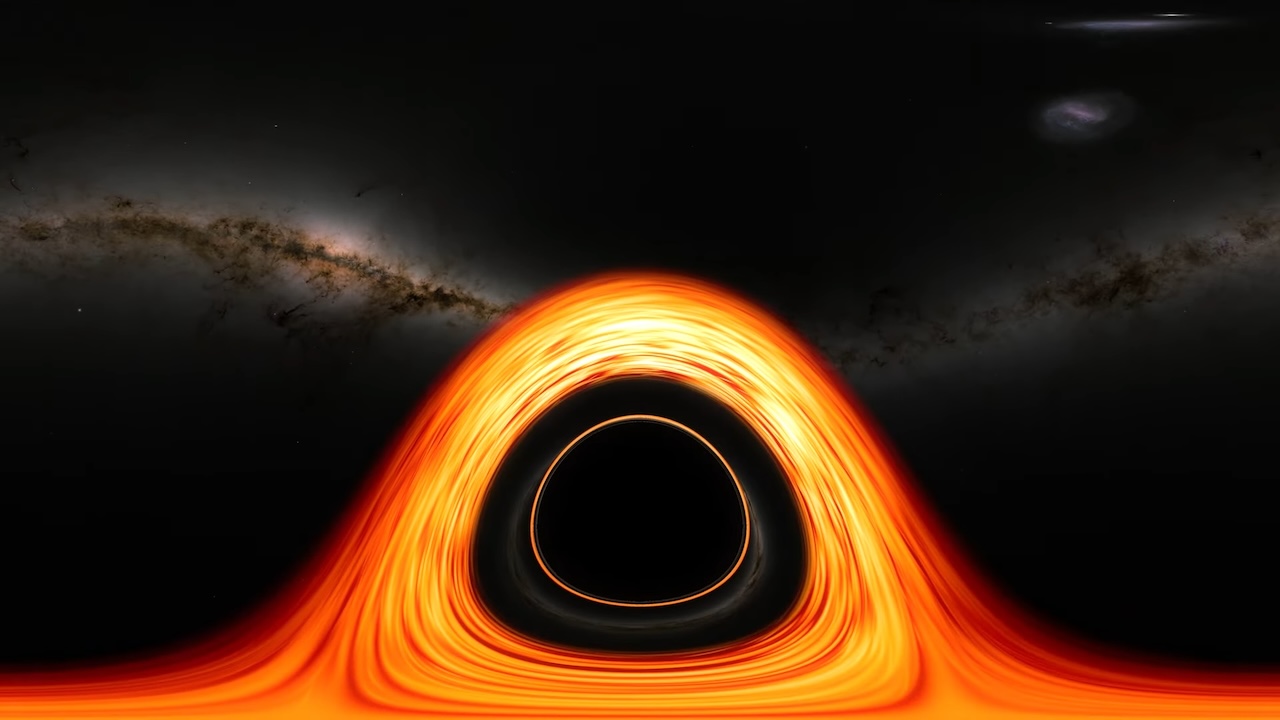
Then came the gravitational wave detections. The first black hole merger, GW150914, involved two black holes of 36 and 29 solar masses, far larger than any previously observed. Subsequent detections revealed an even stranger trend: black holes in the 20–50 solar mass range were far more common than predicted. Some, like the 142-solar-mass monster detected in 2020 (GW190521), challenged theories of black hole formation entirely.
Why Are These Black Holes So Massive?
Traditional models suggested that stars collapse into black holes of up to ~20 solar masses. Anything larger would require exotic processes, such as:
- Hierarchical mergers: Black holes formed from smaller stars merging multiple times in dense stellar environments.
- Primordial black holes: Hypothetical black holes formed in the early universe, not from stellar collapse.
- Pair-instability supernovae: Rare stellar explosions that leave behind massive black hole remnants.
In 2023, a study published in The Astrophysical Journal analyzed over 90 gravitational wave events and concluded that these “impossible” black holes likely formed in dense star clusters, where repeated mergers could build them up over billions of years. This “lost world” of black holes, invisible to traditional telescopes, now accounts for a significant fraction of the universe’s dark mass.
Expert Insight:
“We’re seeing a population of black holes that were completely invisible before. It’s like discovering an ancient civilization no one knew existed—suddenly, the history of the universe looks very different.”
—Dr. Maya Fishbach, Northwestern University gravitational wave researcher
—
Beyond Black Holes: Neutron Stars, Cosmic Mysteries, and the Early Universe
While black hole mergers dominate gravitational wave detections, the field has also uncovered profound insights into neutron stars—the ultra-dense remnants of exploded stars—and even the fabric of spacetime itself.
Neutron Stars: The Ultimate Laboratory for Extreme Physics
Neutron stars are among the most extreme objects in the universe: a teaspoon of their material weighs as much as a mountain. When two neutron stars collide, they produce gravitational waves, gamma-ray bursts, and a fireball of heavy elements—including gold, platinum, and uranium. The 2017 detection of GW170817 confirmed that such mergers are the primary cosmic forges for these elements, solving a long-standing mystery in nuclear astrophysics.
Gravitational wave astronomy has also tested the limits of neutron star physics. Some detections suggest that neutron stars may have softer equations of state than predicted, meaning their interiors might be less rigid than once thought. This could imply the existence of exotic matter like quark matter or hyperons in their cores—a finding that could revolutionize nuclear physics.
The Holographic Universe and Quantum Gravity
One of the most profound implications of gravitational waves is their potential to probe the quantum nature of gravity. Einstein’s general relativity and quantum mechanics remain fundamentally incompatible, and gravitational waves offer a unique way to test theories that bridge the two, such as:
- String theory: Predicts extra dimensions and vibrating “strings” as fundamental particles.
- Loop quantum gravity: Suggests spacetime itself is quantized, like pixels on a screen.
- Holographic principle: Proposes that our 3D universe may be a projection of 2D information.
In 2020, the LIGO-Virgo collaboration analyzed gravitational wave data for signs of quantum foam—tiny fluctuations in spacetime at the Planck scale. While no definitive evidence was found, the search continues, with future detectors like the Einstein Telescope (planned for the 2030s) expected to push these limits even further.
Cosmic Dawn and the First Stars
Gravitational waves may also hold clues about the first stars and galaxies in the universe. Primordial black holes, formed from density fluctuations in the early cosmos, could produce detectable gravitational waves when they merge. The stochastic gravitational wave background—a hum of ancient waves from the universe’s infancy—could reveal details about cosmic inflation, the rapid expansion that shaped the cosmos just after the Massive Bang.
In 2023, the North American Nanohertz Observatory for Gravitational Waves (NANOGrav) reported evidence of a low-frequency gravitational wave background, potentially from supermassive black hole binaries in distant galaxies. If confirmed, this could be the first direct evidence of the universe’s “dark ages” before stars and galaxies formed.
—
The Global Collaboration Behind the Science
Gravitational wave astronomy is not the work of a single country or institution but a global effort involving thousands of scientists, engineers, and funding agencies. The core detectors—LIGO (USA), Virgo (Italy), and KAGRA (Japan)—operate as a unified network, sharing data in real time to pinpoint the origins of signals. This collaboration extends to international observatories like GEO600 (Germany) and INDIGO (India), which contribute to the growing sensitivity of the network.
Key Players in Gravitational Wave Research
| Organization | Role | Location |
|---|---|---|
| LIGO Scientific Collaboration (LSC) | Operates LIGO detectors; analyzes data | USA |
| Virgo Collaboration | Operates Virgo detector; contributes to multi-messenger astronomy | Italy |
| KAGRA Collaboration | Operates underground detector in Japan; improves sensitivity | Japan |
| NANOGrav | Searches for low-frequency gravitational waves using pulsars | USA/Canada |
| Einstein Telescope Consortium | Planning next-generation detector (2030s) | Europe |
Funding for these projects comes from national science agencies, including:
- National Science Foundation (USA) – Primary funder of LIGO
- European Research Council (EU) – Supports Virgo and future detectors
- Japan Society for the Promotion of Science (JSPS) – Funds KAGRA
- Department of Science and Technology (India) – Developing INDIGO
This international cooperation is crucial for advancing the field. For example, the detection of GW170817 relied on 70 observatories worldwide**, including optical telescopes, gamma-ray detectors, and radio arrays, all alerted within minutes of the gravitational wave signal. This real-time coordination is now standard, making gravitational wave astronomy a truly multi-messenger science.
—
What’s Next? The Future of Gravitational Wave Astronomy
The field is far from reaching its limits. Current detectors like LIGO and Virgo are already pushing the boundaries of sensitivity, but the next generation of observatories promises to open entirely new frontiers.
Next-Generation Detectors
By the late 2020s, three major projects will come online:
- LIGO Voyager (USA) – A more sensitive version of LIGO, expected to detect waves from black holes across the entire observable universe.
- Einstein Telescope (Europe) – A 10-kilometer underground detector with 10 times the sensitivity of current instruments, capable of probing quantum gravity.
- Cosmic Explorer (USA) – A dual-detector project in Washington and Louisiana, designed to study the early universe and cosmic inflation.
These detectors will not only find more black hole and neutron star mergers but may also detect:
- Supermassive black hole collisions – Billion-solar-mass monsters merging at the centers of galaxies.
- Primordial gravitational waves – Echoes from the Big Bang itself.
- Exotic compact objects – Such as boson stars or wormholes (if they exist).
Space-Based Observatories
While ground-based detectors excel at high-frequency waves, space-based observatories** like the proposed Laser Interferometer Space Antenna (LISA) will detect low-frequency waves from supermassive black holes. Scheduled for launch in the 2030s, LISA will consist of three spacecraft forming a triangle 2.5 million kilometers wide, sensitive enough to measure waves from black holes millions of light-years away.
Public Engagement and Education
As gravitational wave astronomy matures, public interest has surged. Initiatives like LIGO’s open data policy allow citizen scientists to analyze raw data, and educational programs like Gravitational Wave Open Science Center provide tools for researchers worldwide. The field is also inspiring new technologies, from advanced laser systems to AI-driven data analysis.
—
Common Questions About Gravitational Wave Astronomy
What exactly are gravitational waves?
Gravitational waves are ripples in the fabric of spacetime caused by accelerating massive objects, such as black holes or neutron stars merging. They travel at the speed of light and stretch and squeeze space as they pass—though the effect is incredibly little (smaller than a proton over the distance of a light-year).
How do gravitational wave detectors work?
Detectors like LIGO use laser interferometry. A laser beam is split and sent down two perpendicular 4-kilometer-long arms. When a gravitational wave passes, it slightly changes the length of the arms, causing the laser beams to interfere. This tiny difference is measured with extreme precision.
Can gravitational waves be harmful to humans?
No. Gravitational waves are incredibly weak by the time they reach Earth and pass harmlessly through all matter, including humans. They do not interact with electromagnetic fields or cause any known biological effects.
What’s the difference between gravitational waves and electromagnetic waves (like light)?strong>
Gravitational waves are ripples in spacetime itself, while electromagnetic waves are oscillations of electric and magnetic fields. Gravitational waves can travel through the vacuum of space without being absorbed, whereas light can be blocked by dust or gas. Gravitational waves also carry information about massive, invisible objects (like black holes), while light reveals stars, gas, and dust.
How many gravitational wave events have been detected so far?
As of 2024, over 90 confirmed gravitational wave events have been detected, primarily from black hole mergers. A smaller number come from neutron star collisions. The actual number of events in the universe is likely much higher, as current detectors can only observe a fraction of the sky.
Could gravitational waves help us find alien civilizations?
While gravitational waves themselves don’t carry information like radio signals, some theorists speculate that advanced civilizations might use gravitational wave beacons to communicate across interstellar distances. However, this remains purely speculative, and no evidence of such signals has been found.
—
The story of gravitational wave astronomy is still unfolding. What began as a bold prediction by Einstein has become a global scientific endeavor, reshaping our understanding of the universe’s most extreme objects and the fundamental nature of reality. From the first detection in 2015 to the discovery of a “lost world” of black holes, this field has proven that sometimes, the most revolutionary science comes not from what we see, but from what we feel—the invisible ripples of spacetime whispering the secrets of the cosmos.
As detectors grow more sensitive and new observatories come online, the next decade promises discoveries that could redefine physics, astronomy, and our place in the universe. One thing is certain: the age of gravitational wave astronomy has only just begun.
