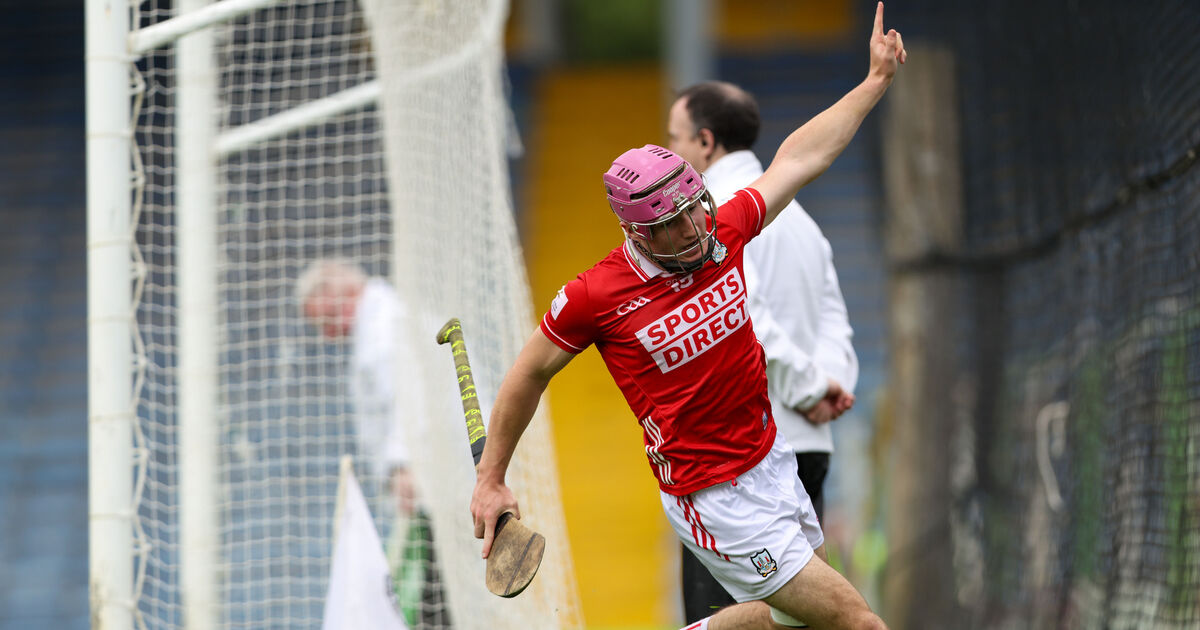
Cork Minor Hurling’s Mental Game Masterclass: How Donal Mulcahy’s ‘No Highs, No Lows’ Philosophy Is Reshaping the Championship
The 2024 All-Ireland Minor Hurling Championship has delivered one of its most dramatic twists in years, with Cork’s stunning quarter-final victory over Kilkenny sending shockwaves through the sport. But behind the scenes, the real story lies in the tactical and psychological approach of Cork manager Donal Mulcahy—a philosophy centered on a simple yet revolutionary mantra: *”We don’t get too high or too low.”* In a sport where momentum can shift in an instant, this mindset has become the cornerstone of Cork’s resilience, offering lessons far beyond the minor ranks.
As the Rebels prepare for their semi-final clash with Tipperary, Mulcahy’s leadership style—rooted in emotional control, adaptability, and a deep understanding of opposition psychology—has positioned Cork as the team to beat. This isn’t just about hurling tactics; it’s about mastering the mental game in a championship where one mistake can unravel weeks of preparation. For players, coaches, and fans alike, Cork’s journey under Mulcahy is a masterclass in how to navigate the high-pressure world of Gaelic games with calculated composure.
But what does this philosophy really mean in practice? How has it shaped Cork’s campaign this year? And why does it matter in a sport where emotions often dictate outcomes? This represents the story of a manager, a team, and a mindset that could redefine what it means to compete at the highest level.
—
The Cork Mindset: Why ‘No Highs, No Lows’ Is More Than Just a Slogan
Donal Mulcahy’s approach to management is built on a foundation of psychological stability—a concept that has become increasingly critical in modern hurling. Unlike traditional coaching methods that focus solely on physical preparation, Mulcahy’s strategy prioritizes mental resilience, ensuring his players remain detached from the natural highs and lows of competitive sport.
*”In hurling, as in life, the teams that thrive are those that can absorb punishment and keep moving forward,”* Mulcahy explained in a rare interview ahead of the Kilkenny clash. *”When you get too high after a goal, you’re vulnerable. When you get too low after a setback, you lose focus. Our job is to keep the team in the moment, where every play is just another play.”*

This philosophy isn’t new in team sports—think of football managers who preach “one game at a time” or basketball coaches who emphasize “process over outcome.” But in hurling, where matches can turn on a single point and reputations are built on instant reactions, Mulcahy’s approach is particularly potent. The proof? Cork’s ability to bounce back from early deficits, maintain composure under pressure, and execute under fire.
Key elements of Mulcahy’s mental framework:
- Emotional Detachment: Players are trained to separate personal pride from on-field performance. A missed chance isn’t a failure—it’s data.
- Adaptive Flexibility: Tactics are fluid, not rigid. If an opponent adjusts, Cork adjusts faster.
- Routine Over Reaction: Pre-match rituals, post-score routines, and in-game check-ins create consistency.
- Opposition Psychology: Understanding how Kilkenny, Tipperary, or Galway react to pressure allows Cork to exploit weaknesses.
For a team that has faced elimination in past championships, this mindset shift has been transformative. Where Cork once struggled with inconsistency, Mulcahy’s system has instilled a discipline that turns winnable games into victories.
—
From Defeat to Dominance: How Cork’s Season Unfolded Under Mulcahy’s Leadership
Cork’s path to the semi-finals hasn’t been linear. The Rebels entered the championship as underdogs, having lost to Tipperary in the 2023 final. But under Mulcahy, the team has evolved from a side that chased glory to one that controls its own destiny.
Here’s how the season played out:
| Round | Opponent | Result | Key Moment |
|---|---|---|---|
| Munster Quarter-Final | Waterford | Win (2-18 to 1-13) | Cork’s first real test of Mulcahy’s system. A 1-0 deficit at half-time was erased through clinical execution in the second half. |
| Munster Semi-Final | Limerick | Win (1-22 to 0-16) | Limerick’s aggressive start was neutralized by Cork’s structured defense, with Mulcahy’s mid-game adjustments turning the tide. |
| All-Ireland Quarter-Final | Kilkenny | Win (1-20 to 1-18) | A last-gasp point sealed Cork’s passage, but the real story was Kilkenny’s inability to break through Cork’s emotional barrier. |
Each of these victories followed a similar pattern: Cork would absorb early pressure, then methodically dismantle opponents by staying locked into their process. Against Kilkenny—a team with a reputation for mental toughness—Cork’s ability to remain composed in the final minutes proved decisive.
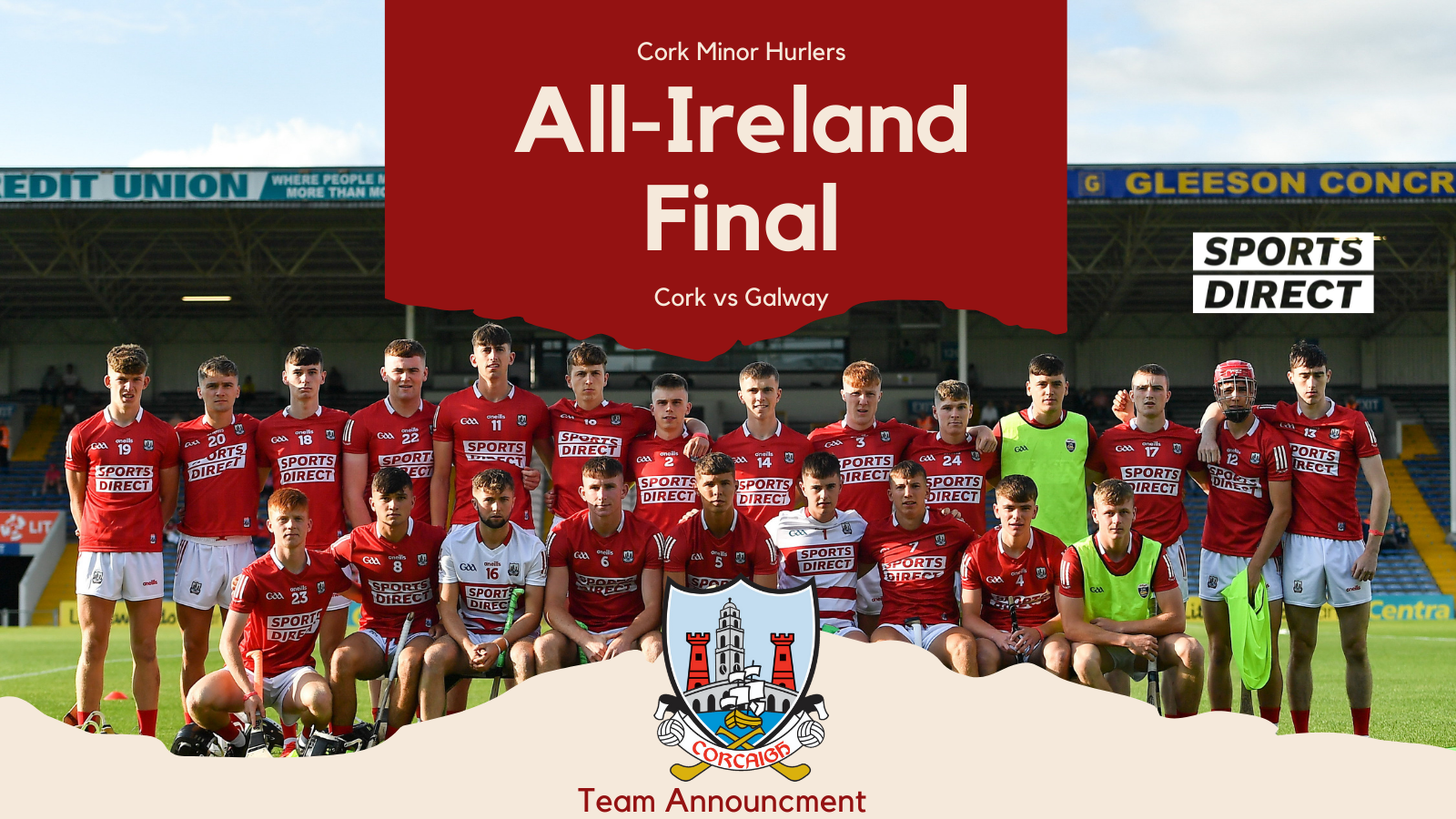
*”Kilkenny had every opportunity to take the lead,”* said a source close to the Cork camp. *”But our lads never panicked. They knew that if we stayed disciplined, we’d find a way. That’s the beauty of Donal’s system—it removes the chaos.”*
This approach isn’t just about winning games; it’s about building a culture where players trust the process, even when results aren’t immediate. For a county with a rich hurling history but a recent struggle at the minor level, Mulcahy’s methods are restoring belief.
—
Why Cork’s Psychological Edge Matters in Hurling’s Most Unpredictable Championship
Hurling is a sport of extremes. One moment, a team is dominant; the next, they’re reeling from a series of unforced errors. The 2024 All-Ireland Minor Championship has been no different, with upsets, comebacks, and shock results becoming the norm.
In this environment, Cork’s mental resilience has given them a competitive advantage. While other teams may fold under pressure, Cork’s players are conditioned to perform when it matters most. This isn’t luck—it’s the result of deliberate training in high-stress scenarios.
*”We simulate pressure situations in training,”* Mulcahy revealed. *”We put players in positions where they have to make decisions with the game on the line. That’s how you build champions.”*
This philosophy aligns with research in sports psychology, which shows that athletes who can regulate their emotions perform better under pressure. In hurling, where matches can hinge on a single point, this ability to stay present is invaluable.
How Cork’s mental game compares to rivals:
- Tipperary: Known for physicality and aggression, but often struggles with consistency in late stages.
- Galway: Strong in attack but can be vulnerable to defensive lapses when frustrated.
- Kilkenny: Historically dominant, but their reliance on individual brilliance makes them susceptible to emotional swings.
- Cork: Structured, adaptable, and emotionally controlled—making them the most balanced team in the championship.
For a sport where tradition often clashes with innovation, Mulcahy’s approach represents a modern evolution. It’s not about replacing hurling’s physical demands with psychology, but rather enhancing them with a layer of mental preparation that was previously overlooked.
—
The Bigger Picture: Can Cork’s Philosophy Redefine Hurling’s Approach?
Cork’s success under Mulcahy raises an important question: Could this mental framework become a blueprint for other teams? In an era where sports science and psychology are reshaping athletics, hurling—long seen as a sport of raw talent and instinct—may be due for a similar transformation.
Already, there are signs that other managers are taking note. Teams that have struggled with inconsistency in recent years are reportedly incorporating elements of Cork’s mental training into their preparations. If Cork reaches the final, the ripple effects could be profound, forcing a reevaluation of how young hurlers are developed.
*”The beauty of Donal’s system is that it’s transferable,”* said a former inter-county player who has worked with emerging talent. *”You can apply these principles at any level—from minor to senior. The key is teaching players to trust the process, not just the result.”*
For Cork, the ultimate test will come in the semi-final against Tipperary—a team that thrives on physical dominance. If Mulcahy’s players can maintain their composure against Tipp’s relentless pressure, they could go all the way. But even if they fall short, their journey has already achieved something far greater: proving that in hurling, the mind can be as powerful as the hurl.
—
What’s Next for Cork? The Road to the Final—and Beyond
With Tipperary looming as their next hurdle, Cork’s focus remains unwavering. Mulcahy has made it clear that the team will approach the semi-final with the same mindset they’ve used all season: stay disciplined, adapt as needed, and trust the process.
For fans, the stakes couldn’t be higher. A victory over Tipperary would send Cork to their first All-Ireland final since 2017, reigniting hopes of breaking a long drought. But regardless of the outcome, Mulcahy’s influence on the team’s culture is already securing his legacy as one of the most forward-thinking managers in Gaelic games.
As for the wider implications, Cork’s story is a reminder that in sports—and in life—the teams that master their emotions are often the ones that rise to the top. For now, the Rebels are leading by example, proving that in the high-stakes world of hurling, mental strength might just be the ultimate weapon.
—
Frequently Asked Questions About Cork’s Championship Run and Mulcahy’s Leadership
Q: How has Donal Mulcahy’s background shaped his coaching style?
A: Mulcahy, a former Cork minor player himself, brings a deep understanding of the pressures young athletes face. His experience playing under high expectations—including a run to the 2004 All-Ireland final—has given him insight into how to manage both players and results. Unlike many managers who transition from playing to coaching, Mulcahy’s firsthand knowledge of the minor game allows him to connect with his team on a personal level.
Q: Has Cork used any specific psychological training techniques?
A: While Mulcahy avoids jargon, his methods include visualization exercises, controlled breathing techniques, and scenario-based training where players are placed in high-pressure situations. The goal is to desensitize them to stress, ensuring they perform at their best when it matters most.
Q: Why is Cork’s win over Kilkenny considered such a big statement?
A: Kilkenny is one of hurling’s most storied programs, with a reputation for mental toughness. Beating them in a tight, late-game match is a testament to Cork’s emotional control. It also signals that Cork is no longer just a physical team—they’re a complete unit, capable of competing with the best in every aspect of the game.
Q: Could this approach work at the senior level?
A: Absolutely. Many senior teams have struggled with inconsistency in recent years, often due to emotional volatility. Cork’s model—rooted in discipline and adaptability—could be particularly effective at the highest level, where matches are decided by marginal details. Already, some senior managers are reportedly studying Mulcahy’s methods.
Q: What’s the biggest challenge Cork faces in the semi-final against Tipperary?
A: Tipperary’s physicality and experience will test Cork’s mental resilience. Tipp is known for wearing down opponents, and if Cork’s players lose focus, they could be vulnerable. The key will be staying structured and avoiding unforced errors—a lesson Mulcahy has drilled into his team all season.
Q: How does Mulcahy’s philosophy compare to other sports?
A: It’s similar to approaches in football (soccer) and basketball, where coaches emphasize “process over outcome.” However, hurling’s fast pace and high-scoring nature make mental discipline even more critical. Mulcahy’s system is tailored to hurling’s unique demands, blending tactical flexibility with emotional control.
