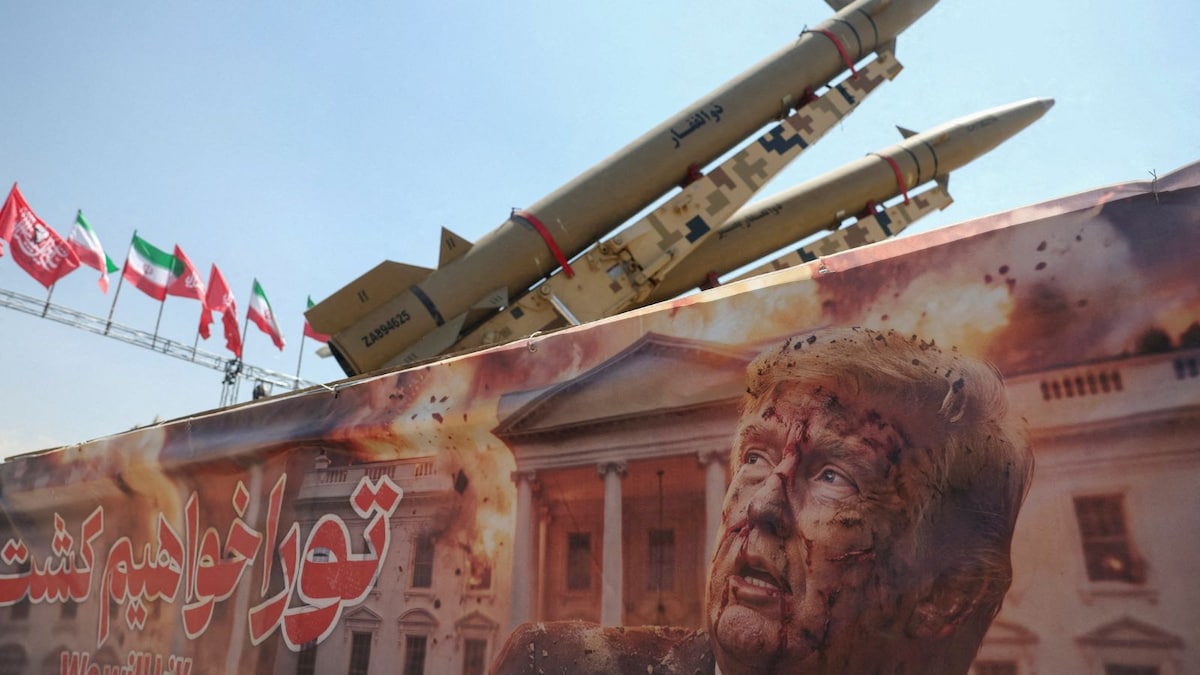
UAE suspends all trade and financial transactions with Iran amid escalating tensions
The United Arab Emirates has completely severed commercial ties with Iran after two ballistic missiles were launched toward its territory, compounding severe oil supply disruptions in the Strait of Hormuz.
Official assertions that the Strait of Hormuz is fully operational collide daily with plunging commercial traffic, burning hulls, and an abrupt economic fracture across the Persian Gulf. President Donald Trump maintains that the critical trade artery is open and that naval mines have been cleared, yet commercial operators navigate a maritime gauntlet defined by erratic U-turns, dark transit bypasses, and active projectile strikes. That physical reality turned absolute on Tuesday, August 19, 2026, when the United Arab Emirates Ministry of Foreign Affairs announced a complete suspension of all trade, commercial exchange, and financial transactions with Iran until further notice. The sweeping commercial cutoff followed an escalation announced by the UAE's Defence Ministry, which stated that Iran launched two ballistic missiles toward the country, with one landing in territorial waters and another falling into the sea outside them.
The sudden severance of financial and trade ties between Abu Dhabi and Tehran underscores how rapidly regional buffer zones are evaporating as a 60-day US-Iran ceasefire expires without extension. Washington has ruled out further diplomatic talks, while Iran’s parliament speaker, Mohammad Bagher Ghalibaf, declared on state media that the strait will remain closed until the United States lifts its naval blockade and sanctions, releases frozen Iranian assets, and ends military threats. As CNBC-TV18 reports, international mediators are currently awaiting an expected transit agreement between Iran and Oman regarding the chokepoint before attempting to revive peace talks. Meanwhile, Washington has reacted sharply to Muscat’s diplomatic engagement with Tehran, with former US envoy Marc Sievers warning that Oman has shifted from a neutral mediator to an Iranian partner, thereby losing American support.
Related YouTube video

For global shipping operators, the geopolitical deadlock translates into severe physical danger and paralyzed logistics. Roughly a fifth of the global oil supply historically transited the narrow waterway, but monthly flows have slowed to a trickle, with United Nations figures indicating that 17 seafarers have died in the waterway over the course of the conflict. INTERCARGO, an association of cargo shipowners, reported that a sailor aboard the Liberian-flagged bulk carrier Minoan Dynasty was killed on Monday, August 18, 2026, during an outbound transit. British maritime officials confirmed additional strikes by unknown projectiles resulting in engine room damage and crew casualties, forcing frightened crews to sail with their transponders switched off to evade targeting.
Tanker traffic has plummeted to single digits, with ship-tracking data monitored by Reuters via Kpler showing that just six commodity vessels crossed the strait on Tuesday, down from nine on Monday and well below the ten-day daily average of 11. While state oil giant Saudi Aramco has resumed some loadings from inside the gulf—offering cargoes via ship-to-ship transfers off Fujairah and relying on Chinese shipping giants collecting oil outside the gulf, as noted by The Globe and Mail—these covert or dark shipments only partially buffer the broader supply contraction.
The transmission mechanism from paralyzed Gulf shipping to household and corporate budgets worldwide is direct and punishing. Brent crude futures climbed to $91.46 a barrel, marking their first sustained rise in three weeks, while West Texas Intermediate hovered near $85.25. Analysts emphasize that the price elevation is driven by physical supply risk rather than surging global demand. Alex Kuptsikevich, chief market analyst at FxPro, observed that US strategic petroleum reserves have fallen to their lowest level since 1982, shedding 5.3 million barrels in a single week and shrinking the safety cushion as the conflict grinds on. Higher crude benchmarks immediately ripple through currency and commodity markets, prompting the Reserve Bank of India to step into the foreign exchange market to defend the rupee against surging import costs, while oil-importing economies face imported inflation.
Despite the mounting economic friction, neither Washington nor Tehran appears ready to compromise. Mohit Kumar, an economist at brokerage Jefferies, noted that the opposing sides have not yet reached the pain thresholds required to force a lasting settlement, pointing toward sustained upward pressure on energy prices in the near term. As oil markets absorb the reality of fractured trade channels, the immediate trajectory of global commerce rests on whether the six vessels that managed to clear the Strait of Hormuz on Tuesday signal the absolute floor of regional survival or the final whispers of maritime trade before a total blockade hardens.
Diplomatic Rift Widens as Oman-Iran Transit Talks Stir Washington
The diplomatic fallout surrounding the contested waterway extends far beyond the immediate exchange of projectiles between Tehran and Abu Dhabi. As regional alliances fracture, Oman's bilateral discussions with Iran regarding an expected transit agreement have drawn sharp rebukes from Washington. According to CNBC-TV18, international mediators are currently waiting for this specific bilateral pact to materialize before they can attempt to revive stalled peace talks between the United States and Iran. However, former US ambassador to Oman Marc Sievers stated via CNBC that Muscat has lost American support by shifting from a neutral mediator into a direct partner with Tehran in pursuit of a solution acceptable to the Iranian government. This diplomatic alignment provoked an aggressive public reaction from President Donald Trump, who threatened military action against the longstanding security partner. As diplomatic channels narrow and secondary sanctions against Chinese independent refiners and banks processing payments linked to Tehran are weighed by experts, the next step depends entirely on whether the anticipated transit agreement between Oman and Iran can be finalized to give mediators a viable opening to restart stalled negotiations.
How significant is this development?
Contribute your assessment to the aggregated reader intelligence ledger.
Archypedia is dedicated to independent, evidence-backed reporting. This briefing was synthesized from primary source reporting, corroborated across independent newsrooms, and verified against our Editorial Standards.
Transparency record
Evidence behind this report
This report synthesizes 5 distinct sources. Open the source ledger below to compare the underlying coverage.
Prepared under the Archypedia Editorial Policy by the Elena Voss editorial desk profile. AI-assisted tools may support drafting and verification; public accountability remains with Archypedia. Report an error.