China solar capacity surpasses coal for the first time
China's total solar generation capacity has eclipsed its coal fleet for the first time at 1,288 gigawatts, though coal remains the primary source for daily electricity.

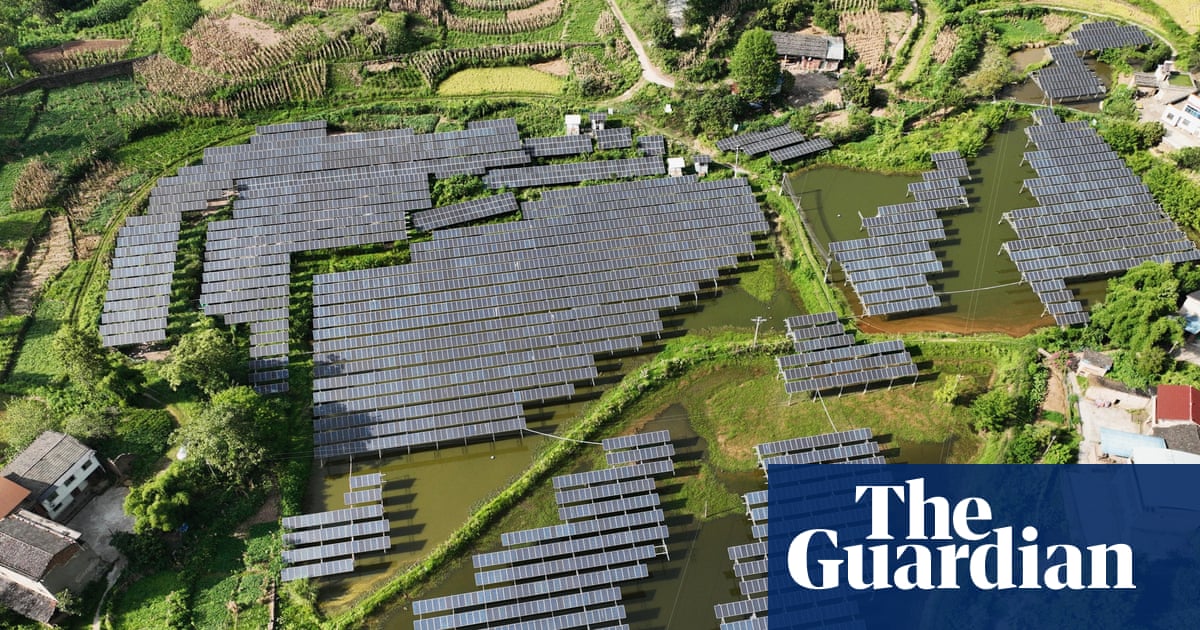
China has officially crossed a major structural threshold in global energy markets, as its installed solar generation capacity narrowly surpassed its coal fleet for the first time. Chinese state-run media announced that the country's total solar capacity reached 1,288 gigawatts, edging out 1,285 gigawatts of coal capacity, according to reporting outlined by Electrek. Solar now accounts for 31.5 percent of China's total installed generation capacity, relegating coal to second place.
Yet this capacity milestone masks a persistent operational divide on the ground. Despite boasting more nameplate solar hardware than coal infrastructure, China continues to rely on coal to power the majority of its daily electricity needs because solar farms generate power only intermittently when the sun shines.
Related YouTube video


That generation gap stems directly from the mechanical limits of capacity factors. While fossil-fuel and nuclear plants consistently operate near their nameplate ceilings, solar capacity utilization typically hovers around the 25 percent range, compared with roughly 50 percent for coal, as detailed by Electrek. Consequently, in the first half of 2026, coal still accounted to supply 49.7 percent of Chinese electricity generation, whereas wind and solar combined contributed 24.6 percent. This nevertheless marks the first time coal has supplied less than half of the nation's grid power.
Structural grid constraints and rigid commercial agreements further entrench coal generation. Independent analysts and technical commentators note that long-term coal contracts require polluting coal plants to keep running and supplying baseload power, forcing grid operators to curtail available wind and solar generation. Even as China eliminated guaranteed feed-in tariffs to force solar developers into open market competition, and despite new government targets allowing curtailment limits to rise up to 15 percent in select provinces under recent sectoral plans analyzed by Carbon Brief, 30 gigawatts of newly added coal-power capacity entered operation in the first half of the year alone.
Concurrently, the broader economy has felt the deflationary and environmental effects of rapid transport electrification. Driven by an accelerating electric vehicle boom—including a surge in heavy electric truck sales and rising charging volumes—China's transport sector has sharply cut its reliance on petroleum. According to energy data reported by China's National Bureau of Statistics and analyzed for Carbon Brief by the Centre for Research on Energy and Clean Air, these EV shifts displaced roughly 36 million tonnes of oil equivalent in the first half of 2026.
That reduction cushioned the world's largest petro-customer against severe price shocks during the strait of Hormuz crisis, when global crude prices surged by about 60 percent following U.S. Airstrikes in Iran. Plummeting oil consumption combined with strategic stockpiling helped drive a 1 percent decline in China's overall carbon dioxide emissions during the second quarter of the year. Analysts point out that this is the first time falling oil use, rather than reduced coal consumption, has driven a quarterly dip in national emissions.
Attention now turns to whether the ongoing expansion of non-fossil generation can outpace domestic power demand growth. The exact proportion of Chinese electricity generation met by renewables versus coal in the first half of 2026 remains the primary empirical benchmark as energy planners navigate grid bottlenecks and shifting fossil incentives.
Grid Bottlenecks and Policy Adjustments in the Renewable Transition
The rapid accumulation of solar infrastructure has collided with entrenched regulatory and physical hurdles that prevent clean electricity from reaching consumers. According to Carbon Brief, China's power-sector emissions climbed in the first half of the year even as vast quantities of renewable generation came online. This paradox stems directly from rules governing grid operation and long-term commercial agreements that favor coal over variable renewables. Power-grid operating models and electricity market structures do not encourage the flexible dispatch of coal-fired plants, hydropower, or inter-provincial transmission lines, leaving significant wind and solar potential wasted.
Recent policy documents released by government planners attempt to address these structural inefficiencies while simultaneously accommodating rising fossil capacity. Official plans outline a higher bar for the approval of new coal-power projects and signal an intent to curb coal-power generation. Nevertheless, the reality on the ground reflects a different pace of expansion. Data analyzed by Carbon Brief highlights that 30 gigawatts of newly added coal-power capacity entered operation in the first half of the year alone, marking the highest level since the middle of the decade.
- Coal-power capacity additions reached 30 gigawatts in the first half of the year, according to Carbon Brief.
- Long-term contracts require coal plants to operate continuously, forcing grid operators to curtail available wind and solar generation.
- Recent sectoral plans allow curtailment limits to rise up to 15 percent in select provinces, as detailed in reports examined by Carbon Brief.
As energy planners navigate these competing pressures, attention now turns to whether the expansion of non-fossil generation can decisively outpace domestic power demand growth. The exact proportion of Chinese electricity generation met by renewables versus coal in the first half of 2026 remains the primary empirical benchmark. The next step depends on how effectively regulators implement new policies to modernize transmission networks, integrate storage, and manage the growing volume of intermittent clean energy.
Archypedia is dedicated to independent, evidence-backed reporting. This briefing was synthesized from primary source reporting, corroborated across independent newsrooms, and verified against our Editorial Standards.
Transparency record
Evidence behind this report
This report synthesizes 4 distinct sources. Open the source ledger below to compare the underlying coverage.
Prepared under the Archypedia Editorial Policy by the Elena Voss editorial desk profile. AI-assisted tools may support drafting and verification; public accountability remains with Archypedia. Report an error.