Audi unveils A2 e-tron as its entry-level EV starting at about $45,000
The revived A2 returns as a steel-bodied electric crossover featuring a 0.24 drag coefficient and bidirectional charging for the European market.

Aerodynamics vs. Mass
Audi's claim that the A2 e-tron is its most efficient model ever rests on a drag coefficient of 0.24, a first for the brand and an improvement over the original A2's 0.25. According to The Verge and Carscoops, this was achieved through a suite of hardware including a fully enclosed underbody, gap reducers around the wheel arches, and aero wheels.
Related YouTube video
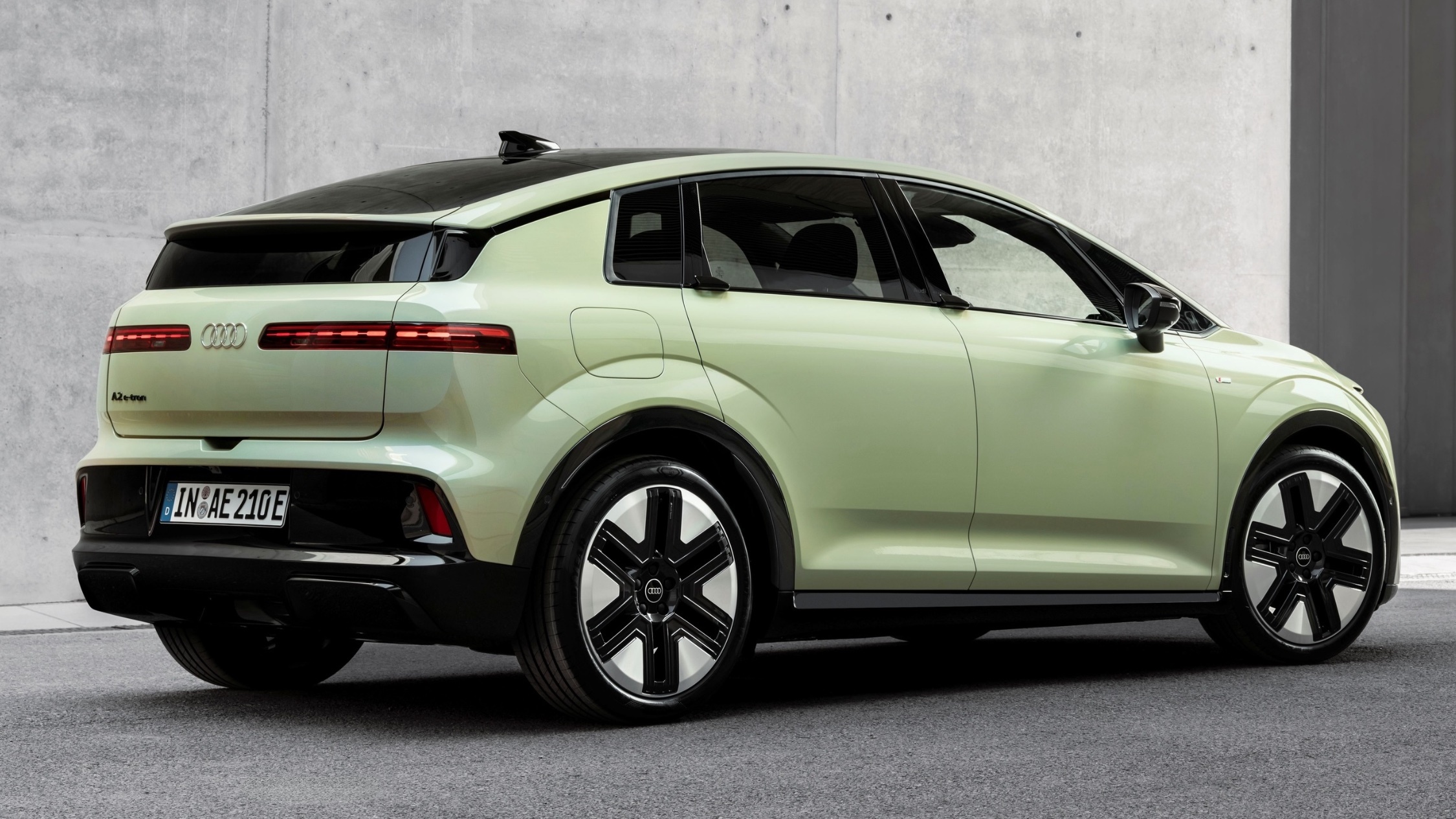
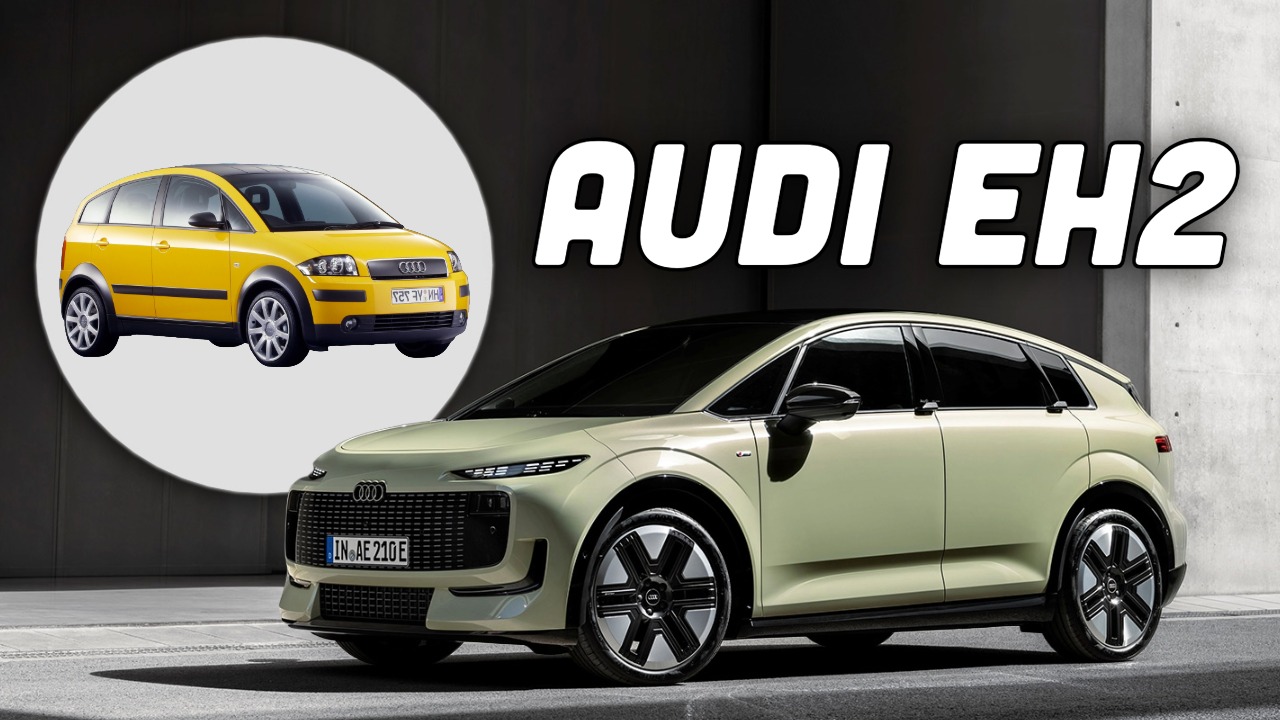
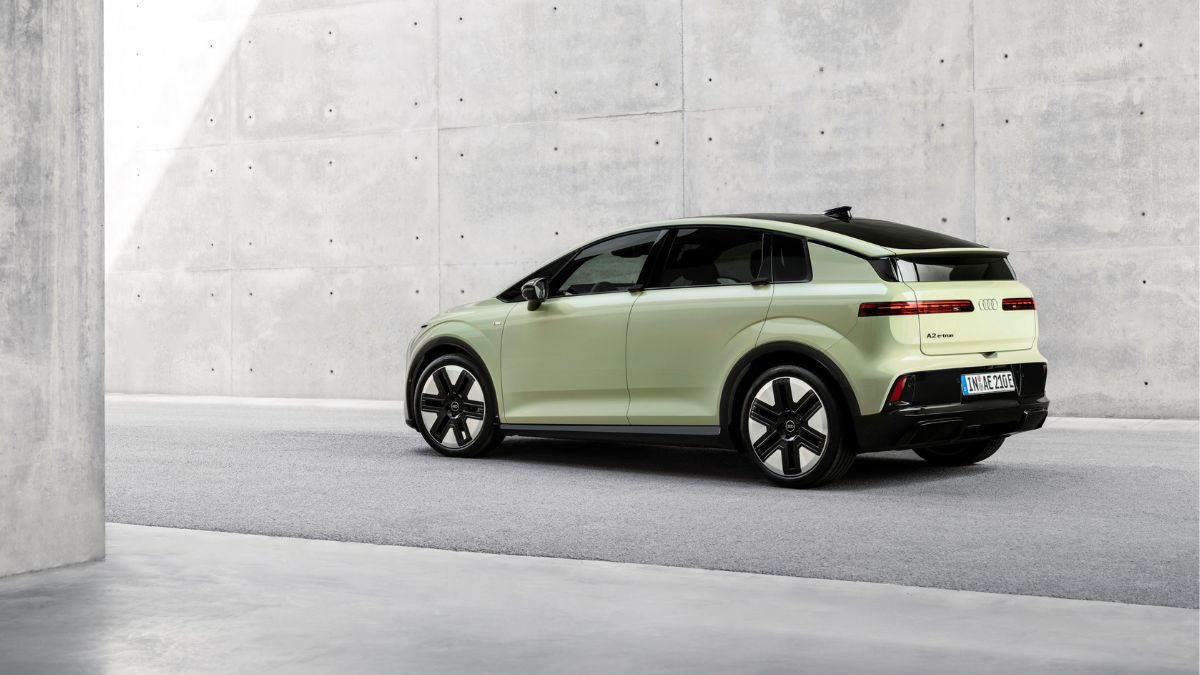
Notably, Audi replaced conventional mechanical door handles with sensor-based wing-type handles at the base of the door pillars. While these were discarded for the luxury Q9 SUV, they return here to reduce turbulence. The result is an energy consumption of 12.8 kWh per 62 miles (100 km), as reported by Electrek.
However, The Autopian highlights a stark divergence from the original's philosophy. The 2000s-era A2 used expensive aluminum to stay light. The e-tron is mostly steel, with weights ranging from 4,056 lbs for the base model to 4,255 lbs for the heaviest configuration.
Power Tiers and Charging Performance
The A2 e-tron is offered with three battery chemistries: LFP (Lithium Iron Phosphate) for the 52 kWh and 61 kWh packs, and NMC (Nickel Manganese Cobalt) for the 84 kWh unit. Power delivery is limited to the rear wheels across all versions.
| Model (Power) | Battery Size | 0-62 mph | WLTP Range | Starting Price (DE) |
|---|---|---|---|---|
| 125 kW | 52 kWh | 8.8s | 262 miles | €38,200 |
| 140 kW | 61 kWh | 7.9s | 320 miles | €41,900 |
| 170 kW | 84 kWh | 7.0s | 401 miles | €48,900 |
| 240 kW | 84 kWh | 5.7s | 391 miles | €51,200 |
Charging speeds vary significantly by battery. The 84 kWh pack supports DC fast-charging up to 183 kW, reaching 10% to 80% in roughly 29 minutes. The smaller LFP batteries are capped at 100 kW, though their lower capacity allows them to reach 80% in 14 to 25 minutes, according to Electrek.
The vehicle supports bidirectional charging, enabling Vehicle-to-Load (V2L) via a trunk outlet. In Germany, Austria, and Switzerland, it also supports Vehicle-to-Home (V2H) when paired with a compatible DC wall box.
Interior Utility and Market Positioning
Inside, the A2 e-tron features a curved MMI panoramic display consisting of an 11.9-inch gauge cluster and a 12.8-inch touchscreen. To offset its compact exterior, Audi integrated a Fidlock magnetic fastening system. This patented technology allows accessories, such as cupholders and charging cable bags, to click into dedicated points in the cabin and trunk.
While the 2.77-meter wheelbase is shared with the larger Q4 e-tron, the A2's practicality is more limited. Its 396-liter trunk is larger than that of the VW ID.3 (385 liters) and the Volvo EX30 (318 liters), but falls short of the Renault Megane E-tech's 440 liters.
The use of the MEB platform — the same architecture found in the VW ID.3, means the A2 e-tron lacks the 800V charging architecture found in some of Audi's higher-end EVs.
Frequently Asked Questions
Will the A2 e-tron be available in the United States?
Audi has not confirmed any US plans, and current reports indicate the vehicle is built in Germany specifically for the European market.
What is the difference between the LFP and NMC batteries used in the A2?
The 52 kWh and 61 kWh batteries use LFP cells, while the 84 kWh range-topping battery uses NMC chemistry to achieve the 401-mile range.
Does the A2 e-tron offer all-wheel drive?
No. Because it is based on the MEB platform, the A2 e-tron is only available in a rear-wheel-drive configuration; it does not feature Quattro technology.
Audi CEO Gernot Döllner described the A2 e-tron as a "renewal" for the brand, reflecting a shift toward more intelligent resource use in the European compact segment. The vehicle effectively replaces the A1 hatchback and Q2 crossover in Audi's lower-end portfolio.
Orders for the A2 e-tron open on September 10, 2026, with the first customer deliveries scheduled to begin in December 2026.
Development Timeline and Market Context
The return of the A2 badge follows a 20-year gap since the original model was discontinued. According to Carscoops, the transition from the drawing board to the official debut took 21 months.
Audi is positioning the A2 e-tron as a strategic reduction of its lower-end portfolio, as the vehicle replaces both the A1 hatchback and the Q2 crossover. While the A2 e-tron is built at the Ingolstadt plant specifically for Europe, it faces competition from other compact EVs in the region.
| Model | Length | Wheelbase | Trunk Space |
|---|---|---|---|
| Audi A2 e-tron | 4.32 m | 2.77 m | 396 L |
| Volvo EX30 | 4.24 m | 2.66 m | 318 L |
| VW ID.3 | - | - | 385 L |
| Renault Megane E-tech | - | - | 440 L |
The vehicle includes several standard driver-assist features, according to Electrek, including attention assist, swerve assist, emergency brake assist, and adaptive cruise control. Customers can also opt for a panoramic glass roof covering 1.6 square meters. Inside, the center console features a Qi 2.2 charging pad capable of powering two smartphones simultaneously at up to 25 watts.
The current production schedule places the opening of order books on September 10, 2026. For customers in Germany, the base 125 kW model begins at €38,200, while the range-topping 240 kW version starts at €51,200. Following this, the next step is the start of customer deliveries, which are scheduled to begin in December 2026.
Archypedia is dedicated to independent, evidence-backed reporting. This briefing was synthesized from primary source reporting, corroborated across independent newsrooms, and verified against our Editorial Standards.
Transparency record
Evidence behind this report
This report synthesizes 5 distinct sources. Open the source ledger below to compare the underlying coverage.
Prepared under the Archypedia Editorial Policy by the Niko Vale editorial desk profile. AI-assisted tools may support drafting and verification; public accountability remains with Archypedia. Report an error.