China exports grow 25% in August as AI boom boosts trade surplus
China's export growth accelerated to 25% in August, fueled by soaring semiconductor prices and global AI demand, even as domestic consumption and property markets lag.

The Dichotomy of Growth: External Boom vs. Internal Stagnation
The latest customs data reveals a stark contrast in the Chinese economy. While exports expanded 25% in August, matching forecasts and accelerating from July's 23.9% growth, domestic indicators remain tepid. According to Reuters, industrial output and retail sales slowed at the start of the third quarter, and fixed-asset investment saw a sharper decline over the first seven months of the year. This reliance on external demand is central to Beijing's effort to hit an annual growth target of 4.5-5%. Following a dip to 4.3% growth in the April-to-June period, the government has deployed an 800 billion yuan ($119.21 billion) financing tool for infrastructure. However, the trade surplus — which reached $119.09 billion in August, acts as a fiscal buffer. This strength relieves the government of the immediate need to implement wide-scale measures to boost household incomes or stabilize the property sector, which has been in a years-long decline.| Metric | July 2026 | August 2026 |
|---|---|---|
| Export Growth (YoY) | 23.9% | 25% |
| Import Growth (YoY) | 27.5% | 28.2% |
| Trade Surplus | $112.5 billion | $119.09 billion |
AI Infrastructure and the Price Inflation Mechanism
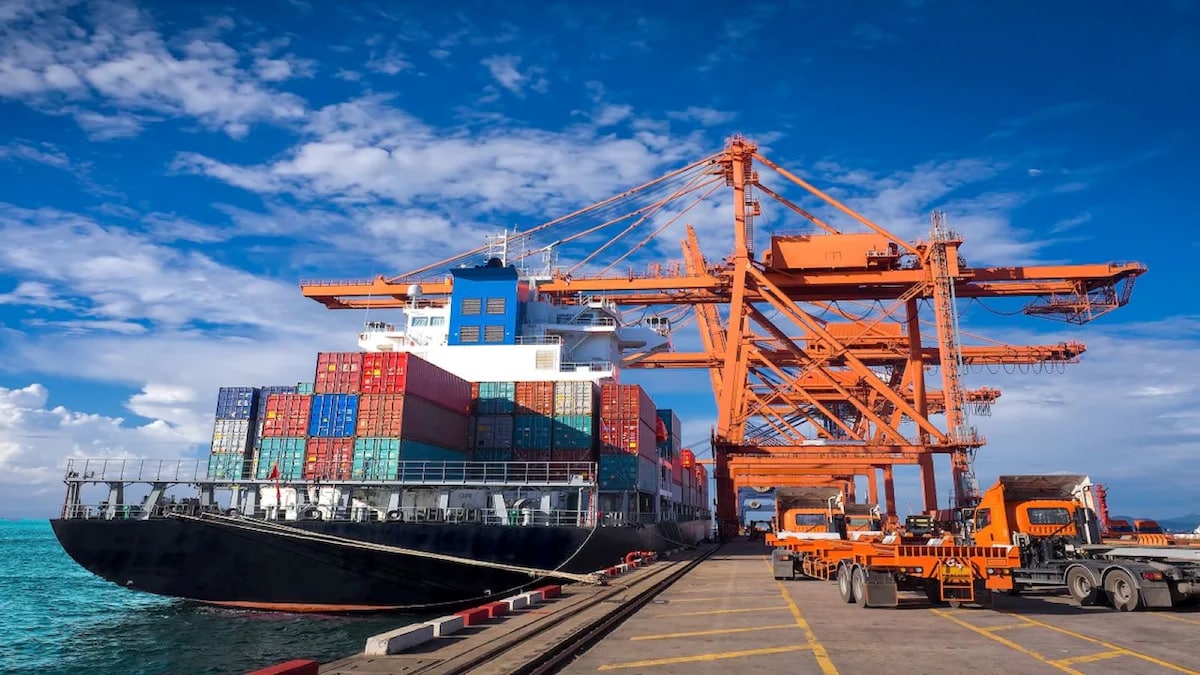
The surge in trade value is not solely a matter of producing more goods. According to CNBC*, the global expansion of AI infrastructure is creating massive shortages of electronic components. This has resulted in some semiconductor prices increasing by 700% over the past year. Consequently, the total value of exports is rising even as shipping activities face interruptions. Severe weather in August caused typhoons to halt operations at significant ports in eastern China, leading to a weekly decline in cargo throughput. Despite these logistical hurdles, the high value of AI-related hardware continues to push the trade surplus higher, putting China on track for a surplus similar to the record $1.2 trillion seen last year.Diplomatic Friction and the Tariff Truce
This manufacturing supremacy is fueling tensions with the United States and the European Union, both of whom argue that China's reliance on exports undermines their own domestic industries. Treasury Secretary Scott Bessent recently criticized Beijing for blocking a G20 joint statement that urged nations withexcessive and persistent external surplusesto eliminate distortions, according to CNBC*. The diplomatic stakes are high as a late-September summit between President Donald Trump and Xi Jinping approaches. While the two nations are currently exploring reciprocal tariff cuts on $30 billion worth of goods, a delicate tariff truce is set to expire in November. Beijing has rejected US accusations of trade distortion, characterizing the rhetoric as an attempt to rationalize protectionism.
Energy Shifts Amid Conflict
The trade picture is further complicated by energy security and the conflict involving Iran. China has significantly reduced its seaborne crude oil imports, which remained nearly 40% below pre-conflict levels in August. Data from Kpler, reported by Business Day, shows seaborne arrivals at 7.14-million barrels per day (bpd) in August, compared to an average of 11.41-million bpd before the February 28 US and Israeli attack on Iran. To compensate for the loss of Iranian crude, which is currently blocked by a US naval blockade, China has shifted toward Russia. Seaborne imports from Russia rose to 1.68-million bpd in August, the highest since March, augmenting the 1-million bpd China receives via pipelines.Frequently Asked Questions
Why is the trade surplus growing if domestic demand is weak?
The surplus is driven by strong global demand for high-tech goods and automobiles, combined with extreme price inflation in semiconductors due to the AI boom, which offsets the lack of internal spending.
Related YouTube video

How has the Iran conflict affected China's oil imports?
China has slashed seaborne crude imports from the Middle East due to conflict risks and high prices, replacing much of that volume with Russian oil via sea and pipeline.
What is the current status of US-China trade relations?
The two countries are in a tariff truce that expires in November. They are currently discussing reciprocal tariff cuts on $30 billion of goods ahead of a leadership summit in late September.
Archypedia is dedicated to independent, evidence-backed reporting. This briefing was synthesized from primary source reporting, corroborated across independent newsrooms, and verified against our Editorial Standards.
Transparency record
Evidence behind this report
This report synthesizes 5 distinct sources. Open the source ledger below to compare the underlying coverage.
Prepared under the Archypedia Editorial Policy by the Elena Voss editorial desk profile. AI-assisted tools may support drafting and verification; public accountability remains with Archypedia. Report an error.