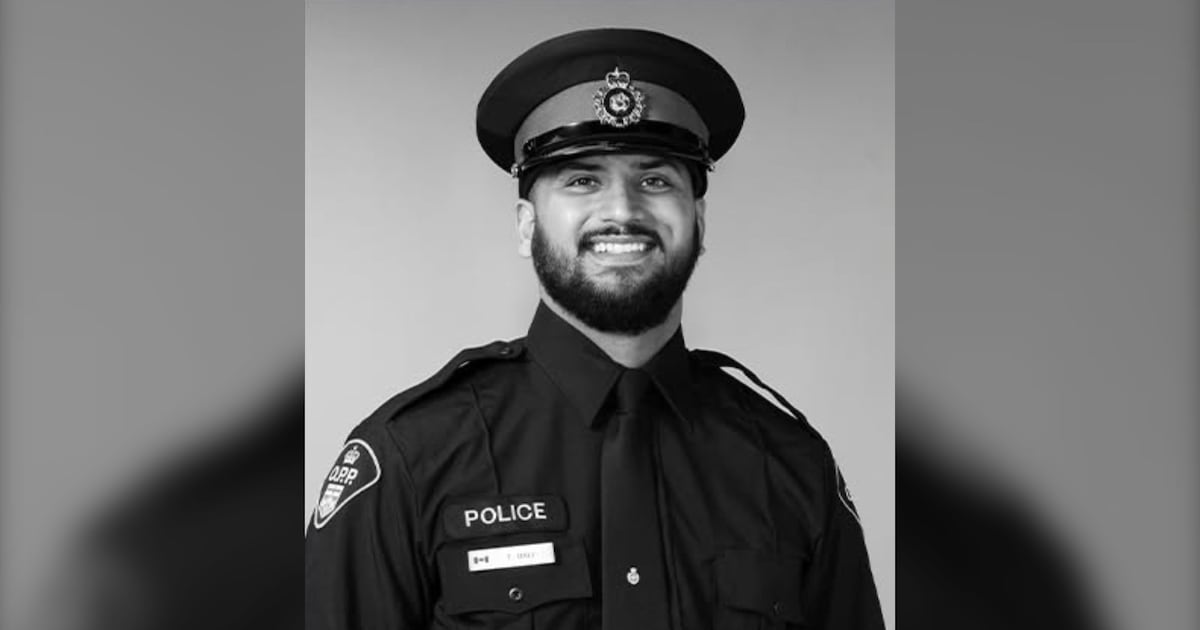
OPP Officer Tarun Bali’s Funeral Set for Thursday: A Life in Service, a Legacy in Loss
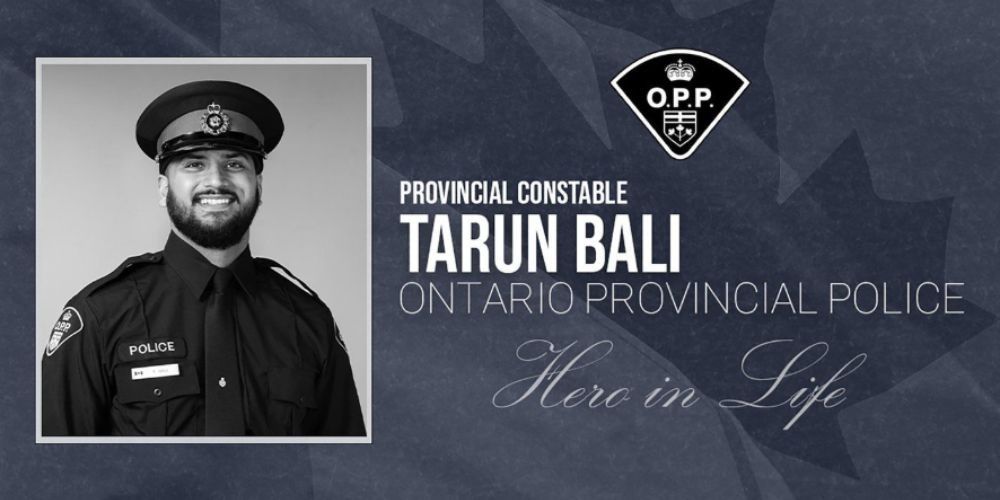
A funeral service for Ontario Provincial Police (OPP) Constable Tarun Bali, who was killed in the line of duty in northern Ontario, will be held Thursday in Mississauga, marking the end of a career that began with a lifelong commitment to public service. Bali, 32, was shot and killed during a traffic stop in the Temagami area on March 3, a tragedy that has left the OPP and communities across the province grieving. His funeral, themed “Forever be a hero in life,” will honor a man whose dedication to duty was matched only by the respect he earned from colleagues and the public.
Bali’s death has prompted reflection on the risks faced by law enforcement officers, particularly in remote regions where resources are stretched thin. His service, which spanned nearly a decade with the OPP, underscores the challenges of policing in northern Ontario—a jurisdiction known for vast distances, limited infrastructure, and a reliance on officers who often work in isolation. As details emerge about the circumstances of his death and the suspect’s identity, the focus remains on the life of a man who chose a path of service, even as the broader conversation about officer safety and support continues.
This article provides a comprehensive look at Bali’s life, the circumstances of his death, the upcoming funeral, and the broader implications for law enforcement in Ontario.
—
Who Was Constable Tarun Bali, and What Defined His Career?
Constable Tarun Bali joined the OPP in 2014, drawn to a profession that had long been a family tradition. His father, also a police officer, instilled in him the values of duty, integrity, and community service—principles that would later define Bali’s own career. Colleagues and family members describe him as a dedicated officer who took pride in his work, often going above and beyond to assist the public.
Bali’s service included postings in various regions of Ontario, including the northern communities where he was ultimately killed. His ability to connect with residents, particularly in Indigenous and rural areas, earned him respect from those he served. “He was the kind of officer who remembered faces and stories,” said a former colleague, who requested anonymity to speak freely. “People trusted him because he treated them like individuals, not just cases.”
In 2021, Bali was recognized with the OPP’s Distinguished Service Medal for his role in a high-risk operation that resulted in the arrest of a violent offender. The citation praised his “courage, professionalism, and commitment to the safety of the public.” His colleagues say such moments were typical of his approach to policing—calm under pressure, methodical in his decisions, and always mindful of the human cost of his work.
Key details about Bali’s career:
- Joined OPP: 2014 (after completing training at the OPP College in Orillia)
- Postings: Northern Ontario (including Temagami, where he was killed), Toronto, and rural communities
- Awards: Distinguished Service Medal (2021) for bravery in a high-risk arrest
- Family background: Son of a retired police officer; his father served in the OPP for 30 years
- Community impact: Known for building strong relationships with Indigenous and rural residents
Bali’s death has reignited discussions about the mental and physical toll of policing, particularly in remote areas where officers often face long shifts and limited backup. His funeral will serve as both a tribute and a reminder of the sacrifices made by those who wear the badge.
—
How Did Constable Bali Die, and What Do We Know About the Suspect?
Constable Tarun Bali was killed on March 3, 2024, during a routine traffic stop in the Temagami area of northern Ontario, approximately 400 kilometers north of Toronto. According to the OPP, Bali was conducting a traffic enforcement operation when he encountered a vehicle that failed to comply with his directions. The situation escalated, and Bali was fatally shot.
The OPP has identified the suspect as a local resident with a history of interactions with law enforcement, though details about his criminal record remain under investigation. Authorities have confirmed that the suspect was taken into custody without further incident. A press release from the OPP stated that the investigation into Bali’s death is ongoing, with a focus on determining whether the shooting was premeditated or occurred during a confrontation.
While the OPP has not released the suspect’s name, reports indicate he has prior convictions, including charges related to weapon offenses and failure to comply with police orders. The circumstances of the shooting—whether it involved a firearm seized during the traffic stop or another weapon—are still under review.
Timeline of key events:
| Date | Event |
|---|---|
| March 3, 2024 | Constable Bali killed during traffic stop in Temagami; suspect taken into custody |
| March 4, 2024 | OPP confirms Bali’s death; investigation begins |
| March 10, 2024 | Bali’s body transported to Thornhill, Ontario, for funeral preparations |
| March 14, 2024 | Funeral service scheduled for 11:00 AM at the Mississauga Armouries |
Critics of police funding in Ontario have pointed to the incident as evidence of the dangers faced by officers in understaffed regions. Northern Ontario, with its vast geography and sparse population, relies heavily on OPP officers who often respond to calls alone. The Ontario Association of Chiefs of Police (OACP) has previously highlighted staffing shortages in rural areas, where response times can exceed 30 minutes in some cases.
“This is a tragedy that could have been prevented with better resources,” said OACP President Steve McCrimmon in a statement. “Officers in northern Ontario are expected to handle situations that would overwhelm urban forces, yet they’re often left without adequate support.”
—
Why Is the Funeral Being Held in Mississauga, and What Will It Entail?
The funeral for Constable Tarun Bali will take place Thursday, March 14, at 11:00 AM at the Mississauga Armouries, a venue chosen for its capacity to accommodate the expected large turnout. The decision to hold the service in Mississauga—rather than in Temagami or another northern community—reflects Bali’s deep ties to the region and the logistical challenges of transporting family and colleagues from across Ontario.
Mississauga, a city of over 700,000 people, was selected for its central location and accessibility, allowing officers, family members, and community leaders from Toronto, Ottawa, and northern Ontario to attend. The OPP has coordinated with local authorities to ensure security and traffic management, given the high profile of the event.

The theme of the funeral, “Forever be a hero in life”, was chosen by Bali’s family and reflects his belief that heroism is not defined by a single act of bravery, but by a lifetime of service. The service will include:
- Military honors: A formal procession with OPP officers and members of the Canadian Armed Forces
- Eulogies: Speeches by OPP Commissioner Chris Lewis, family members, and colleagues
- Community tributes: Messages from Indigenous leaders, local residents, and first responders
- Memorial display: Photos, awards, and personal items honoring Bali’s career
- Private family moment: A closed-casket ceremony before the public service
The funeral will be closed to the public, with media access limited to pre-approved outlets. The OPP has emphasized that the focus will remain on honoring Bali’s life rather than the circumstances of his death.
“This is about Tarun,” said a source close to the family. “It’s about celebrating who he was, not how he left us.”
—
What Does This Death Mean for Officer Safety and Police Funding in Ontario?
Constable Tarun Bali’s death is the latest in a series of high-profile incidents that have raised concerns about officer safety, mental health support, and police funding in Ontario. Since 2020, at least 12 OPP officers have been killed in the line of duty, according to internal OPP records, with northern Ontario accounting for nearly half of these fatalities. The remote nature of policing in the region—where officers often work alone and response times are longer—has been cited as a major factor.
In response to growing concerns, the OPP has launched a review of its northern policing strategy, focusing on:
- Increased patrol coverage: Additional officers assigned to high-risk areas
- Mental health support: Expanded counseling services for officers and families
- Equipment upgrades: Better body armor and communication devices for remote postings
- Community engagement: Partnerships with Indigenous and rural leaders to improve trust
However, critics argue that these measures are insufficient without a broader increase in funding. The Canadian Association of Police Boards (CAPB) has repeatedly called for the federal government to allocate additional resources to provincial police forces, particularly in regions with high crime rates and limited infrastructure.
“We’re asking officers to do more with less,” said CAPB President Kim Pate. “When an officer like Tarun Bali is taken from us, it’s not just a personal loss—it’s a failure of the system.”
Bali’s death also comes amid a national debate about police accountability and reform. While some advocates argue for stricter oversight of officer conduct, others emphasize the need for better support systems to prevent tragedies like Bali’s. The OPP has faced scrutiny in recent years over its handling of use-of-force incidents, particularly in Indigenous communities where distrust of law enforcement remains high.
In Temagami, where Bali was killed, residents have expressed mixed emotions. Some have praised his service, while others have questioned why such a small community requires heavy police presence. “We need officers like Tarun,” said Temagami Chief Wayne Moonias, “but we also need to ask why we’re losing them.”
—
How Are Communities Reacting to Bali’s Death?
Across Ontario, reactions to Constable Tarun Bali’s death have ranged from outpourings of grief to calls for action. In Mississauga, where the funeral will be held, local police have prepared for an emotional service, with officers standing by to assist with crowd control. The city’s mayor, Ward 2 Councillor Namir Anwar, announced a moment of silence during Mississauga’s council meeting on Thursday in honor of Bali.
In northern Ontario, Indigenous communities have shared tributes, highlighting Bali’s role in bridging gaps between police and residents. The Temagami First Nation issued a statement calling him “a true ally” who worked to build trust with their community. “Tarun understood that policing isn’t just about enforcing laws—it’s about listening,” said Chief Moonias. “He will be deeply missed.”
Meanwhile, police unions have used Bali’s death to push for better working conditions. The OPP Association, which represents rank-and-file officers, has demanded a 20% increase in mental health funding** and the creation of a national officer safety task force. “Tarun’s death is a wake-up call,” said OPP Association President Mike McCormack. “We can’t keep losing officers to preventable risks.”
On social media, the hashtag #ForeverAHero has trended, with users sharing stories of Bali’s kindness and professionalism. One post from a former colleague described him as “the kind of officer who made you feel safe just by being there.” Another shared a photo of Bali with a child at a community event, captioned: “He had a heart bigger than his uniform.”
For many, Bali’s funeral will serve as a reminder of the human cost of policing. While the OPP continues its investigation into the circumstances of his death, the focus remains on honoring a life cut short—and on the urgent need to protect those who put their lives on the line every day.
—
What Happens Next for the OPP and the Suspect?
As Constable Tarun Bali’s funeral takes place, several key developments remain pending:
- Criminal charges: The suspect in Bali’s death is expected to face first-degree murder charges, though a formal indictment has not yet been issued. Crown prosecutors will determine whether the case will proceed by summary conviction or indictment, with the latter carrying a potential life sentence.
- OPP investigation: Authorities are reviewing bodycam footage, witness statements, and forensic evidence to determine if the shooting was justified or premeditated. The OPP’s Special Investigations Unit (SIU) is overseeing the probe to ensure impartiality.
- Coroner’s inquest: A public inquest is likely to be held, where medical examiners will examine the circumstances of Bali’s death. Such inquests often lead to recommendations for policy changes, as seen in past cases involving officer fatalities.
- OPP reforms: Commissioner Chris Lewis has signaled that Bali’s death will prompt a review of traffic enforcement protocols, particularly in high-risk areas. Changes may include stricter guidelines for solo officer operations and enhanced training for de-escalation.
For Bali’s family, the focus remains on healing. His parents, who have kept a low public profile since his death, have expressed gratitude for the outpouring of support. “We’re trying to find strength in the love people have shown us,” a family spokesperson said. “But we also want answers—so this never happens to another officer.”
In the weeks ahead, attention will likely shift to:
- The legal proceedings against the suspect, which could set a precedent for how similar cases are handled
- Potential legislative changes to improve officer safety, particularly in northern Ontario
- The long-term impact on the OPP’s recruitment and retention, as officers grapple with the emotional toll of service
For now, the message from colleagues and communities alike is clear: Tarun Bali’s legacy will endure—not just as a fallen officer, but as a reminder of the courage, compassion, and commitment that define public service.
—
Frequently Asked Questions About Constable Tarun Bali’s Death and Funeral
Q: What was the exact cause of Constable Bali’s death?
A: Constable Tarun Bali was fatally shot during a traffic stop in Temagami on March 3, 2024. The OPP has confirmed the suspect was taken into custody, but the full details of the shooting—including whether a firearm was seized during the stop—remain under investigation.
Q: Why is the funeral being held in Mississauga instead of Temagami?
A: Mississauga was chosen for its central location, allowing family members, colleagues, and community leaders from across Ontario to attend. The OPP coordinated with local authorities to ensure logistical support for the large expected turnout.
Q: Has the suspect in Bali’s death been charged yet?
A: The suspect has been identified but not formally charged. Crown prosecutors are reviewing evidence to determine whether to proceed by summary conviction or indictment, with first-degree murder being the likely charge.
Q: How many OPP officers have been killed in the line of duty in the past five years?
A: Since 2020, at least 12 OPP officers have been killed in the line of duty, according to internal OPP records. Northern Ontario has accounted for nearly half of these fatalities, highlighting the risks of remote policing.
Q: Will there be a public memorial for Constable Bali?
A: The funeral service will be closed to the public, but the OPP has encouraged private memorials in communities where Bali served. Some cities, including Mississauga, have announced moments of silence in his honor.
Q: What reforms is the OPP considering after Bali’s death?
A: The OPP is reviewing traffic enforcement protocols, mental health support for officers, and equipment upgrades, particularly in northern regions. Police unions have also called for increased funding and a national task force on officer safety.
Q: How can the public support Bali’s family?
A: The family has requested privacy but has expressed gratitude for messages of support. Donations in Bali’s name can be made to the OPP Benevolent Fund, which provides financial assistance to officers and their families in need.
