Over 80 feared dead after migrant boat gets into difficulty off Gran Canaria
Rescuers found 44 to 45 survivors southwest of Gran Canaria, but accounts suggest more than 100 people were on board when the vessel departed West Africa.

Forty-four to 45 survivors were rescued from a drifting vessel southwest of Gran Canaria on Wednesday, September 3, 2026, but they represent only a fraction of those who departed West Africa nearly a month earlier. At least 80 people, including a baby, are feared dead after the boat spent between 26 and 27 days adrift in the Atlantic Ocean, according to the human rights organization Caminando Fronteras.
The vessel was first spotted Wednesday afternoon by a rescue aircraft approximately 65 nautical miles southwest of Arguineguín, or 120 kilometers south of Gran Canaria. The rescue ship Guardamar Urania reached the boat around midnight, discovering 44 to 45 survivors and between five and eight bodies on board. While most survivors disembarked at the port of Arguineguín in the early hours of Thursday, three others were airlifted to hospitals in critical condition.
Related YouTube video


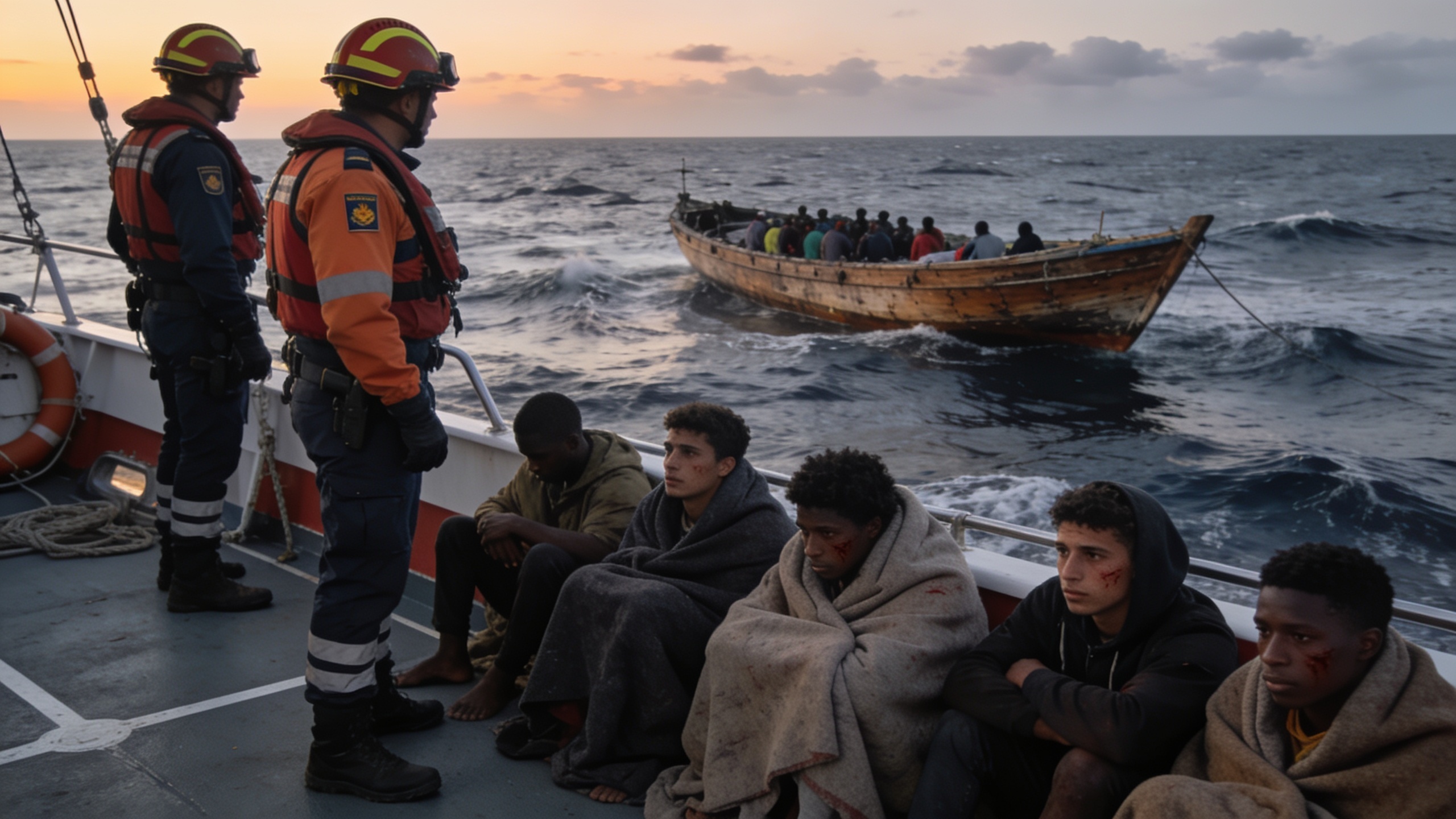
A stark discrepancy exists between official rescue tallies and figures provided by aid workers. Spanish Maritime Rescue confirmed finding five bodies on the vessel, but Helena Maleno Garzón, founder of Caminando Fronteras, asserts that 83 people perished. This higher figure is based on survivor accounts and the tracking of the vessel's departure; Spain's Civil Guard confirmed to the NGO that markings on the hull matched a boat that left The Gambia on August 7 with 127 or 128 people aboard, including four women and a baby, according to reports from English and thewhistler.ng.
The survivors, reported to be men from The Gambia and Mali, told the Red Cross that more than 100 people were on board when the journey began. For weeks, families of the migrants called aid workers in desperation before the tragedy was confirmed, according to a spokesperson for Caminando Fronteras via Nz.
This crossing illustrates the danger of the West African-to-Canary Islands corridor. In a June report, Caminando Fronteras stated that 635 people died on this specific Atlantic route during the first five months of 2026, out of a total of 1,317 deaths attempting to reach Spain. The organization described it as the deadliest route to Spain during that period.
The shift toward these longer journeys is linked to security measures. A spokesperson for the International Organisation for Migration (IOM) told The Independent that as counter-smuggling enforcement becomes stricter in departure countries, migrants are leaving from as far south as The Gambia. This necessitates overseas journeys of several weeks in small fishing boats, which are susceptible to mechanical failure, strong currents, and the exhaustion of food and water supplies.
Fernando Clavijo, the regional leader of the Canary Islands, described the Atlantic as a death trap
on X, stating that it is intolerable that lives continue to be lost
. Clavijo said the tragedy highlighted the need for a state policy on migration, following a deadly migrant surge in Spain's North African enclave of Ceuta in July.
The risks are reflected in long-term data from the Missing Migrants Project, which notes that deaths on the Atlantic route rose by 480 per cent between 2019 and 2025, increasing from 202 to 1,172. In 2026, the project has recorded 349 deaths, a figure that does not yet include the casualties from the August 7 departure.
Recovery efforts were hampered by extreme weather. Because of rough sea conditions, rescuers were unable to safely retrieve five of the bodies found on the vessel, leaving them on board.
The tragedy is part of a broader pattern of disappearances. According to Caminando Fronteras, 376 boats have disappeared on sea routes to Spain since 2022, with all occupants considered missing. While official data shows arrivals via the Canary Islands from West Africa have fallen by 57.4% so far this year, the nature of the journeys has become more hazardous.
This specific disaster occurred one day after the Moroccan navy intercepted 201 migrants 185 kilometres southwest of Dakhla who had departed from Western Sahara, according to Info Migrants and EFE.
Humanitarian organizations such as Médecins Sans Frontières have reported that survivors often arrive with severe trauma, hypothermia, and acute psychological stress. Helena Maleno questioned the level of cooperation between international search-and-rescue services and the resources available for vessels drifting in need of urgent rescue.
Archypedia is dedicated to independent, evidence-backed reporting. This briefing was synthesized from primary source reporting, corroborated across independent newsrooms, and verified against our Editorial Standards.
Transparency record
Evidence behind this report
This report synthesizes 7 distinct sources. Open the source ledger below to compare the underlying coverage.
- thewhistler.ng
- irishtimes.com
- english.news.cn
- chinaview.cn
- nz.news.yahoo.com
- russpain.com
- jen.jiji.com
Prepared under the Archypedia Editorial Policy by the Samir Haddad editorial desk profile. AI-assisted tools may support drafting and verification; public accountability remains with Archypedia. Report an error.