Houthis Capture Mocha as Yemeni Coastal Defense Line Collapses
The collapse of a decade-old coastal defense line puts the Red Sea's primary energy bypass at risk and triggers mass civilian displacement.

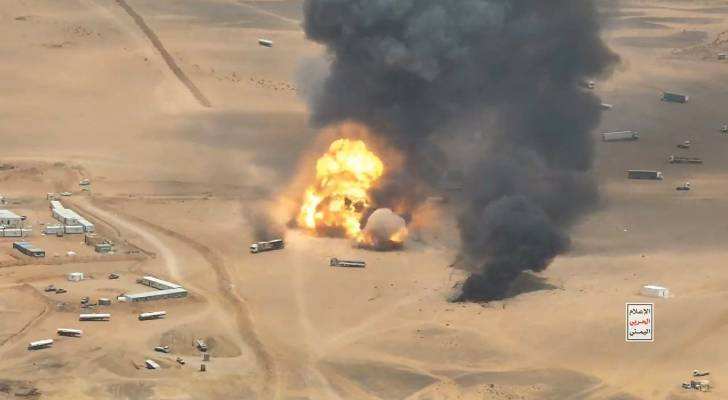
DUBAI — A decade-old defensive line along Yemen’s western seaboard collapsed on Thursday, according to reporting by Reuters and Agence France-Presse citing Yemeni government sources, as Iran-aligned Houthi forces seized the strategic Red Sea port city of Mocha. The rapid territorial loss shifts the active frontline to within roughly 46 kilometers of the Bab al-Mandab Strait, directly menacing the alternative maritime corridor that global energy markets have leaned upon since the closure of the Strait of Hormuz. In immediate reaction to the port's fall, benchmark Brent crude futures rose past $102 a barrel, closing up more than 1% as commodities traders priced in the growing prospect of simultaneous chokepoint closures across the Middle East.
The week-long offensive that culminated in Mocha's capture began Sept. 3 with a coordinated Houthi push through western Taiz and southern Hodeidah under heavy missile, drone, and artillery cover. Pro-government units — including Tareq Saleh’s National Resistance, the Giants Brigades, and Nation’s Shield forces, were forced into a chaotic southern retreat toward Dhubab. Tareq Saleh, vice chairman of Yemen's Presidential Leadership Council, confirmed that the withdrawing troops had suffered casualties over days of brutal engagements and that an alternative command center had been established at a secure location to coordinate with the Saudi-led coalition.
Related YouTube video

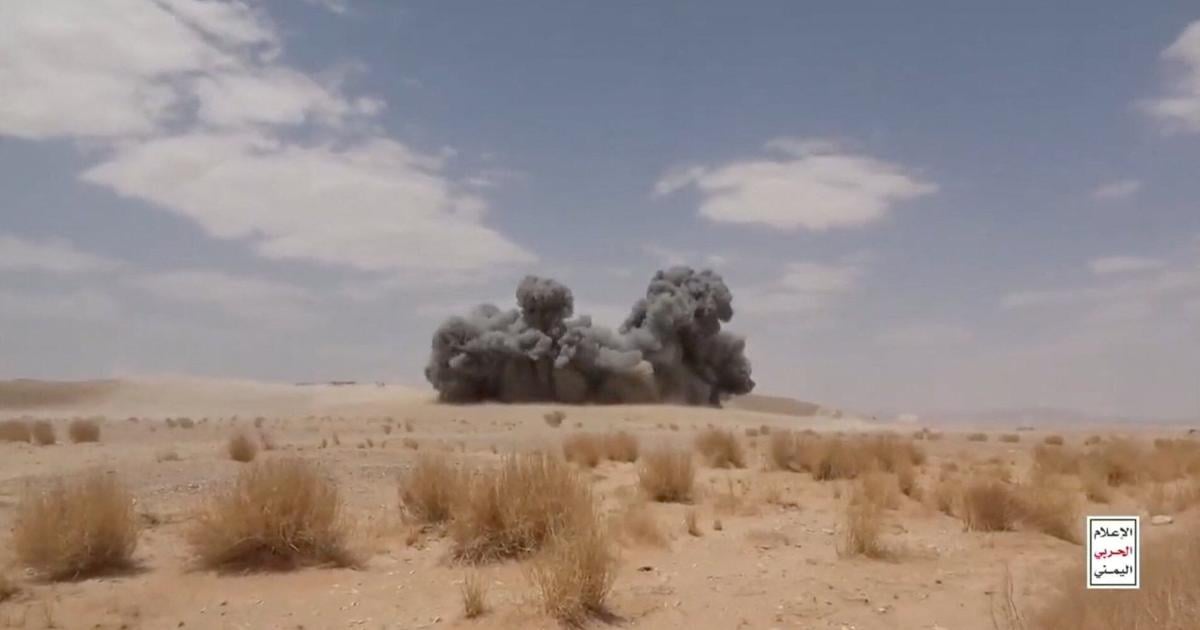
The geopolitical shockwaves of Mocha's fall extend directly into the global energy architecture. With traffic through the Strait of Hormuz heavily constricted by Iranian blockades, Saudi Arabia has relied on its East-West pipeline to transport crude to Yanbu on the Red Sea. According to Kpler data, petroleum volumes moving through the southern strait had recently climbed to roughly 7% of global output, nearly twice the year-earlier level. The establishment of an enduring Houthi artillery and drone threat along the littoral approaches threatens to sever this final arterial bypass.
| Metric / Asset | Previous Status / Baseline | Current Status (September 2026) |
|---|---|---|
| Mocha Port Control | Held by Saudi-backed government forces since 2017 | Captured by Houthi forces following defensive collapse |
| Brent Crude Futures | Trading near $101 a barrel | Rose above $102.40 (with some benchmarks exceeding $107) |
| Strait of Hormuz Traffic | Carried ~20% of global oil supplies prewar | Reduced to a fraction of normal volume (e.g., 7 vessels transiting daily) |
| Displacement Impact | Fragmented local displacement | Nearly 1,800 families displaced within 48 hours of offensive start |
Chronology of the Coastal Collapse
The collapse of Yemen's southern defenses was preceded by weeks of tactical maneuvering. Beginning Sept. 3 with a coordinated push through western Taiz and southern Hodeidah, Houthi units advanced through Maqbanah, Al-Kadaha, Jabal Habashi and Mawza under missile, drone and artillery cover, cutting the road linking Taiz city with the coast before turning toward the port. Although government forces launched repeated counterattacks, briefly retaking positions around Hays in Hodeidah province and claiming earlier in the week that dozens of Houthi fighters had been killed or captured in fighting around Taiz, those gains were not enough to prevent a broader withdrawal from Mocha, Hays and Al-Khawkhah by Thursday, according to multiple government-aligned military sources.
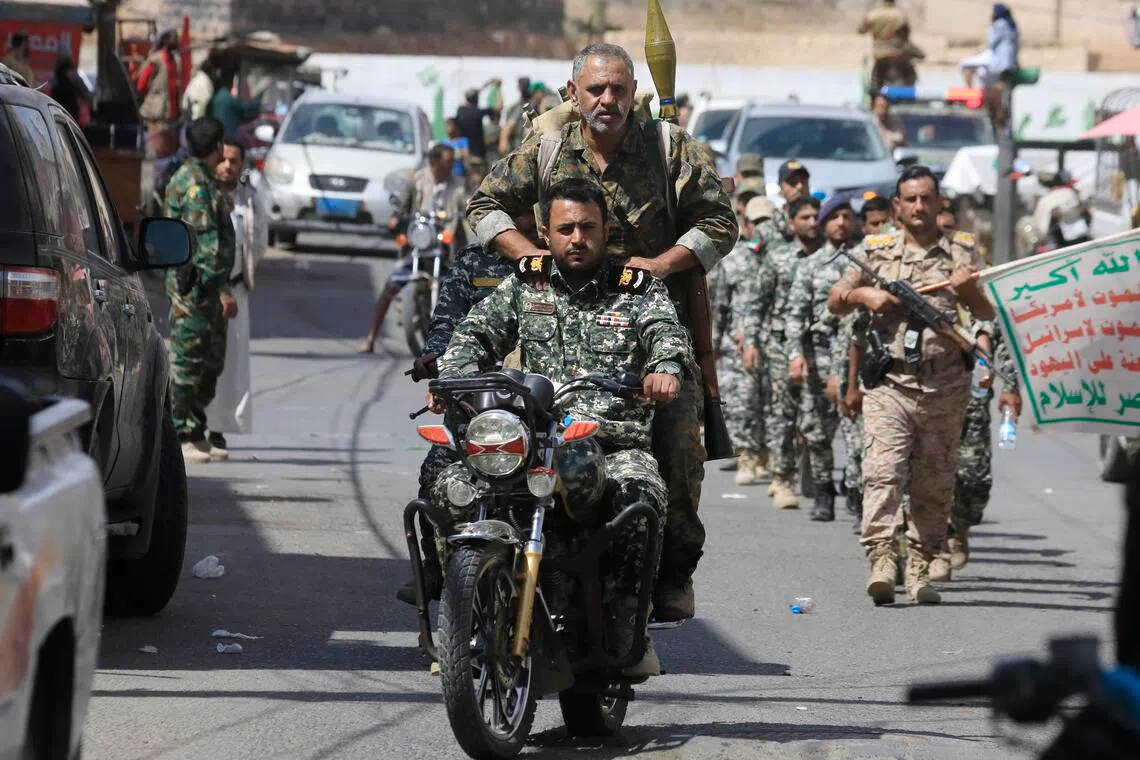
Simultaneous with the land assault, the Houthis also seized Zuqar Island farther south in the Red Sea in a combined rocket and boat assault. Witnesses inside Mocha reported Houthi fighters moving through Mocha's streets chanting slogans against the United States and Israel. Nevertheless, precise ground-level verification remains fraught; Yemen's internationally recognized government issued no formal public statement by Thursday afternoon, and unnamed Arabic-language field sources cited by regional observers disputed whether insurgent forces had achieved total saturation of the urban center.
External Direction and Divergent Official Perspectives
Behind the tactical execution of the coastal offensive lies deeper foreign involvement. Yemeni government, Iranian, and regional sources told Reuters that the advance down the coast this week had direct guidance from Iran's Islamic Revolutionary Guard Corps (IRGC). U.S. Officials corroborated this assessment, estimating that hundreds of IRGC officers are currently inside Yemen, working alongside the Houthis to help close the Bab el-Mandeb Strait, CNN reported Thursday.
Diplomatic channels reflect acute regional anxiety over these developments. Riyadh has also sent a warning to Tehran through Pakistani intermediaries, urging restraint regarding the Houthis.
The diplomatic friction mirrors broader military escalations across the Arabian Peninsula. The Saudi-led coalition said Wednesday that Houthi ballistic missiles and drones had struck Khamis Mushait, Abha and Jazan, wounding at least 73 civilians and forcing temporary shutdowns at oil facilities in the kingdom's south. Coalition spokesman Maj. Gen. Turki al-Malki said the escalation would be met "responsibly" and in line with Saudi Arabia's right to self-defense, while local monitors noted that Saudi forces responded with about 54 airstrikes across Yemen's Taiz, Hodeidah, Jawf and Marib provinces.
Frequently Asked Questions
Why is the fall of Mocha port strategically vital?
Mocha provides the Houthis with a major resupply hub and naval staging ground roughly 46 kilometers north of the Bab al-Mandab Strait, threatening the primary maritime route used by Saudi Arabia to export oil to Asian markets while the Strait of Hormuz remains blocked.
What is the status of official confirmation regarding the city's capture?
While Yemeni government military sources and AFP/Reuters field reports confirm the collapse and subsequent withdrawal toward Dhubab, Yemen's internationally recognized government has issued no public statement, and some regional field sources have disputed whether Houthi forces hold total control of the urban area.
How are international markets responding to the Red Sea escalation?
Global energy markets reacted immediately, with Brent crude futures climbing above $102 a barrel and other benchmarks topping $107 amid mounting anxiety over potential synchronized disruptions across both Gulf and Red Sea shipping lanes.
The human cost of the resurgent conflict continues to compound daily. An Agence France-Presse tally based on sources from both sides put the death toll above 500 since fighting resumed last week, with combatants constituting the vast majority of the fallen. Individual clashes have also caused a smaller but continuing civilian toll, including four civilians killed and nine wounded in a Houthi missile strike on a highway south of Taiz on Sept. 5. U.N. Office for the Coordination of Humanitarian Affairs recorded nearly 1,800 families displaced within 48 hours of the offensive's start, a figure expected to multiply as fighting bleeds into Dhalea, Marib, Jawf and Bayda provinces, further straining a nation where more than 22 million people in the country already require humanitarian aid.
Whether the Houthis can turn their capture of Mocha into effective control of the approach to the strait remains uncertain. The group does not control territory directly on Bab al-Mandab and would need to advance roughly another 46 kilometers beyond Dhubab to reach it. With Washington leaving the Bab al-Mandab front largely to Saudi Arabia and its coalition partners since the Houthis reached a separate ceasefire with the United States in 2025, Thursday's advance is putting that division of responsibility to a direct test.
Archypedia is dedicated to independent, evidence-backed reporting. This briefing was synthesized from primary source reporting, corroborated across independent newsrooms, and verified against our Editorial Standards.
Transparency record
Evidence behind this report
This report synthesizes 8 distinct sources. Open the source ledger below to compare the underlying coverage.
- kulu-media.com
- jp.ibtimes.com
- foxnews.com
- richmond.com
- straitstimes.com
- indianexpress.com
- africa.businessinsider.com
- cnn.com
Prepared under the Archypedia Editorial Policy by the Samir Haddad editorial desk profile. AI-assisted tools may support drafting and verification; public accountability remains with Archypedia. Report an error.