Houthis launch missile and drone attack on Saudi Arabia’s Abha airport
Hostilities have spiked in Yemen after the government disabled the Sanaa airport runway, prompting a retaliatory Houthi strike on Saudi infrastructure.

Yemen’s Houthi rebels launched a coordinated strike using ballistic missiles and unmanned aerial vehicles against Saudi Arabia’s Abha International Airport on Monday, 13 July 2026. The assault marks a sharp escalation in regional hostilities, threatening to dismantle a period of relative calm that has characterized the conflict between the Houthi movement and the Saudi-backed Yemeni government since 2022.
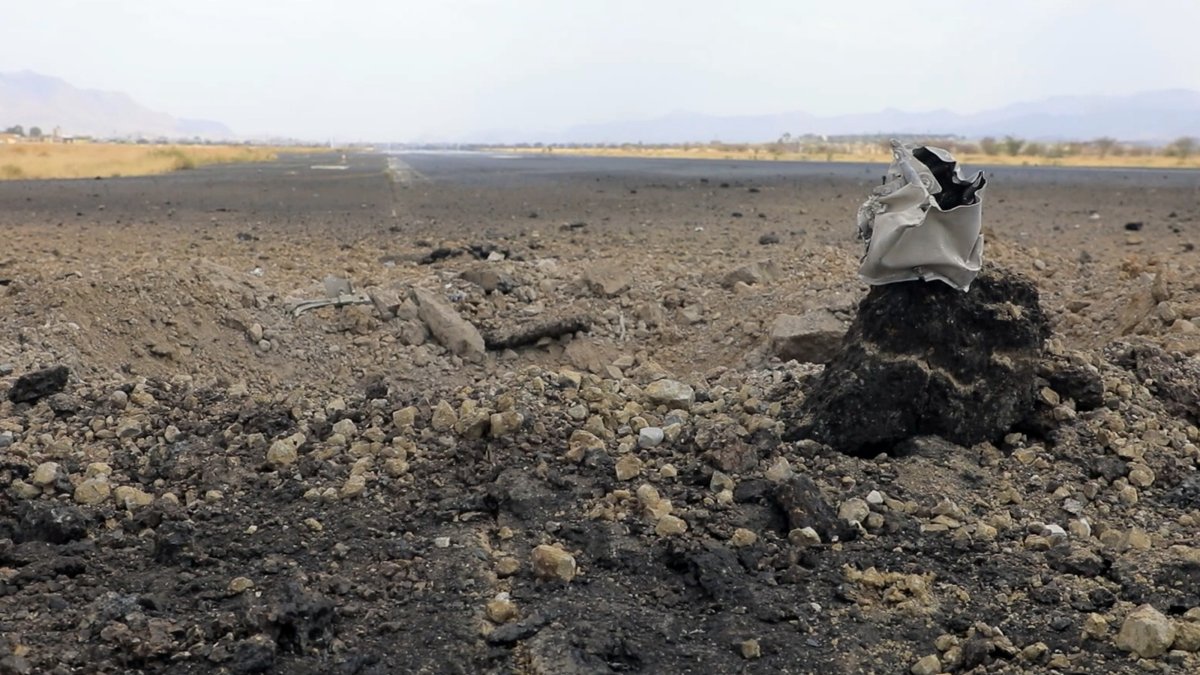
The hostilities were triggered earlier on Monday, 13 July 2026, when the Yemeni government, based in Aden, conducted an airstrike against the runway at Sanaa International Airport. The government stated the action was necessary to prevent an Iranian-operated Mahan Air plane from landing, alleging that the Houthi rebels were bypassing established sovereign frameworks for civil aviation. According to the Aden-based Ministry of Defense, the flight was attempting to return a Houthi delegation that had traveled to Tehran to attend the funeral of the late Iranian Supreme Leader Ayatollah Ali Khamenei. The Yemeni government reported that its forces had previously attempted to convince the delegation to travel on a domestic carrier instead.
Related media
Houthi military spokesperson Yahya Saree denounced the runway strike as a blatant and unjust act of aggression
and declared that the de-escalation phase
had ended. In response, Saree warned that the group’s retaliatory strike on Abha International Airport was intended to protest the continued restrictions at Sanaa airport. He cautioned airlines against entering Saudi airspace, stating these warnings should be taken seriously until the blockade on Sanaa International Airport is lifted.
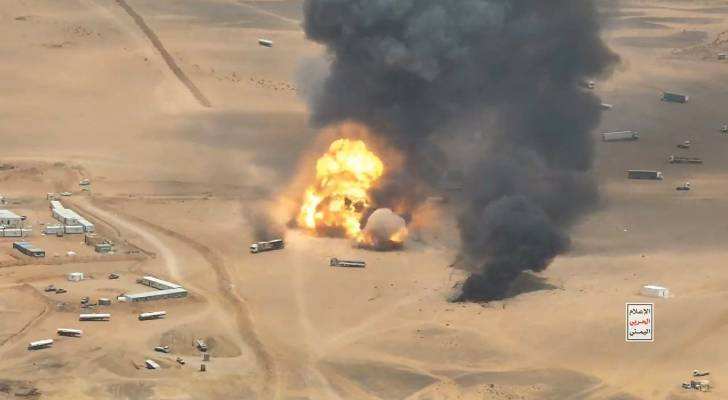
Footage broadcast by the Houthi-controlled al-Masirah outlet depicted a missile strike on the Sanaa airport runway, while local reports indicated the Iranian flight was subsequently diverted to the Hodeida Airport.
Saudi-led coalition spokesperson Turki al-Maliki confirmed via social media that Saudi air defenses engaged and dealt with ballistic missile threats aimed at the kingdom's southern region. While no casualties were reported in the attack on Abha, the development has drawn immediate international concern. During an emergency session on Monday afternoon, 13 July 2026, the United Nations Security Council addressed the situation, with U.N. Assistant Secretary-General for political affairs Khaled Khiari stating that Yemen and the wider region cannot afford another cycle of escalation.
The situation remains volatile, as the Yemeni government simultaneously accused the Houthis of detaining the crew of an International Committee of the Red Cross (ICRC) aircraft at the Sanaa airport. Hachem Osseiran, an ICRC spokesperson, later confirmed that all staff and crew members were safe. Despite the aggressive rhetoric from the rebel leadership, Rashad al-Alimi, the head of Yemen’s Presidential Leadership Council, signaled a desire to contain the situation, stating he had ordered that the scope of the confrontation not be expanded.
Chronology of Recent Escalations
- Early July 2026: Tensions rise after Houthi allegations that Saudi aircraft violated Yemeni airspace to intercept an Iranian plane.
- 3 July 2026: Houthi military officials claim their air defenses fired on Saudi aircraft to protect an arriving Iranian flight.
- 13 July 2026 (Morning): Yemeni government strikes the Sanaa airport runway to prevent an Iranian flight from landing.
- 13 July 2026 (Afternoon): Houthi rebels retaliate with a missile and drone attack on Abha International Airport in Saudi Arabia.
Security analysts suggest that the stability of the long-standing ceasefire is now in significant jeopardy. Mohammed al-Basha of the Basha Report noted that if the current cycle of retaliation continues, it could result in the total collapse of the 2022 truce. Meanwhile, experts such as Andreas Krieg of King’s College London have suggested that while the Yemeni government claimed responsibility for the Sanaa strike, the operation may have relied on Saudi technical support, given the condition of the government's own limited aviation assets. The current standoff occurs against a backdrop of wider regional friction.
Observers are now focused on whether the Houthis will continue their campaign against Saudi infrastructure or if diplomatic pressure under U.N. Auspices, as requested by Special Envoy Hans Grundberg, can restore the fragile relative calm. The immediate future of the conflict depends on whether the Houthis perceive the landing of their delegation in Hodeida as a successful challenge to the blockade or as a precursor to further military engagements.
Archypedia is dedicated to independent, evidence-backed reporting. This briefing was synthesized from primary source reporting, corroborated across independent newsrooms, and verified against our Editorial Standards.
Transparency record
Evidence behind this report
This report synthesizes 4 distinct sources. Open the source ledger below to compare the underlying coverage.
Prepared under the Archypedia Editorial Policy by the Samir Haddad editorial desk profile. AI-assisted tools may support drafting and verification; public accountability remains with Archypedia. Report an error.