
Vietnam, Canada Co-Host UN Staff Officer Training Course to Bolster Peacekeeping Capacity
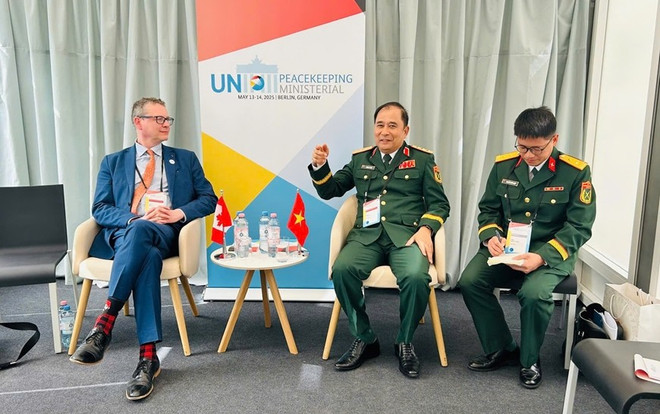
Vietnam and Canada are co-hosting a United Nations staff officer training course to enhance the professional capabilities of military personnel deployed in global peacekeeping missions. According to reports from Báo VietNamNet, the initiative focuses on improving operational planning and staff functions to meet evolving UN mandate requirements and ensure the safety and effectiveness of peacekeepers in high-risk environments.
What is the goal of the Vietnam-Canada UN staff officer training course?
The primary objective of the training course, as reported by Báo VietNamNet, is to equip military officers with the specialized skills required to function as staff officers within a United Nations peacekeeping mission. Unlike tactical training, which focuses on field maneuvers, staff officer training emphasizes the administrative, planning, and coordinative functions that allow a mission to operate cohesively.
The program focuses on several core competencies:
- Operational Planning: Developing the ability to translate UN mandates into actionable military plans.
- Inter-agency Coordination: Learning to work alongside civilian UN agencies, non-governmental organizations (NGOs), and local governments.
- Logistical Management: Coordinating the movement of troops, supplies, and medical assets in underdeveloped regions.
- Risk Mitigation: Implementing safety protocols to protect personnel from asymmetric threats and local instability.
By co-hosting this course, Vietnam and Canada aim to standardize the level of professionalism among participating officers, ensuring that regardless of their home country, they can operate under a unified UN command structure. This standardization is critical for reducing friction during the deployment phase of a mission.
Who are the key stakeholders in this peacekeeping initiative?
The partnership involves three primary entities: the government of Vietnam, the government of Canada, and the United Nations Department of Peace Operations (DPO).
Vietnam: As the co-host and a growing contributor to UN peacekeeping, Vietnam provides the venue and a significant portion of the participating personnel. Vietnam has shifted its international military strategy toward “proactive integration,” increasing its presence in UN missions to demonstrate its commitment to global peace and security.
Canada: Canada brings a legacy of peacekeeping expertise. As one of the original architects of UN peacekeeping concepts, Canada provides the instructional framework and experienced trainers. This role allows Canada to maintain its influence in international security architecture while supporting the capacity-building of emerging contributors like Vietnam.
The United Nations: The UN provides the overarching curriculum and certification standards. The DPO ensures that the training aligns with the current “Action for Peacekeeping” (A4P) initiative, which seeks to make peacekeeping missions more efficient and accountable.
The participants typically include mid-to-senior level officers from various member states, creating a multilateral environment that mirrors the actual conditions of a UN mission.
Why is the partnership between Vietnam and Canada significant?
The collaboration between Vietnam and Canada represents a strategic alignment between a traditional peacekeeping power and a rising contributor. According to official reports, this partnership is not merely technical but reflects a broader diplomatic strengthening between Hanoi and Ottawa.
For Vietnam, partnering with Canada provides a direct pipeline to “best practices” in military staff work. Vietnam has rapidly expanded its peacekeeping footprint, deploying Level 2 field hospitals and engineering companies to missions in South Sudan and the Central African Republic. However, providing troops and equipment is different from providing the staff officers who manage those assets at the mission headquarters level. This course fills that leadership gap.

For Canada, the partnership facilitates a “training-of-trainers” model. By helping Vietnam establish a robust training pipeline, Canada contributes to the overall stability of UN missions without necessarily having to deploy as many boots on the ground. It shifts the Canadian contribution toward intellectual and structural leadership within the UN framework.
| Stakeholder | Primary Contribution | Strategic Goal |
|---|---|---|
| Vietnam | Infrastructure, Personnel, Logistics | Increase global prestige and operational capacity |
| Canada | Curriculum, Expert Trainers, Methodology | Maintain leadership in international security standards |
| United Nations | Mandates, Certification, Global Oversight | Ensure mission effectiveness and personnel safety |
How does this training fit into Vietnam’s broader UN strategy?
Vietnam’s engagement in UN peacekeeping has evolved from a cautious approach to a systematic expansion. The country has transitioned from observing missions to deploying specialized units that provide critical services, such as healthcare and infrastructure repair.
According to Báo VietNamNet and official government statements, Vietnam’s strategy focuses on “non-combatant” but essential support. By deploying field hospitals (Level 2) and engineering units, Vietnam minimizes political risk while maximizing humanitarian impact. This approach has earned the country praise from the UN and improved its standing in the international community.
However, the transition from providing “units” to providing “staff officers” is a significant step. Staff officers are the ones who:
- Draft the daily operational orders.
- Manage the interface between the military commander and the civilian Head of Mission.
- Coordinate intelligence and security assessments.
By mastering these roles, Vietnamese officers can move into higher-ranking positions within the UN hierarchy, giving Vietnam a greater voice in how missions are managed and executed. This is a move toward “strategic peacekeeping,” where the goal is not just participation, but influence.
For more on Vietnam’s international relations, see this related explainer on Vietnam’s diplomatic strategy.
What are the current challenges in UN peacekeeping that this course addresses?
The training course is designed to address several systemic failures observed in recent UN missions. Peacekeeping has moved away from the traditional “blue helmet” model—where troops stood between two warring armies—toward “stabilization” missions in environments where there is often no peace to keep.
The Challenge of Asymmetric Threats: Modern peacekeepers often face improvised explosive devices (IEDs), insurgent attacks, and disinformation campaigns. Staff officers must now plan for “protection of civilians” (POC) mandates while simultaneously ensuring their own troops are not targeted by non-state actors.
The Complexity of Mandates: UN mandates have become increasingly “Christmas tree” style—meaning they are loaded with too many objectives, from monitoring elections to reforming police forces and protecting human rights. Staff officers need the ability to prioritize these competing goals under extreme pressure.
Cultural and Linguistic Barriers: Missions are composed of troops from dozens of different nations. A staff officer from Canada must be able to communicate a complex order to a battalion from Vietnam or a logistics unit from Rwanda. The co-hosting of this course by two diverse nations provides a practical laboratory for this intercultural communication.
“The effectiveness of a peacekeeping mission depends not on the number of troops deployed, but on the quality of the planning and the clarity of the command structure.” — General principle of UN Peacekeeping Operations.
How is the course structured to ensure operational readiness?
The curriculum for the UN staff officer training course is typically divided into theoretical modules and practical simulations. According to the frameworks provided by the UN and implemented by the Canada-Vietnam partnership, the training follows a rigorous progression.
Phase 1: Theoretical Foundation
Participants study the UN Charter, the current Secretary-General’s priorities, and the legal frameworks governing the use of force. They analyze case studies of past mission failures and successes to understand the pitfalls of poor staff coordination.
Phase 2: The Staff Process
This phase focuses on the “Military Decision Making Process” (MDMP). Officers learn how to receive a mission directive, analyze the environment, develop courses of action (COAs), and produce a final operation order (OPORD). This ensures that every action taken in the field is backed by a logical, documented plan.
Phase 3: Practical Exercises (PX)
The course culminates in simulated scenarios. Participants are placed in a mock mission headquarters and given a crisis—such as a sudden outbreak of violence in a protected village or a logistical collapse during a rainy season. They must coordinate a response in real-time, using the staff functions they have learned.
Phase 4: Evaluation and Certification
Officers are assessed on their ability to produce clear, concise staff papers and their capacity to lead a diverse team. Certification is granted only to those who meet the UN’s global standards, ensuring that only qualified personnel are sent to mission headquarters.
What are the long-term implications for regional security?
The ability of Southeast Asian nations, led by Vietnam, to provide high-quality staff officers has broader implications for regional security in Asia and Africa. As Vietnam becomes more proficient in UN operations, it can act as a regional hub for peacekeeping training, potentially hosting similar courses for other ASEAN members.
Furthermore, the partnership with Canada signals a shift in geopolitical alignment. By collaborating on security training, Vietnam and Canada are building a relationship based on professional military-to-military ties, which often serve as a stabilizing force even when political disagreements arise.
The long-term impact includes:
- Increased Professionalism: A higher standard of military leadership within the Vietnamese People’s Army (VPA).
- Enhanced Interoperability: The ability for Vietnamese forces to integrate seamlessly with Western and Global South militaries.
- Diplomatic Leverage: Greater influence for Vietnam within the UN General Assembly and Security Council regarding peacekeeping mandates.
Common Misconceptions About UN Peacekeeping Training
There are several common misunderstandings regarding the nature of these training courses that need clarification.
Misconception 1: This is “combat training.”
Contrary to popular belief, staff officer training is not about teaching soldiers how to fight. It is about teaching officers how to manage the fight and the peace. The focus is on administration, logistics, and strategy, not tactical weaponry.
Misconception 2: The training is only for the host nations.
While Vietnam and Canada co-host, these courses are often open to officers from various UN member states. The goal is multilateralism, not bilateral gain.
Misconception 3: Peacekeeping is a passive activity.
The modern UN mandate is active. Training now includes “robust peacekeeping,” where officers must plan for the proactive protection of civilians, which requires a high level of strategic planning and risk assessment.
For a deeper look at how these missions are funded, check out this related analysis on UN peacekeeping budgets.
Frequently Asked Questions
What exactly is a “staff officer” in a UN mission?
A staff officer is a military leader who works in the headquarters of a mission rather than leading a unit in the field. They are responsible for planning, intelligence, logistics, and communications, acting as the bridge between the mission commander and the troops on the ground.
Why is Canada involved in training in Vietnam?
Canada has a long history of contributing to the development of UN peacekeeping standards. By partnering with Vietnam, Canada shares its expertise in operational planning and helps build the capacity of a nation that is increasingly active in UN missions.
How does this training benefit the civilians in peacekeeping zones?
Better-trained staff officers lead to more efficient missions. This means faster delivery of humanitarian aid, more effective protection of civilians from violence, and better coordination of medical services, which directly improves the lives of people in conflict zones.
Is this course part of a larger military alliance?
No. This is a multilateral effort conducted under the auspices of the United Nations. It is focused on professional capacity building for peacekeeping and is not a mutual defense treaty or a formal military alliance.
What happens after the officers complete the course?
Certified officers are eligible for appointment to staff positions within UN missions. They may be deployed to headquarters in cities like New York or directly to mission headquarters in countries such as South Sudan or the Central African Republic.
The collaboration between Vietnam and Canada on this UN staff officer training course marks a transition in Vietnam’s international military role. By moving from providing specialized units to providing the strategic minds that manage those units, Vietnam is positioning itself as a more capable and influential actor in the global pursuit of peace. As the nature of conflict evolves, the ability to plan, coordinate, and lead in a multilateral environment remains the most critical asset for any peacekeeping force.
