AI search engines pull from different web sources than Google rankings
A divergence between traditional search results and AI citations is forcing publishers to shift from keyword-based SEO to answer-engine optimization. Top-ranked organic pages are often ignored by AI tools, requiring new strategies to improve citation probability.
A fundamental divergence has emerged between the websites that rank in traditional search and the sources cited by modern AI search tools. Data across the industry indicates that visibility in search engines no longer guarantees a spot in AI-generated answers, creating a dual-layered environment for content discoverability.
Traditional search models have long relied on domain authority, backlinks, and keyword placement. However, AI search engines — including Perplexity and Google’s AI Overviews — operate on different principles. According to reports from Archynewsy, these systems prioritize contextual relevance and real-time synthesis over rigid ranking lists. This shift means that content creators must navigate two separate systems: one that delivers a list of links and another that curates information into a unified response.
Related media

The Disconnect in Source Selection
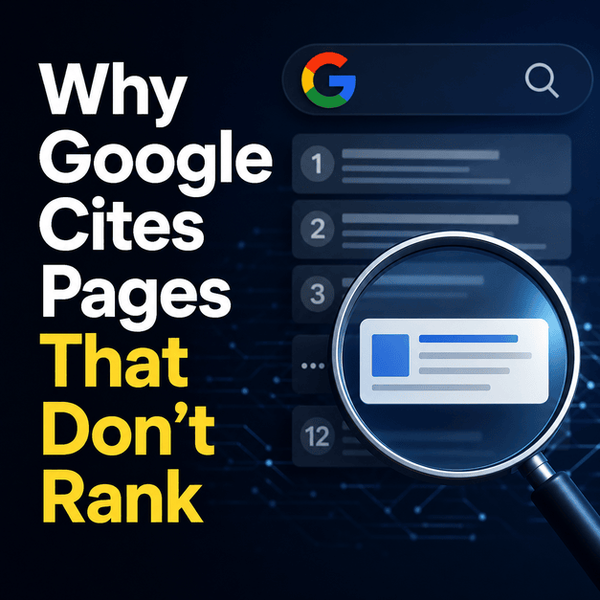
The gap between organic rankings and AI citations is substantial. Research analyzing over 66,000 queries suggests that the overlap between top-ranked organic pages and AI-cited domains is minimal, with some datasets showing near-random correlation. As noted by Authoritytech, nearly 30% of domains cited by AI Overviews do not appear on the first page of traditional organic results at all. This phenomenon occurs because AI systems function as interpreters of the web rather than mere directories.
The architectural differences between platforms further complicate the landscape. Leapd reports that platforms such as Perplexity perform real-time web retrieval, allowing them to surface fresh content within hours of indexing. In contrast, ChatGPT relies on a hybrid of vast pre-trained data and selective retrieval for specific queries, often favoring established, fact-heavy sources like Wikipedia or community-driven platforms such as Reddit. Searchenginejournal corroborates this, noting that Perplexity’s citation patterns track more closely with traditional rankings than those of ChatGPT or Gemini, which demonstrate lower domain overlap with Google’s organic index.
A Shift in Optimization Strategy
For content publishers, the move toward "answer-engine optimization" requires a departure from traditional keyword stuffing. AI systems evaluate content at the passage level, meaning a single, well-structured paragraph can outperform a higher-ranking page if it provides a more direct answer to a query. Key factors for improving citation probability include:
- Semantic Completeness: Providing self-contained answers that do not require external context.
- Structured Data: Utilizing schema markup, particularly FAQ, Article, and BreadcrumbList, to help machines parse content.
- Original Data: Incorporating proprietary statistics, survey results, and research to make content a "citation magnet."
- Brand Authority: Establishing a presence across diverse third-party publications and social platforms, which acts as a foundational trust signal.
The following table illustrates the differing citation behaviors noted in recent industry analyses:
| Platform | Primary Driver | Content Preference |
|---|---|---|
| ChatGPT | Training data & Bing retrieval | Factual, structured guides, FAQ schema |
| Perplexity | Real-time retrieval | Fresh content, community discussions, proprietary data |
| Google AI Overviews | Organic index retrieval | Semantic clarity, multi-modal content, E-E-A-T signals |
What to Watch Next
As the divide between traditional search and AI discovery continues to widen, industry observers are tracking the following developments:
- Traffic Consolidation: While total search volume is rising, traffic to individual sites may consolidate around those frequently cited by AI, shifting the focus from total volume to "citation share."
- Platform-Specific Updates: With models updated frequently, publishers are increasingly conducting platform-specific visibility audits rather than relying on generalized rankings.
- Measurement Standards: The shift from tracking page rankings to tracking citation frequency by publication outlet is expected to become the new standard for measuring digital visibility in the latter half of 2026.
Ultimately, while concerns about AI cannibalizing traffic have persisted, evidence suggests a more fragmented environment where users utilize both traditional search and AI summaries in parallel. Success in this environment will depend on whether a brand’s presence is legible to machines across every engine, rather than just the one dominating organic search rankings.
How significant is this development?
Contribute your assessment to the aggregated reader intelligence ledger.
Archypedia is dedicated to independent, evidence-backed reporting. This briefing was synthesized from primary source reporting, corroborated across independent newsrooms, and verified against our Editorial Standards.
Transparency record
Evidence behind this report
This report synthesizes 12 distinct sources. Open the source ledger below to compare the underlying coverage.
- leapd.ai
- archynewsy.com
- authoritytech.io
- searchenginejournal.com
- kaylarosehall.com
- sourcecodecommunications.com
- linkedin.com
- otterly.ai
- machinerelations.ai
- newsdirectory3.com
- superlines.io
- semrush.com
Prepared under the Archypedia Editorial Policy by the Niko Vale editorial desk profile. AI-assisted tools may support drafting and verification; public accountability remains with Archypedia. Report an error.


