Life Expectancy of Singapore’s Population Rose in 2025 to 83.9 Years, Higher than Pre-pandemic Peak
In a significant indicator of national health and systemic resilience, the life expectancy of Singapore’s population rose in 2025 to 83.9 years, higher than pre-pandemic peak levels. This milestone, reflected in recent data from the Department of Statistics (SingStat), marks a definitive recovery from the volatility introduced by the COVID-19 pandemic and signals a new era of longevity for the city-state. The surge to 83.9 years is not merely a statistical rebound but a testament to a multifaceted approach to public health, an aggressive pivot toward preventive care, and the successful integration of advanced medical technologies into primary healthcare.
For policymakers, healthcare providers, and the general public, this figure is more than a record; it is a catalyst for redefining the lifecycle of the average Singaporean. As the nation surpasses its previous longevity highs, the conversation is shifting from the quantity of years lived to the quality of those years—a concept known as “healthspan.” The ability of the population to not only survive the challenges of a global health crisis but to emerge with a higher life expectancy suggests that the systemic shocks of the early 2020s may have accelerated critical improvements in healthcare delivery and personal health consciousness.
Analyzing the Data: The Path to 83.9 Years
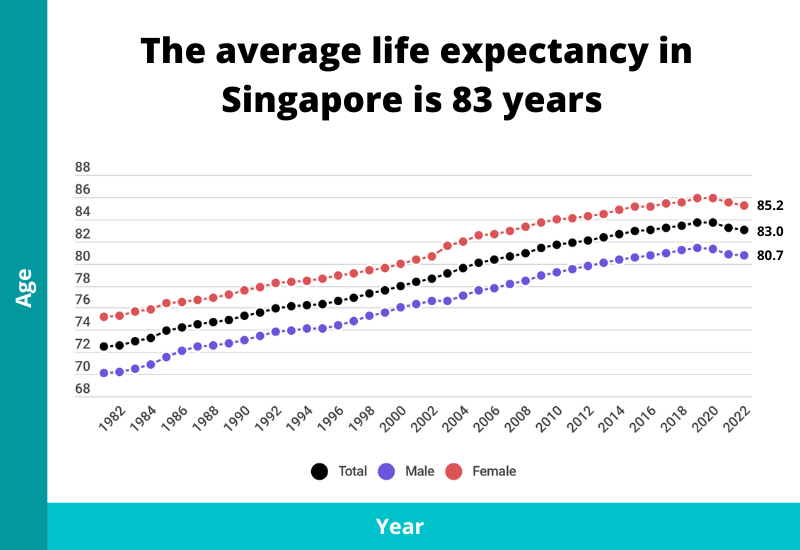
To understand the gravity of the 2025 figure, one must examine the trajectory of Singapore’s longevity over the last decade. Before the pandemic, Singapore was already on a steady upward climb, consistently ranking among the top nations globally for life expectancy. However, the onset of COVID-19 created a temporary but sharp disruption. The pandemic introduced excess mortality and strained the healthcare system, causing a momentary plateau or slight dip in expectancy figures across many developed nations.
The rise to 83.9 years represents a “V-shaped” recovery in demographic terms. By surpassing the pre-pandemic peak, Singapore has demonstrated that its healthcare infrastructure was not only capable of managing a crisis but was strengthened by it. The rebound can be attributed to several coinciding factors: the rapid rollout of vaccination programs, the refinement of critical care protocols, and a renewed national focus on managing chronic comorbidities that were exacerbated during lockdowns.
| Period | Life Expectancy Trend | Key Driver |
|---|---|---|
| Pre-Pandemic Peak | Steady Growth | General medical advancement & nutrition |
| Pandemic Era (2020-2022) | Stagnation/Volatility | COVID-19 mortality & healthcare strain |
| Recovery Phase (2023-2024) | Upward Correction | Vaccination & improved acute care |
| 2025 Milestone | Record 83.9 Years | Preventive health shift & systemic resilience |
The Role of the “Healthier SG” Strategy
A pivotal driver in this increase is the implementation of the related explainer on Healthier SG initiative. Moving away from a “sick-care” model—where the focus is on treating illness after it occurs—Singapore has leaned heavily into a “health-care” model. This strategy emphasizes a strong partnership between residents and a single family physician, focusing on preventive screenings and personalized health plans.
By identifying risks such as hypertension, diabetes, and high cholesterol earlier, the state has effectively reduced the incidence of catastrophic health events like strokes and heart attacks. When a population manages chronic conditions more effectively in their 50s and 60s, the statistical result is a significant push upward in life expectancy across the board.
Beyond the Numbers: Why This Increase Matters
While a higher life expectancy is generally viewed as a triumph, it brings with it a complex set of socio-economic implications. A population that lives longer requires a society that is structured for longevity. The jump to 83.9 years forces a re-evaluation of the “three-stage life” model (education, work, retirement) and suggests a transition toward a “multi-stage life.”
The Economic Impact of a Longer Life
The financial implications of living nearly 84 years on average are profound. For the individual, it means retirement savings (such as CPF) must be stretched further. For the state, it necessitates a sustainable funding model for healthcare that does not collapse under the weight of an aging demographic.
- The Silver Economy: We are seeing the rise of a “silver economy,” where products and services are specifically tailored to active seniors. This includes everything from age-friendly housing to lifelong learning programs.
- Labor Market Adjustments: With people living longer and remaining healthier, there is increasing pressure to raise the retirement and re-employment ages to keep experienced talent in the workforce and reduce the dependency ratio.
- Healthcare Expenditure: While preventive care reduces acute costs, the long-term management of age-related conditions like dementia and frailty will require sustained investment.
The Social Fabric and Caregiving
Longevity also reshapes family dynamics. Singapore is increasingly seeing “four-generation households,” where the gap between the oldest and youngest members is wider than ever before. This puts a unique pressure on the “sandwich generation”—adults who are simultaneously caring for their children and their elderly parents.
“The achievement of a record life expectancy is a victory for medicine, but it is a challenge for sociology. The goal now is to ensure that these extra years are lived with dignity, autonomy, and social connection.”
The Critical Distinction: Life Expectancy vs. Healthspan
One of the most important nuances in the report that the life expectancy of Singapore’s population rose in 2025 to 83.9 years, higher than pre-pandemic peak, is the distinction between life expectancy and healthspan. Life expectancy is the average number of years a person is expected to live. Healthspan, however, is the period of life spent in good health, free from chronic disease and cognitive decline.
There is a risk that medical interventions can extend life without necessarily extending health. For example, a person might live to 90 but spend the last 15 years in a state of severe morbidity. The current objective for Singapore’s health ministry is to “compress morbidity”—to push the onset of chronic illness as far back as possible so that the period of decline is short and occurs right at the end of life.
Strategies for Extending Healthspan
To ensure that the 83.9-year average is a high-quality average, the focus has shifted toward:
- Nutritional Literacy: Combating the “hidden hunger” of processed foods and promoting diets that support brain health and muscle mass (to prevent sarcopenia).
- Cognitive Reserve: Encouraging lifelong learning and social engagement to delay the onset of dementia.
- Physical Activity: Moving beyond simple exercise to “functional fitness,” ensuring seniors can maintain the mobility required for independent living.
Global Context: How Singapore Compares
Singapore has long been a global leader in longevity, often trading places with Japan and Switzerland for the top spot. The rise to 83.9 years reinforces its position as a global benchmark. However, the reasons for Singapore’s success differ from those of other longevity hubs.
While Japan’s longevity is often attributed to traditional diet and a cultural emphasis on moderation, Singapore’s success is more closely tied to institutional efficiency. The combination of a highly centralized healthcare system, world-class infrastructure, and a government that treats public health as a matter of national security has created a unique environment where health outcomes can be optimized at scale.
Comparatively, many Western nations saw their life expectancies stall or decline during the pandemic due to fragmented healthcare systems and higher rates of obesity and opioid addiction. Singapore’s ability to not only recover but exceed its previous peak highlights the advantage of an integrated, state-led health strategy.
Common Misconceptions About Longevity Trends
When news of rising life expectancy breaks, several common misconceptions often surface. It is important to clarify these to provide a balanced perspective on the 2025 data.
Misconception 1: “Everyone is living longer”
Life expectancy is a statistical average. While the mean has risen to 83.9, We find still significant disparities based on socioeconomic status, ethnicity, and lifestyle choices. The “average” can hide pockets of the population that are not seeing the same gains in longevity.
Misconception 2: “Better medicine is the only reason”
While pharmaceutical breakthroughs are vital, the rise is equally due to non-medical interventions. Improved urban planning (more parks, walkable cities), cleaner environments, and better workplace safety regulations play a massive role in reducing the external triggers of premature death.
Misconception 3: “A longer life is always a better life”
As discussed with the concept of healthspan, longevity without quality of life can lead to increased suffering and higher costs. The goal is not simply to reach a number, but to ensure the years added are functional and fulfilling.
The Future Outlook: The Century of the Aged
As Singapore moves forward from 2025, the focus will likely shift toward the “extreme elderly”—those aged 85 and above. This demographic is the fastest-growing segment of the population. The challenges of the next decade will be centered on geriatric care, palliative care, and the psychological well-being of the very old.
One can expect to see further integration of AI and robotics in eldercare to supplement the human workforce. From AI-driven health monitoring that can predict a fall before it happens to robotic assistants that help with daily mobility, technology will be the bridge that allows a population with an 83.9-year life expectancy to remain independent for longer.
there will be a continued push toward related analysis on aging population strategies, focusing on “ageing in place.” The goal is to modify the physical environment—homes and neighborhoods—so that seniors can live in their own communities rather than in institutionalized settings.
Frequently Asked Questions
What does a life expectancy of 83.9 years actually mean for the average person?
It is a statistical average, meaning that if you were born today, the average lifespan of your cohort is projected to be 83.9 years. It does not guarantee an individual’s lifespan but indicates a general trend of improved survival rates across the population due to better healthcare and living conditions.

Why did life expectancy drop or stall during the pandemic?
The pandemic caused a spike in direct deaths from the virus and indirect deaths caused by the disruption of routine healthcare. Many people delayed screenings for cancer or treatment for heart disease, leading to a temporary decline in the average life expectancy.
Is Singapore’s life expectancy the highest in the world?
Singapore is consistently among the top three globally, often competing with Japan and Switzerland. The 2025 figure of 83.9 years keeps it at the forefront of global longevity rankings.
Does living longer put a strain on the healthcare system?
Yes, it creates a higher demand for long-term care and the management of age-related diseases. However, the government is mitigating this by shifting toward preventive care (Healthier SG) to ensure that people stay healthy longer, thereby reducing the burden on acute hospitals.
What is the difference between life expectancy and healthspan?
Life expectancy is the total number of years a person lives. Healthspan is the number of years they live in good health. The objective of modern public health is to make these two numbers as close as possible, minimizing the time spent in ill health at the end of life.
The trajectory of Singapore’s population health suggests a future where the boundaries of age are constantly being pushed. While the record of 83.9 years is a landmark achievement, the true success will be measured by how the nation supports its citizens in living those years with vitality, purpose, and health.
