
Global Temperature Forecast in Fahrenheit: What to Expect This Week and Why It Matters
Global temperatures are expected to spike in the coming days, with some regions facing record-breaking heat, according to the latest projections from the National Oceanic and Atmospheric Administration (NOAA) and the European Centre for Medium-Range Weather Forecasts (ECMWF). The shift from seasonal norms could strain infrastructure, health systems, and agricultural output, particularly in vulnerable areas where extreme heat has already taken a toll. Here’s what the data shows, who is most at risk, and what experts say about the broader climate trends driving these forecasts.
The global forecast for the next seven days indicates temperatures will average 2–5°F above normal in many regions, with isolated areas—including parts of the southwestern U.S., the Middle East, and South Asia—experiencing 10°F or higher deviations from seasonal averages. According to NOAA’s Climate Prediction Center, Las Vegas and surrounding areas in Nevada could see highs near 110°F by midweek, while the ECMWF’s models suggest India and Pakistan may face dangerous heat indices exceeding 120°F. These spikes follow a pattern of increasingly frequent extreme heat events linked to long-term climate change, with 2023 already ranking among the warmest years on record.
—
Where Will the Heat Be Most Intense—and When?
Extreme heat is not a global blanket; it’s concentrated in specific regions where weather patterns, geography, and climate trends collide. Here’s where the most significant deviations from normal temperatures are expected in the coming days:
- Southwestern U.S. (including Las Vegas): Highs of 108–112°F are forecasted for the Mojave Desert and surrounding areas, with overnight lows struggling to drop below 85°F. The National Weather Service (NWS) has issued excessive heat warnings for Clark County, Nevada, starting Monday, advising residents to avoid outdoor activity between 10 a.m. and 6 p.m..
- Middle East (Iraq, Kuwait, Saudi Arabia): Cities like Basra, Iraq, could see temperatures reach 125°F, with humidity pushing heat indices toward 130°F. The World Health Organization (WHO) has classified prolonged exposure to such conditions as a “public health emergency”.
- South Asia (India, Pakistan): Monsoon delays have left large swaths of the subcontinent 5–8°F hotter than usual, with Delhi and Karachi expected to hit 115°F. Power grids in both countries are already under strain, with India’s central grid operator reporting a 15% increase in electricity demand over the past week.
- Southern Europe (Spain, Italy, Greece): While not as extreme as other regions, Madrid and Rome could see highs of 100°F, with wildfire risks elevated due to dry conditions and strong winds.
These forecasts align with broader trends: NOAA data shows that the past nine years have been the warmest on record globally, with 2023 on track to surpass 2022 as the hottest year ever measured. The Intergovernmental Panel on Climate Change (IPCC) attributes this to a combination of greenhouse gas accumulation and natural variability, though the latter is becoming harder to distinguish from human-driven warming.
—
Why Are These Temperatures Dangerous—and Who Is Most at Risk?
Extreme heat is more than just uncomfortable—it’s a silent killer, responsible for more deaths annually than hurricanes, floods, and earthquakes combined, according to the Centers for Disease Control and Prevention (CDC). The risks vary by region, but common vulnerabilities include:
- Urban heat islands: Cities like Las Vegas, Phoenix, and Delhi experience 5–10°F higher temperatures than surrounding rural areas due to concrete, asphalt, and lack of vegetation. The U.S. Environmental Protection Agency (EPA) estimates that urban heat islands can make cities up to 22°F warmer than nearby countryside.
- Outdoor workers: In Nevada, agricultural and construction workers account for nearly 30% of heat-related illnesses, per data from the Nevada Occupational Safety and Health Administration (OSHA). The World Health Organization (WHO) reports that heat stress costs the global economy $100 billion annually in lost productivity.
- Vulnerable populations: The elderly, children, and those with chronic illnesses are three times more likely to suffer heat-related health issues, according to a 2023 study in The Lancet. In India, over 17,000 deaths were attributed to heatwaves in 2022, with the majority affecting people over 65.
- Infrastructure strain: Power grids, water supplies, and transportation systems are pushed to their limits. In Pakistan last year, heatwaves caused blackouts affecting 200 million people, while in the U.S., Las Vegas’ water authority has warned of “critical shortages” if demand isn’t managed carefully.
Exacerbating the risk is the phenomenon of “compound heat events”, where extreme temperatures coincide with other hazards like droughts, wildfires, or air pollution. For example, Las Vegas’ current heatwave is overlapping with elevated PM2.5 levels from wildfires in California, creating a “double exposure” risk for respiratory conditions.
—
How Do These Forecasts Compare to Past Heatwaves—and What’s Changing?
While extreme heat is not new, the frequency, intensity, and duration of these events are accelerating. Here’s how recent forecasts stack up against historical precedents:
| Event | Year | Peak Temperature (°F) | Duration (Days Above 100°F) | Deaths Reported | Key Difference from Today |
|---|---|---|---|---|---|
| European Heatwave | 2003 | 104°F (France) | 15+ | 70,000+ | First major heatwave linked to climate change; no real-time forecasting systems in place. |
| Russian Heatwave | 2010 | 111°F (Moscow) | 20+ | 55,000+ | Wildfires contributed to smog levels 20x higher than safe limits. |
| U.S. Southwest Heatwave | 2021 | 120°F (Death Valley) | 30+ | 200+ | First time 120°F+ readings were recorded outside Death Valley. |
| Current Global Forecast (2024) | June–July | 110–125°F (varies by region) | 7–14+ (prolonged in some areas) | Not yet determined | Forecasts now include heat indices and multi-hazard warnings; climate models suggest this may become the “new normal” by 2030. |
The most striking shift is in forecasting accuracy. Decades ago, meteorologists could predict general temperature trends but struggled with localized extreme events. Today, machine learning models and satellite data allow agencies like NOAA to issue hyper-localized alerts—such as the NWS’s “Excessive Heat Risk” categories—with up to 72-hour lead times. However, climate scientist Dr. Friederike Otto of Imperial College London warns that even these advances are being outpaced by warming trends.
“We’re no longer just breaking records—we’re breaking them by wider margins every year,” Otto said in a recent interview. “The physics are clear: a warmer atmosphere holds more moisture, which fuels more intense heatwaves. The question isn’t if these events will happen, but how severe they’ll be.”
—
What Are Governments and Cities Doing to Prepare?
From cooling centers to policy changes, responses to extreme heat vary widely in effectiveness. Here’s what’s being implemented—and where gaps remain:
- Las Vegas, Nevada:
- The Clark County Department of Public Health has opened 12 cooling centers across the city, with additional mobile units deployed to homeless populations.
- Mandatory heat action plans require construction sites to provide shade, water, and 10-minute rest periods every hour.
- Criticism: Advocacy groups argue the city’s lack of affordable housing with air conditioning leaves many residents vulnerable. A 2023 report by the ACLU of Nevada found that 30% of low-income households lack AC.
- India and Pakistan:
- Heat action plans in cities like Ahmedabad and Delhi have reduced heat-related deaths by 40–50% since 2013, according to a WHO study.
- Challenges: Power shortages and water rationing limit the effectiveness of cooling measures. In Pakistan, only 30% of households have access to electricity, per the World Bank.
- European Union:
- The EU Heat Health Action Plan mandates early warning systems in all member states, with France and Spain seeing a 30% drop in heat-related deaths since 2004.
- Criticism: Southern Europe remains underprepared, with Greece and Italy lacking sufficient shelter-in-place infrastructure.
One emerging strategy is “cool communities” design, where cities incorporate green roofs, reflective pavements, and urban forests to reduce temperatures. Phoenix, Arizona, has seen a 2°F reduction in urban heat island effect since implementing these measures in 2015, according to a study in Nature Climate Change.
—
What’s Next: Will This Become the New Normal?
The short answer is yes—but not uniformly. Climate models project that by 2030, what we’re seeing now could be considered “average” in many regions, with extreme heat events becoming 2–3 times more frequent. However, the speed of adaptation will determine the human cost.
Key factors to watch:
- El Niño/La Niña patterns: The current El Niño phase is weakening, but its legacy—warmer ocean temperatures—will continue to fuel heatwaves. The NOAA Climate Prediction Center expects a shift to La Niña by late 2024, which could bring temporary relief but won’t reverse long-term trends.
- Policy responses: The U.S. Inflation Reduction Act’s $369 billion in climate investments includes $10 billion for heat resilience programs, but implementation timelines remain uncertain. Meanwhile, the EU’s Green Deal aims to cut emissions by 55% by 2030, though critics argue it’s “too little, too late” for heat-vulnerable regions.
- Technological solutions: Innovations like solar-powered cooling systems and AI-driven heat alerts are showing promise. For example, Google’s “Heatwave Tracker” uses satellite data to predict high-risk areas in real time, but coverage remains limited in developing nations.
For now, the focus remains on immediate preparedness. The Red Cross has activated emergency response teams in the U.S., Middle East, and South Asia, while global health organizations are urging governments to treat heat as a “priority public health issue”. The question is no longer whether these forecasts will become routine—but how societies will respond when they do.
—
Frequently Asked Questions About Extreme Heat Forecasts
Why do some forecasts show such different temperatures for the same region?
Different weather models—like NOAA’s GFS and ECMWF’s IFS—use slightly different data inputs and algorithms. For example, ECMWF often provides more accurate long-range forecasts because it incorporates more global observations, while NOAA’s models are optimized for U.S.-specific conditions. The discrepancies usually narrow within 48 hours of an event.
Can extreme heat be predicted weeks in advance?
Yes, but with limitations. Seasonal outlooks (3–6 months ahead) can predict general trends, such as “above-average temperatures”, but exact daily forecasts are only reliable up to 10–14 days out. The NOAA Climate Prediction Center uses dynamical models and statistical methods to extend forecasts, but uncertainty grows rapidly beyond two weeks.
How does humidity affect heat risk?
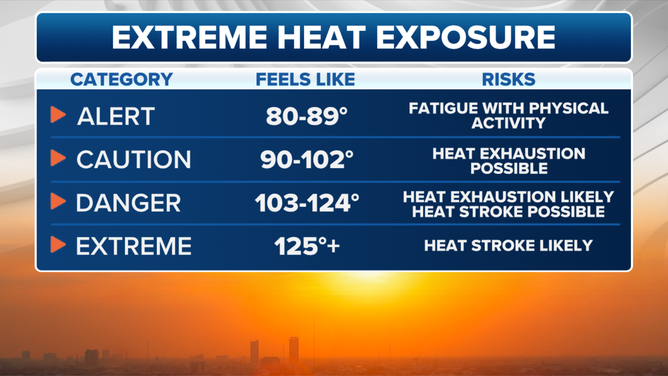
Humidity doesn’t change the actual temperature, but it increases the heat index—the “feels-like” temperature. For example, 90°F with 70% humidity feels like 106°F, while 90°F with 30% humidity feels like 96°F. High humidity prevents sweat from evaporating, making it harder for the body to cool down. The WHO considers a heat index above 125°F “extremely dangerous”.
Are there any benefits to extreme heat?
While the risks dominate headlines, some limited benefits exist. For example:
- Reduced heating costs in winter months.
- Longer growing seasons in some agricultural regions (though extreme heat can also damage crops).
- Lower mortality rates in cold climates (e.g., fewer winter-related deaths in Scandinavia).
However, these do not outweigh the overall risks, especially as heatwaves become more frequent and intense.
What should individuals do to stay safe during extreme heat?
The CDC and WHO recommend:
- Stay hydrated—drink water even if you’re not thirsty, and avoid alcohol/caffeine.
- Limit outdoor activity to early morning or evening; seek shade or AC during peak heat (10 a.m.–6 p.m.).
- Check on vulnerable neighbors, especially the elderly or those without AC.
- Use fans and damp cloths—evaporative cooling works even without AC.
- Never leave children or pets in parked cars—temperatures can rise 20°F in 10 minutes.
For those without AC, public libraries, malls, and community centers often serve as cooling hubs. Many cities also offer subsidized cooling vouchers for low-income households.
How does climate change make heatwaves worse?
Climate change amplifies heatwaves in three key ways:
- Higher baseline temperatures: The global average has risen 1.1°C (2°F) since pre-industrial times, making extreme heat more likely.
- More frequent “blocking patterns”: High-pressure systems (like the “heat dome”) now linger longer, trapping hot air.
- Increased humidity: Warmer air holds more moisture, raising heat indices and straining human physiology.
The IPCC’s 2023 report states that heatwaves that were “once-in-50-year events” are now occurring every 5–10 years in many regions.
—
For readers in Las Vegas or nearby areas, monitor local alerts from the National Weather Service and Clark County Public Health. For broader climate insights, explore our explainer on how heatwaves are reshaping global agriculture.
