President Marcos Visits Sarangani School Amid Quake Damage as Aftershocks and Ground Instability Persist
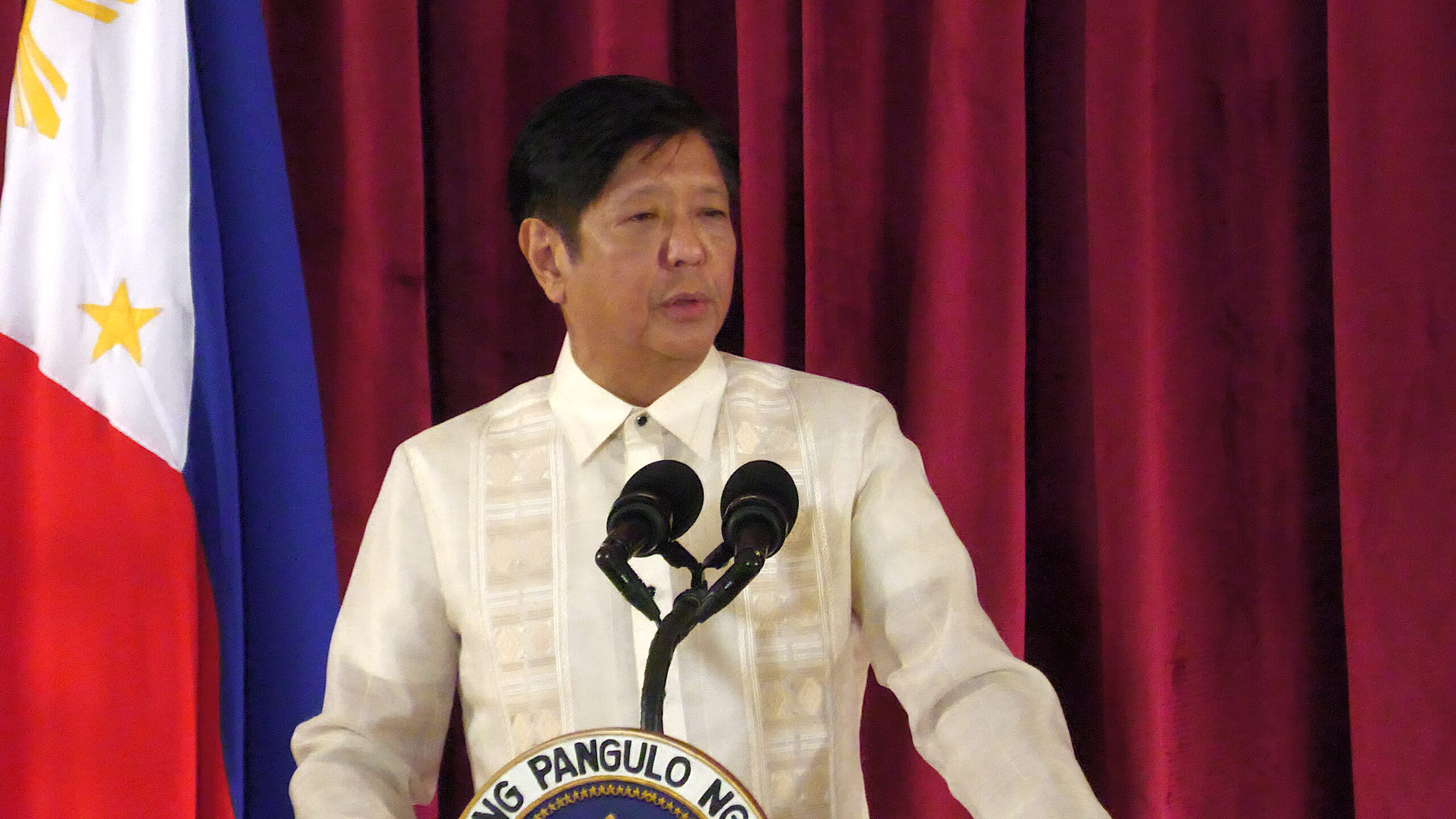
General Santos City, Philippines — President Ferdinand Marcos Jr. inspected a damaged school in Sarangani province on Tuesday, assessing structural damage from a powerful 7.8-magnitude earthquake that struck Mindanao last week. The visit came as officials warn of ongoing risks, including over 6,100 recorded aftershocks and ground deformation in nearly 40% of General Santos City’s barangays.
Marcos’ inspection of the school—one of several affected in the region—highlighted the urgent need for repairs and safety assessments as authorities scramble to address the quake’s lingering threats. Meanwhile, government agencies are coordinating to stabilize infrastructure, with hospitals and critical facilities under close scrutiny.
This report provides a detailed breakdown of the inspection, the scale of the quake’s impact, and the steps being taken to mitigate risks in one of the Philippines’ most seismically active zones.
Key developments:
- Marcos’ first on-site assessment of quake damage in Sarangani, focusing on school infrastructure.
- Over 6,100 aftershocks recorded since the main quake, with Phivolcs warning of continued seismic activity.
- Ground deformation detected in 38% of General Santos City barangays, raising concerns about building safety.
- Hospitals and government facilities declared operational but under heightened monitoring.
- Local officials and disaster agencies coordinating response efforts amid financial and logistical challenges.
—
Why Did Marcos Visit a Sarangani School After the Quake?
President Marcos’ visit to Sarangani on Tuesday marked his first on-site assessment of damage from the December 2 quake, which killed at least 12 people and left thousands displaced. The school inspection—reportedly in Kiamba town—came as officials grappled with the scope of structural damage across the region, where over 1,000 buildings were damaged or destroyed.

According to local officials, the school Marcos inspected had suffered partial roof collapses and cracked walls, forcing temporary relocation of students. The president’s team, including disaster response officials, reviewed damage assessments and discussed immediate repair priorities with provincial leaders.
Context: The quake’s epicenter was near Sarangani, making the province a focal point for recovery efforts. Marcos’ visit followed earlier surveys by the National Disaster Risk Reduction and Management Council (NDRRMC), which reported that Sarangani and General Santos City bore the brunt of the quake’s destruction.
“The president emphasized the need for swift action to ensure children can return to school safely,” said a source familiar with the inspection, adding that Marcos directed agencies to fast-track repairs for critical facilities.
—
How Severe Is the Damage? Key Figures and Risks
The December 2 quake—Mindanao’s strongest in decades—has left a trail of destruction, with officials warning that the threat is far from over. Here’s what the latest data shows:
| Metric | Figure | Source |
|---|---|---|
| Magnitude of main quake | 7.8 | Philippine Institute of Volcanology and Seismology (Phivolcs) |
| Aftershocks recorded (as of Dec. 10) | Over 6,100 | Phivolcs |
| Barangays in General Santos City with ground deformation | 38% | Rappler (based on Phivolcs data) |
| Hospitals declared operational post-quake | All major facilities | Department of Health (DOH) |
| Displaced families (conservative estimate) | 20,000+ | NDRRMC |
Ground instability remains a critical concern. Phivolcs has identified areas in Sarangani and General Santos City where soil liquefaction and land subsidence could compromise building stability. In one barangay in General Santos, officials reported cracks up to 20 centimeters wide, forcing evacuations.
“The ground is still settling in some areas,” warned Phivolcs Director Renato Solidum. “Residents should avoid damaged structures and report any new cracks immediately.”
Why it matters: The quake’s shallow depth (12 kilometers) amplified its destructive power, making it particularly hazardous for poorly constructed buildings—a common issue in rural Mindanao. Experts note that the region’s history of seismic activity (including the 2019 magnitude 6.5 quake in Davao) underscores the need for stricter building codes.
—
What Are the Biggest Challenges in Recovery?
While Marcos’ inspection signaled political attention to the crisis, recovery efforts face significant hurdles:

- Funding gaps: The NDRRMC has requested P1.5 billion for immediate repairs, but local governments report delays in disbursement.
- Logistical delays: Remote areas like Sarangani’s coastal towns have limited access, slowing damage assessments.
- Aftershock fatigue: Residents in affected barangays continue to sleep outdoors, fearing further tremors.
- School reopening timelines: Officials aim to repair 80% of damaged classrooms within 30 days, but material shortages threaten this goal.
Comparison: The 2019 Davao quake, which killed 16 people, saw similar recovery challenges. However, this year’s disaster has been compounded by the COVID-19 pandemic’s strain on local budgets and supply chains.
“The difference this time is the scale of the aftershocks,” said a disaster resilience expert from the University of the Philippines. “Communities are exhausted, and the government must act faster to restore confidence.”
—
How Are Hospitals and Critical Facilities Holding Up?
Despite the quake’s intensity, the Department of Health (DOH) has assured that all major hospitals in Sarangani and General Santos City remain operational. However, officials acknowledge strains on medical supplies and staffing.
Key points:
- General Santos City Medical Center and Sarangani Provincial Hospital were inspected for structural integrity and declared safe for use.
- Mobile clinics have been deployed to barangays with limited access, focusing on treating minor injuries and psychological distress.
- The DOH has prepositioned emergency medical supplies, including trauma kits and IV fluids, in high-risk areas.
- Power and water systems in hospitals were restored within 48 hours, though some rural health centers remain offline.
“Our priority is to ensure continuity of healthcare services,” said DOH Regional Director Myrna Cabotaje. “We’re working with local governments to address gaps in medical logistics.”
Long-term concern: The quake has exposed vulnerabilities in rural healthcare infrastructure, where many facilities lack earthquake-resistant designs. Advocates are pushing for retrofitting programs, similar to those implemented after Typhoon Haiyan in 2013.
—
What’s Next? Timeline for Recovery and Monitoring
With aftershocks continuing and ground instability reports rising, authorities are focusing on three immediate priorities:
- Structural assessments: Phivolcs and the NDRRMC are conducting door-to-door checks in high-risk barangays, using drones to identify unstable areas. Results are expected within two weeks.
- Temporary housing: The government has approved P500 million for emergency shelters, with construction set to begin in Kiamba and Malungon towns.
- School repairs: The Department of Education (DepEd) has fast-tracked P300 million in funds for classroom restorations, targeting a 60% completion rate by January.
Ongoing risks:
- Phivolcs expects aftershocks to continue for weeks, with magnitudes up to 6.0 possible.
- Rainy season (starting in January) could worsen landslide risks in mountainous areas.
- Psychosocial support for displaced families remains underfunded, according to local NGOs.
“This is a marathon, not a sprint,” said a spokesperson for the United Nations Office for the Coordination of Humanitarian Affairs (OCHA) in Manila. “The focus must stay on both immediate relief and long-term resilience.”
—
Additional resources:
For readers seeking further details, related topics on this site include:
- How to prepare for aftershocks: A step-by-step guide
- The science behind Mindanao’s seismic activity
- Government aid programs for quake-affected families
—
Frequently Asked Questions About the Quake and Recovery
Q: Are aftershocks still dangerous?
A: Yes. Phivolcs has recorded over 6,100 aftershocks since December 2, with some exceeding magnitude 5.0. Residents should avoid damaged buildings and follow local evacuation orders.
Q: Can I return to my home if it has minor cracks?
A: Not yet. Phivolcs advises waiting for official structural assessments. Even small cracks can indicate instability, especially in soft soil areas.
Q: How long will it take to repair schools?
A: The Department of Education aims to repair 80% of damaged classrooms within 30 days, but delays are possible due to material shortages and remote locations.
Q: Are hospitals safe to use?
A: All major hospitals in Sarangani and General Santos City have been declared structurally sound by the DOH. However, rural health centers may have limited services.
Q: What should I do if I feel an aftershock?
A: Drop, cover, and hold on under a sturdy table. Avoid windows and heavy furniture. If outdoors, move to an open area away from buildings.
Q: How can I help quake-affected communities?
A: Donations can be directed to verified NGOs like the Philippine Red Cross or local government disaster offices. Avoid sending cash; supplies like food, water, and hygiene kits are most needed.
—
