Tohoku University researchers create stable boron graphene and quantum liquid
Researchers engineered a stable boron honeycomb lattice by exposing internal layers of a 3D crystal, revealing an exotic electronic nematic quantum state.
Researchers at Tohoku University have reported a milestone in materials science by successfully realizing a stable version of boron graphene. The study, published on 2 July 2026 in Science Advances, introduces a method for generating two-dimensional quantum materials by leveraging the internal architecture of a pre-existing three-dimensional crystal rather than attempting the difficult task of synthesizing a standalone atomic sheet.
Standard graphene is widely recognized for its potential in electronics, though its utility is often constrained by relatively weak electron interactions, which limit its application in fields such as high-temperature superconductivity. Borophene, a theorized two-dimensional lattice of boron atoms, has long been a subject of interest because it is expected to host stronger electron interactions and more exotic quantum phenomena. However, creating a stable, free-standing honeycomb sheet of boron has remained a persistent challenge for scientists due to the material's extreme instability.
Related media
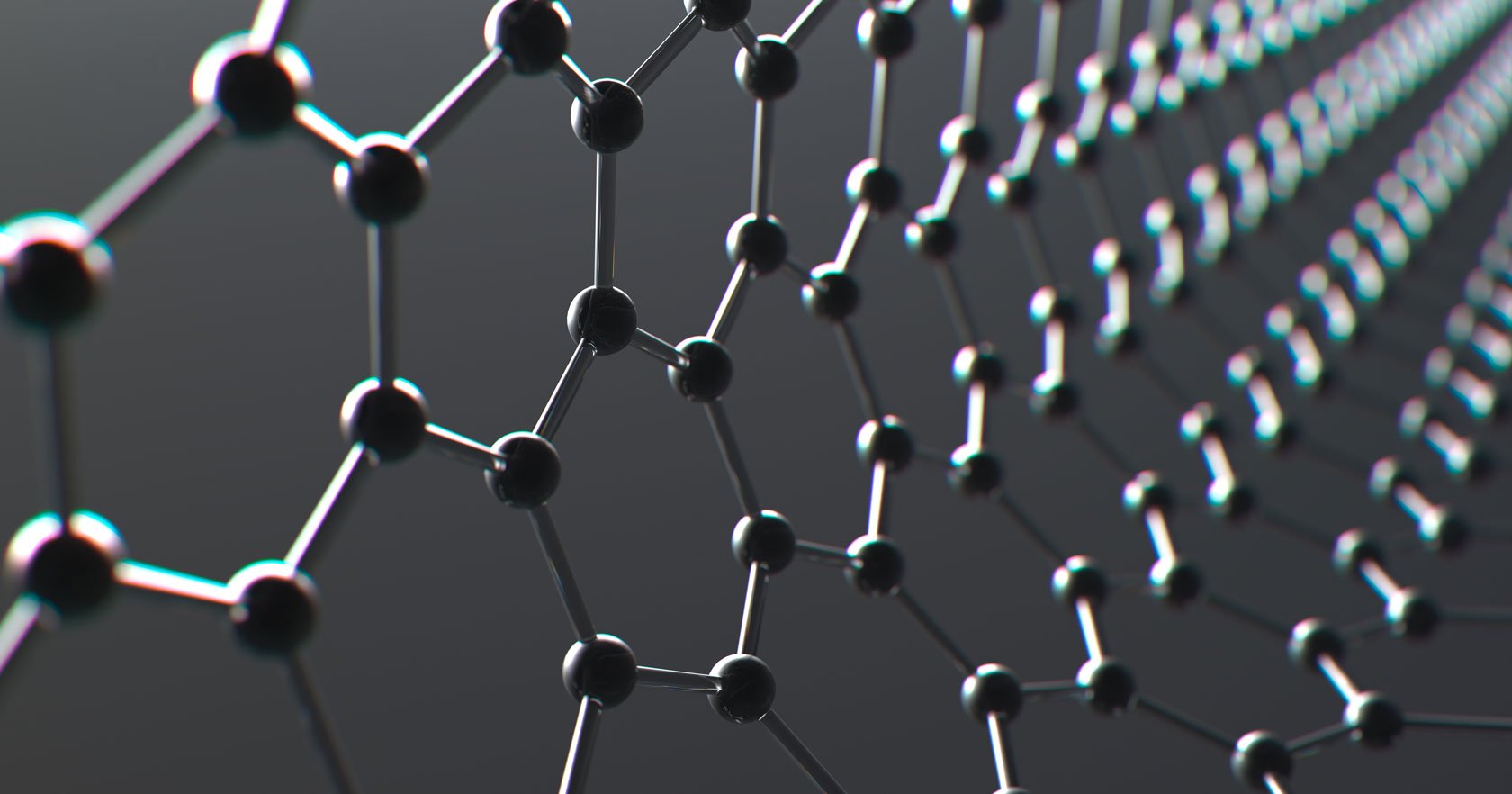
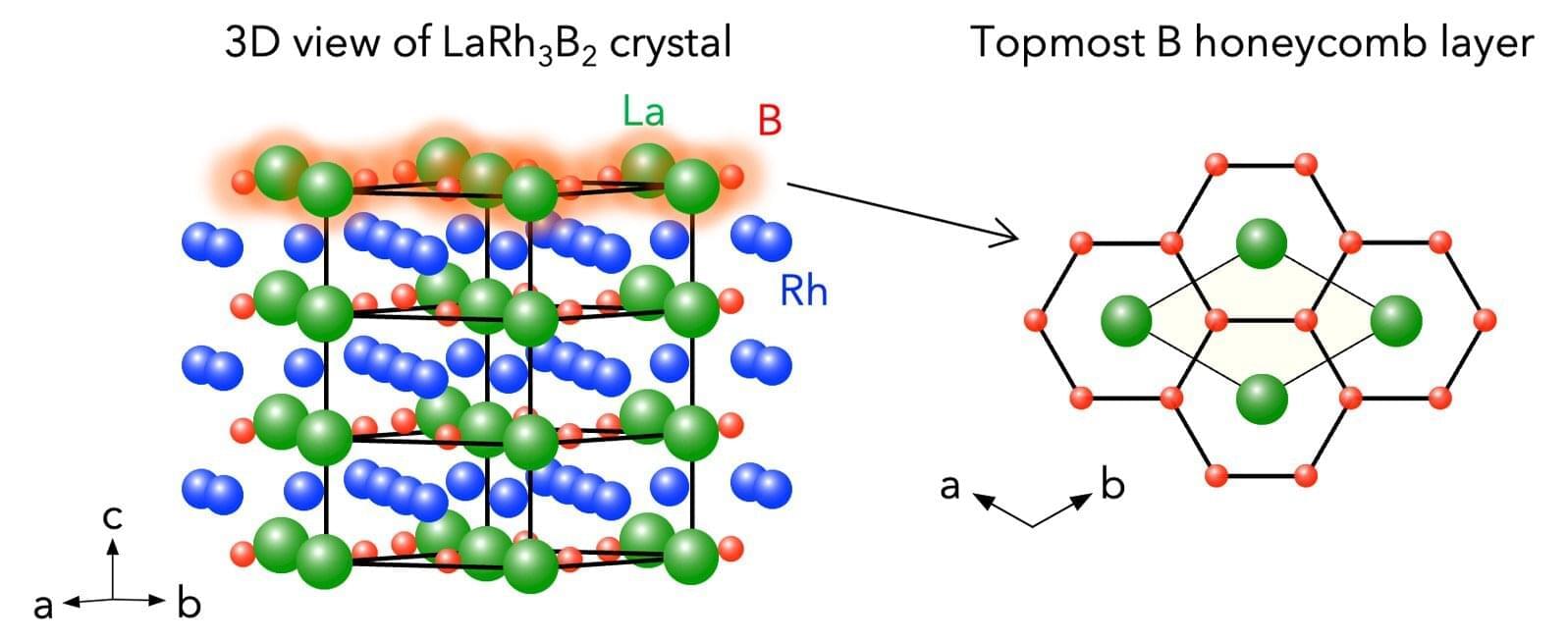

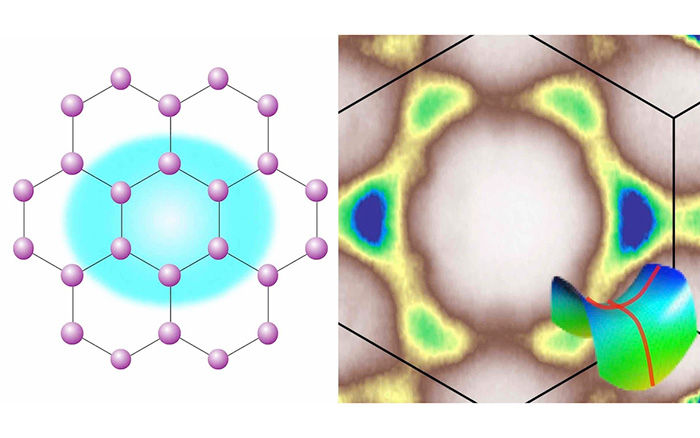
The research team, based at the Advanced Institute for Materials Research (WPI-AIMR) and the Graduate School of Science at Tohoku University, bypassed this manufacturing barrier by utilizing the crystal structure of LaRh3B2. This three-dimensional crystal naturally contains honeycomb-patterned layers of boron atoms. By exposing these internal layers at the surface of the crystal, the team successfully created a stable two-dimensional electronic system that possesses the properties of the elusive material.
Observation of the Quantum Liquid Crystal State
The team employed a dual-imaging methodology to verify the material's properties and identify its quantum state. Using angle-resolved photoemission spectroscopy (ARPES) at synchrotron radiation facilities, the researchers identified an unusually high concentration of electrons situated near the material's Fermi level. This feature, known as a van Hove singularity, acts as a catalyst for unusual quantum behavior by strengthening the interactions between electrons.
To view these electrons in real space, the researchers utilized scanning tunneling microscopy and spectroscopy (STM/STS). The integrated data showed that the electrons within the boron honeycomb layer spontaneously align in a preferred direction, breaking the crystal's original six-fold symmetry. This shift results in what the researchers define as an “electronic nematic state.” In this phase, the electrons exhibit behavior analogous to that of molecules found in liquid crystal displays.
"Instead of struggling to synthesize a fragile two-dimensional boron sheet from scratch, we looked inside a stable three-dimensional crystal that already contained a boron honeycomb lattice and exposed it on the material’s surface. Observing this electronic liquid crystal state in a graphene-like material shows that carefully designing a material’s electronic structure can unlock entirely new quantum phenomena."
Takafumi Sato, WPI-AIMR, via Tohoku University
Kosuke Nakayama, an assistant professor at the Graduate School of Science, stressed that the dual-approach methodology was essential to the discovery. "Neither technique alone could have revealed the full picture," he noted. "By combining momentum-space information from ARPES with real-space observations from STM, we were able to connect the electronic instability with the emergence of the nematic state."
Future Research and Implications
The research team pointed out that the crystal family utilized in the study allows for significant chemical substitution, meaning that researchers can adjust the concentration and behavior of electrons within the material. This versatility is expected to provide a flexible platform for designing next-generation superconductors and energy-saving quantum technologies.
The study was authored by a large team including Takemi Kato, Tomonori Nakamura, Kosuke Nakayama, Takumi Osumi, Seigo Souma, Asuka Honma, Alexandre Antezak, Pedro Rezende Gonçalves, Kiyohisa Tanaka, Miho Kitamura, Kenichi Ozawa, Koji Horiba, Hiroshi Kumigashira, Takashi Takahashi, Franck Fortuna, Andrés Felipe Santander-Syro, Rikio Settai, Yoshichika Onuki, Yoshinori Okada, and Takafumi Sato.
Key Concepts
- Boron Graphene: A stable, two-dimensional boron honeycomb lattice derived from the surface of a 3D crystal structure.
- Van Hove Singularity: An electronic feature near the Fermi level that increases interactions between electrons.
- Electronic Nematic State: A quantum phase where electrons align in a specific direction, breaking rotational symmetry similarly to molecules in liquid crystals.
- Methodological Synergy: The use of momentum-space imaging (ARPES) and real-space imaging (STM/STS) to characterize electronic instabilities.
Archypedia is dedicated to independent, evidence-backed reporting. This briefing was synthesized from primary source reporting, corroborated across independent newsrooms, and verified against our Editorial Standards.
Transparency record
Evidence behind this report
This report synthesizes 7 distinct sources. Open the source ledger below to compare the underlying coverage.
- tohoku.ac.jp
- wpi-aimr.tohoku.ac.jp
- www2.tagen.tohoku.ac.jp
- lifeboat.com
- miragenews.com
- technologynetworks.com
- sci.tohoku.ac.jp
Prepared under the Archypedia Editorial Policy by the Niko Vale editorial desk profile. AI-assisted tools may support drafting and verification; public accountability remains with Archypedia. Report an error.