LSU physicists develop first room-temperature quantum material
Researchers at Louisiana State University have developed a quantum statistical plasmonic metacrystal that maintains coherence at room temperature. This development offers a new blueprint for quantum computing and potential applications in increasing solar cell efficiency.
Physicists have developed a new class of material capable of processing quantum information at room temperature, potentially bypassing the need for the bulky, energy-intensive cryogenic cooling systems that have long hindered the translation of quantum research into practical technology. The development, led by researchers at Louisiana State University (Lsu), offers a new blueprint for engineering materials that can transport quantum states of light without succumbing to the atomic vibrations usually triggered by heat.
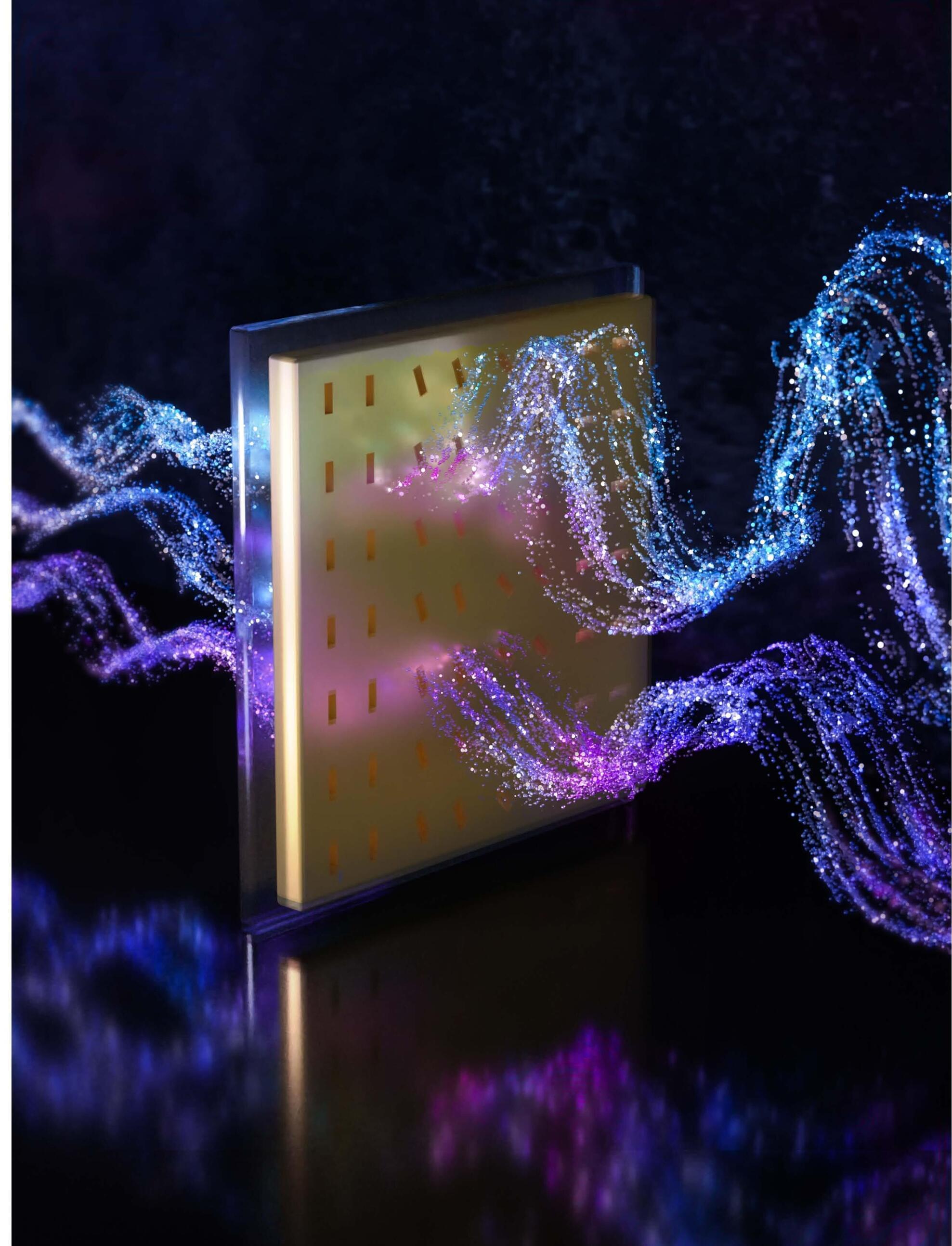
The research, published in the journal Nature, centers on a device the team calls a quantum statistical plasmonic metacrystal. To build this structure, the team deposited a thin film of gold onto a glass chip and used focused ion beams to carve hundreds of microscopic slits. These slits function as artificial atoms — or meta-atoms — which are arranged to form a custom crystal thinner than a human hair. As light enters the chip, the interaction between the photons and these meta-atoms allows the crystal to act as a filter, distinguishing subtle quantum differences in incoming light and guiding specific states along robust, coherent pathways.
Related media


Associate Professor of Physics Omar S. Magaña-Loaiza, who led the Quantum Photonics Group behind the work, emphasized the significance of moving away from natural materials. By manually designing the size, shape, and spacing of the meta-atoms, the team can dictate how quantum statistics propagate through the system. According to the researchers, this ability to maintain quantum coherence at ambient temperatures provides a foundation for future quantum computing, secure communication networks, and advanced sensing technologies.
Designing for the Future
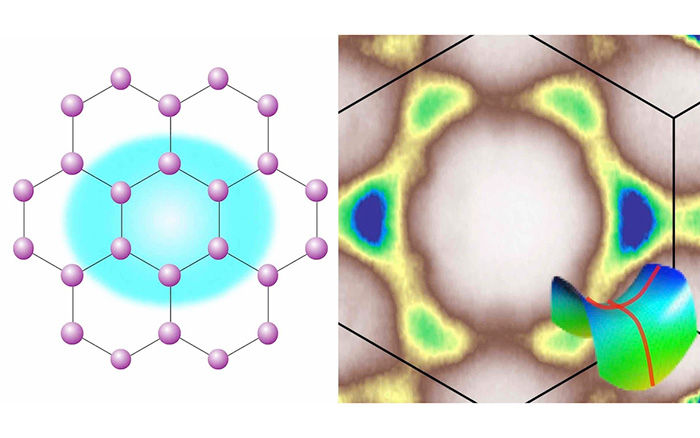
The LSU team discovered that their metacrystal naturally forms quantum statistical bands, which function similarly to the electronic band structures found in common semiconductors. By manipulating these bands, scientists can control which quantum states are permitted to traverse the material unchanged. This design principle suggests that the metacrystal architecture can be scaled and adapted for various applications beyond basic physics, including the potential for increasing the efficiency of solar cells. The team aims to integrate the metacrystal into solar technologies next, investigating whether the robust light-transport pathways can prevent energy from being lost as heat.
The broader field of quantum materials has seen several recent experimental breakthroughs, often involving different strategies for achieving room-temperature stability. Researchers at Rensselaer Polytechnic Institute (RPI) recently demonstrated a room-temperature supersolid, a phase of matter that is simultaneously ordered like a crystal and fluid enough to move without resistance, by using light to drive interactions in a perovskite-based nanostructure. Similarly, at RPTU University Kaiserslautern-Landau, researchers observed spontaneous macroscopic coherence in a magnon Bose-Einstein condensate, a feat published in Nature Physics that suggests new possibilities for spin-based signal processing.
Comparative Landscape of Quantum Breakthroughs
| Approach | Key Mechanism | Application Potential |
|---|---|---|
| Quantum Statistical Plasmonic Metacrystal | Engineering meta-atom spacing to filter light states | Quantum computing, solar energy efficiency |
| Supersolid Nanostructures | Light-matter interaction (polaritons) | Optical computing, tunable lasers |
| Magnon Bose-Einstein Condensates | Spontaneous magnon coherence | Signal processing, quantum sensing |
What to Watch Next
- Solar Integration: The LSU research team is preparing to test whether their metacrystal can be directly incorporated into solar cells to boost electricity conversion.
Archypedia is dedicated to independent, evidence-backed reporting. This briefing was synthesized from primary source reporting, corroborated across independent newsrooms, and verified against our Editorial Standards.
Transparency record
Evidence behind this report
This report synthesizes 9 distinct sources. Open the source ledger below to compare the underlying coverage.
- lsu.edu
- photonicsonline.com
- lifeboat.com
- sciencedaily.com
- news.rpi.edu
- gsas.harvard.edu
- idw-online.de
- forbes.com
- yahoo.com
Prepared under the Archypedia Editorial Policy by the Niko Vale editorial desk profile. AI-assisted tools may support drafting and verification; public accountability remains with Archypedia. Report an error.