Superworms offer museums a safer method for cleaning animal skeletons
A study published in PLOS One suggests that superworm larvae can effectively clean animal skeletons while reducing the risk of museum-wide infestations.
Museum curators and researchers tasked with preparing skeletal remains for study and exhibition face a persistent dilemma: how to strip soft tissue from bones without damaging delicate structures or endangering the surrounding collection. A study published in the journal PLOS One on July 1, 2026, proposes a solution using the larvae of Zophobas morio, commonly referred to as superworms. Researchers from the Ferdowsi University of Mashhad in Iran and the State Museum of Natural History in Stuttgart, Germany, investigated these larvae as a safer, more efficient alternative to conventional preparation techniques.
For generations, natural history institutions have relied on techniques including manual dissection, burial, enzymatic digestion, chemical baths, and the use of dermestid beetles. While dermestid colonies are highly effective at consuming flesh, they present significant risks to museum environments. Because these beetles complete their entire life cycle within a colony, escaped adults or hidden eggs can infest a museum’s broader collection, potentially destroying taxidermy, feathers, and other preserved materials. Other methods have their own shortcomings; for instance, chemical treatments can pose biohazard risks and degrade bone, while boiling can warp thin ribs, loosen teeth, and complicate the reconstruction of specimens.
Related media


The research team identified the superworm as a viable alternative because its life cycle can be managed more easily than that of the dermestid beetle. Superworms are limited to the larval stage in crowded conditions and will not pupate unless isolated. This characteristic significantly reduces the risk of adult beetles emerging and causing damage to wider museum holdings. Furthermore, superworms are widely available commercially as pet and livestock feed, making them an inexpensive and accessible tool for institutions that may lack specialized entomology facilities.
Balancing Efficiency and Preservation
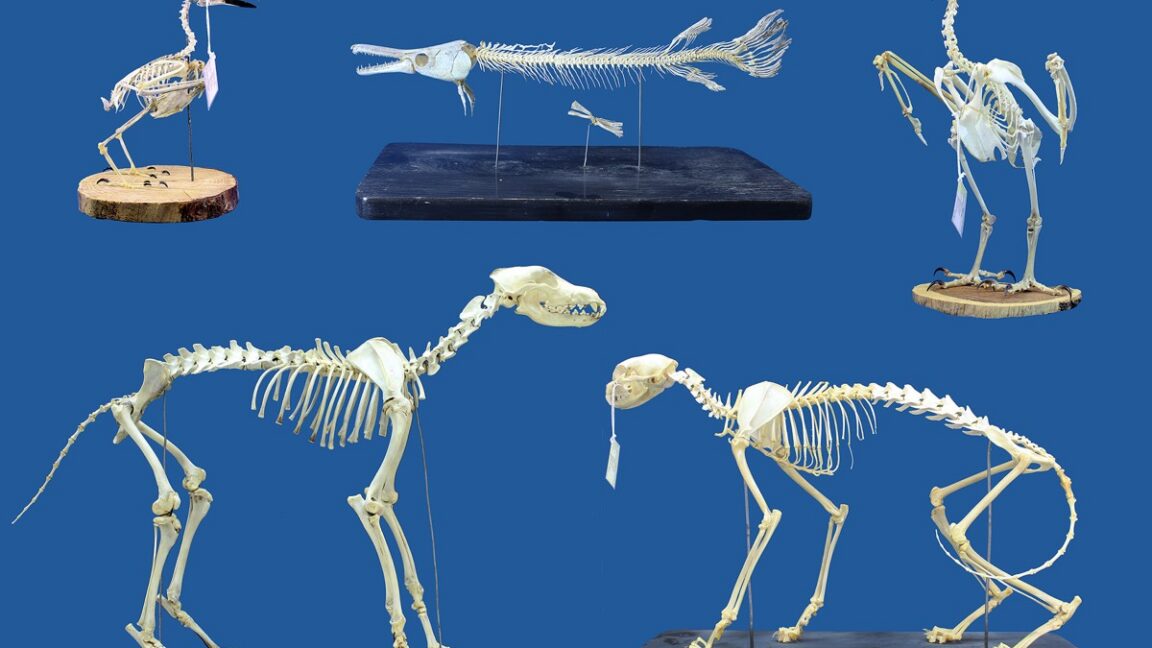
The study established a standard protocol for skeletal cleaning using superworms. After initial preparation — which involved skinning the specimens and removing internal organs — the researchers applied varying biomasses of larvae to different vertebrates, including mice, birds, fish, a wild cat, and a gray wolf. To prevent tissues from hardening and to maintain consistent cleaning performance, medium and large specimens were periodically softened in water heated to 80°C. In trials where specimens became desiccated, researchers temporarily removed them for rehydration in warm water before returning them to the larvae.
The researchers identified a specific efficiency ratio, suggesting that 10 to 15 larvae work best to balance rapid tissue removal with minimal risk of bone damage. When the density of larvae was too high, the insects consumed fragile structures like rib bones and thin skull elements. Conversely, using too few larvae resulted in prolonged cleaning times. By rotating medium and large specimens every six to eight hours into fresh containers of starved, active larvae, the team ensured continuous cleaning. The larvae were also noted for their ability to reach internal cavities that are typically difficult to clean using manual tools.
A Practical Tool for Modern Museums
While the study suggests superworms are a practical tool for many institutions, some experts advise a measured approach. Damien Charabidze, a forensic entomologist at the University of Lille, noted that while superworms are easier to contain than dermestid beetles, he worries that the superworms' powerful mandibles could inadvertently snap a small bone. Marna Sakalem, an anatomist at the State University of Londrina, raised a similar concern. She also noted that in the five years that she's worked with dermestid beetles, she and her team have not observed any escapees, so she's not willing to write off more traditional approaches just yet.
The research team emphasized that this new method is designed to complement existing scientific practices. Proper maintenance of a superworm colony is relatively straightforward, requiring a stable temperature between 25–27°C and a supplemental diet of fruit or vegetable scraps between cleaning sessions to maintain larval health.
The study authors suggest that future applications of this method may include its use to ensure skeletal integrity for advanced imaging, such as CT scanning, provided the final bones are not coated in varnish sprays, which can interfere with technical analysis. As museums continue to seek sustainable and efficient methods for preparing osteological series for public display and comparative research, the use of superworms offers a new, low-risk option for curatorial collections.
Archypedia is dedicated to independent, evidence-backed reporting. This briefing was synthesized from primary source reporting, corroborated across independent newsrooms, and verified against our Editorial Standards.
Transparency record
Evidence behind this report
This report synthesizes 7 distinct sources. Open the source ledger below to compare the underlying coverage.
Prepared under the Archypedia Editorial Policy by the Niko Vale editorial desk profile. AI-assisted tools may support drafting and verification; public accountability remains with Archypedia. Report an error.