NASA's Roman Telescope Will Spot Distant Black Holes That Shred Stars
A new study suggests the Roman Space Telescope will track star-shredding events to help researchers determine how supermassive black holes formed in the early universe.
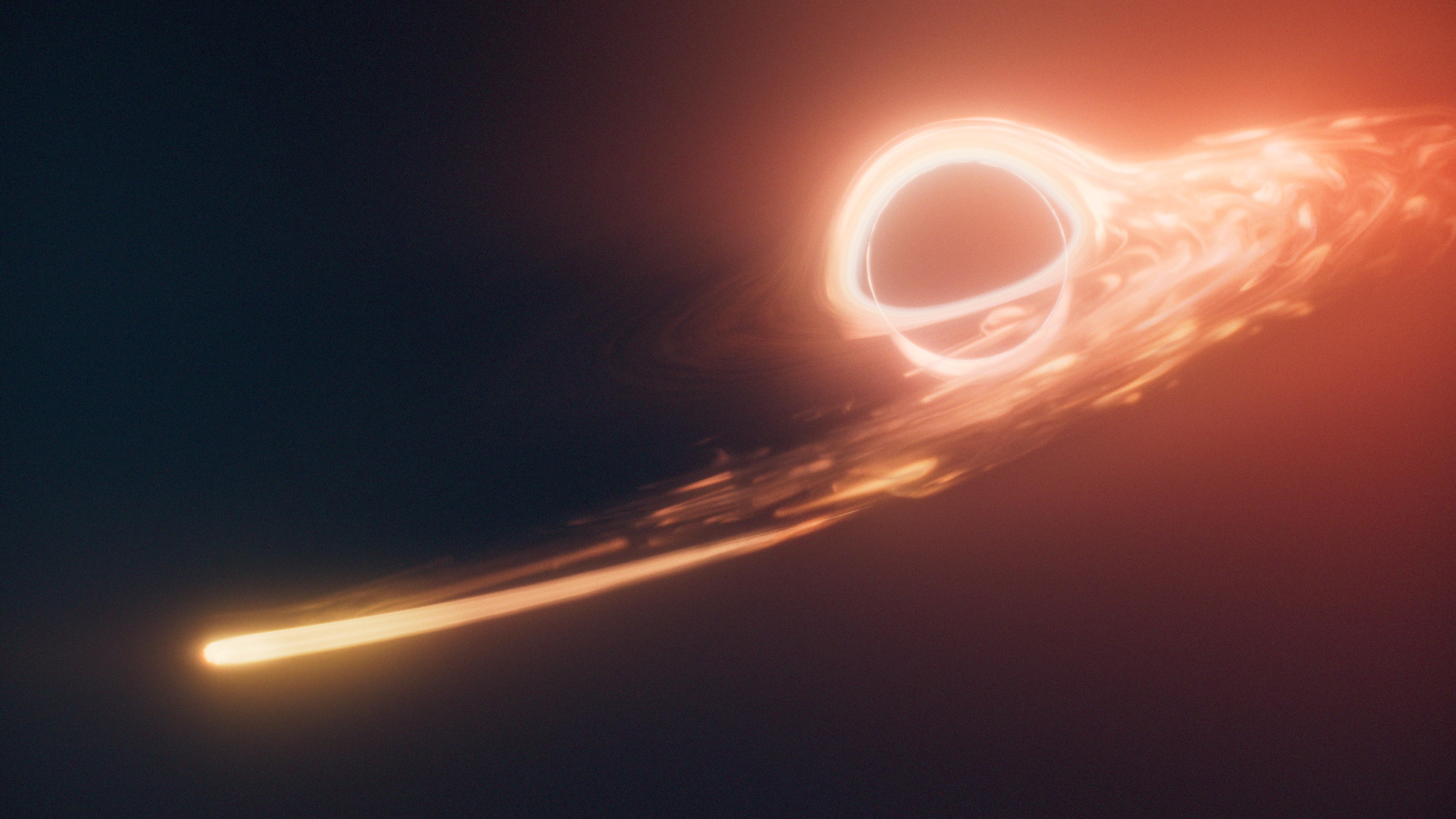
As the scientific community prepares for the highly anticipated launch of the Nancy Grace Roman Space Telescope, now scheduled for lift-off on August 30, 2026, researchers have identified a powerful new method for probing the early history of the cosmos. A new study suggests the observatory will be uniquely equipped to detect tidal disruption events (TDEs) — catastrophic occurrences where a star is shredded by the gravity of a supermassive black hole — at distances that reach back 11 billion years into the universe’s history.
For decades, astronomers have struggled to reconcile the existence of gargantuan black holes found in the very early universe with current theories of formation. Because these objects reached immense sizes so rapidly after the Big Bang, researchers must determine whether they began as "light seeds", the remains of massive stars, or "heavy seeds," which may have formed through the direct collapse of massive gas clouds. Identifying which scenario is correct depends on characterizing the population of smaller, lighter supermassive black holes in the early universe, a task that has remained elusive due to their relative lack of luminosity.
Related media

The Role of Tidal Disruption Events
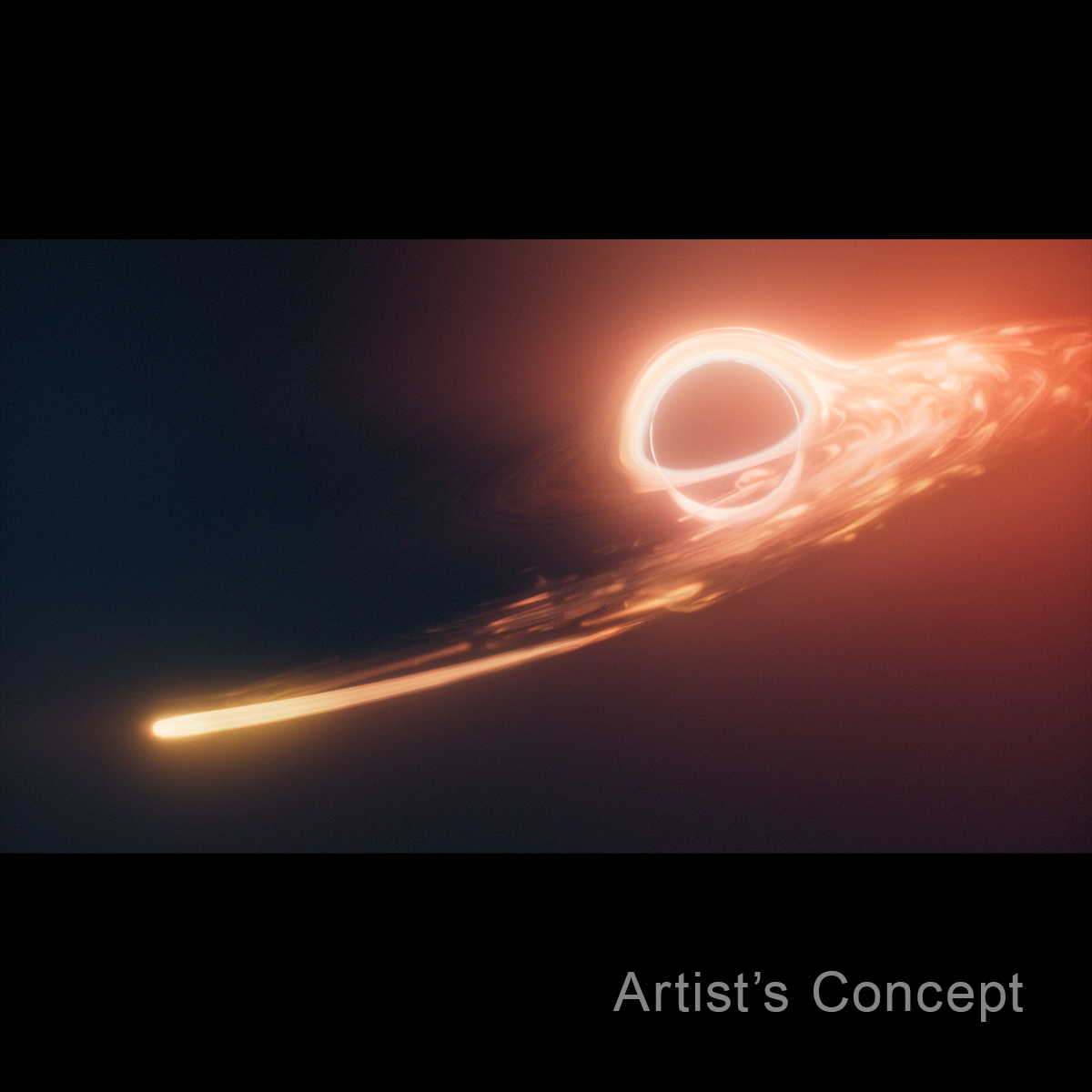
TDEs provide the necessary beacon to find these otherwise hidden black holes. When a wandering star ventures too close to a black hole weighing between 100,000 and 100 million solar masses, the tidal forces are sufficient to tear the star apart before it is consumed. This process releases a burst of light that can briefly outshine an entire host galaxy. By tracking these flashes, the Roman Space Telescope will allow scientists to map the distribution of black holes throughout the universe's past.
According to research published Tuesday in The Astrophysical Journal, the Roman telescope is expected to identify approximately 100 TDEs annually. Mitchell Karmen, lead author of the study and a graduate student at Johns Hopkins University, notes that the mission will be transformative for transient Science
because the telescope's high sensitivity allows for the detection of these events across cosmic time scales previously inaccessible to researchers.
Complementary Observatories and Strategy
The quest to understand these ancient objects involves multiple international efforts and specialized survey strategies. While the ground-based Vera C. Rubin Observatory will also conduct large-scale sky surveys to detect thousands of TDEs annually, its reliance on visible light limits its reach compared to Roman’s infrared capabilities. Light from the most distant, ancient events is stretched by the expansion of the universe, a process known as cosmological redshift, making Roman’s near-infrared instruments the ideal tool for peering into the deep past.
The mission will employ the "High-Latitude Time-Domain Survey," which will repeatedly observe the same 18 square degrees of the sky. This cadence is essential for spotting the rapid brightening and gradual fading characteristic of star-shredding events. Suvi Gezari, an associate professor of astronomy at the University of Maryland and co-author of the study, explains that just by counting the number of TDEs as a function of redshift, you can put meaningful constraints on the population of million-solar-mass black holes.
Comparison of Mission Capabilities
| Observatory | Primary Capability | Survey Scope |
|---|---|---|
| Nancy Grace Roman | Near-infrared/Deep cosmic history | Up to 100 TDEs per year |
| Rubin Observatory | Visible light/Wider, closer fields | Thousands of TDEs per year |
As Roman approaches its launch date, the scientific team intends to compare their current predictive models against the real-time data flow from the telescope. The goal is to move from theoretical speculation regarding "light" versus "heavy" seeds to an observational understanding of how the black hole population has changed since the peak of star formation at "cosmic noon," approximately 11 to 12 billion years ago.
Archypedia is dedicated to independent, evidence-backed reporting. This briefing was synthesized from primary source reporting, corroborated across independent newsrooms, and verified against our Editorial Standards.
Transparency record
Evidence behind this report
This report synthesizes 11 distinct sources. Open the source ledger below to compare the underlying coverage.
- nasa.gov
- stsci.edu
- miragenews.com
- science.nasa.gov
- science.gsfc.nasa.gov
- gizmodo.com
- space.com
- yahoo.com
- mashable.com
- sciencenews.org
- nbcnews.com
Prepared under the Archypedia Editorial Policy by the Niko Vale editorial desk profile. AI-assisted tools may support drafting and verification; public accountability remains with Archypedia. Report an error.